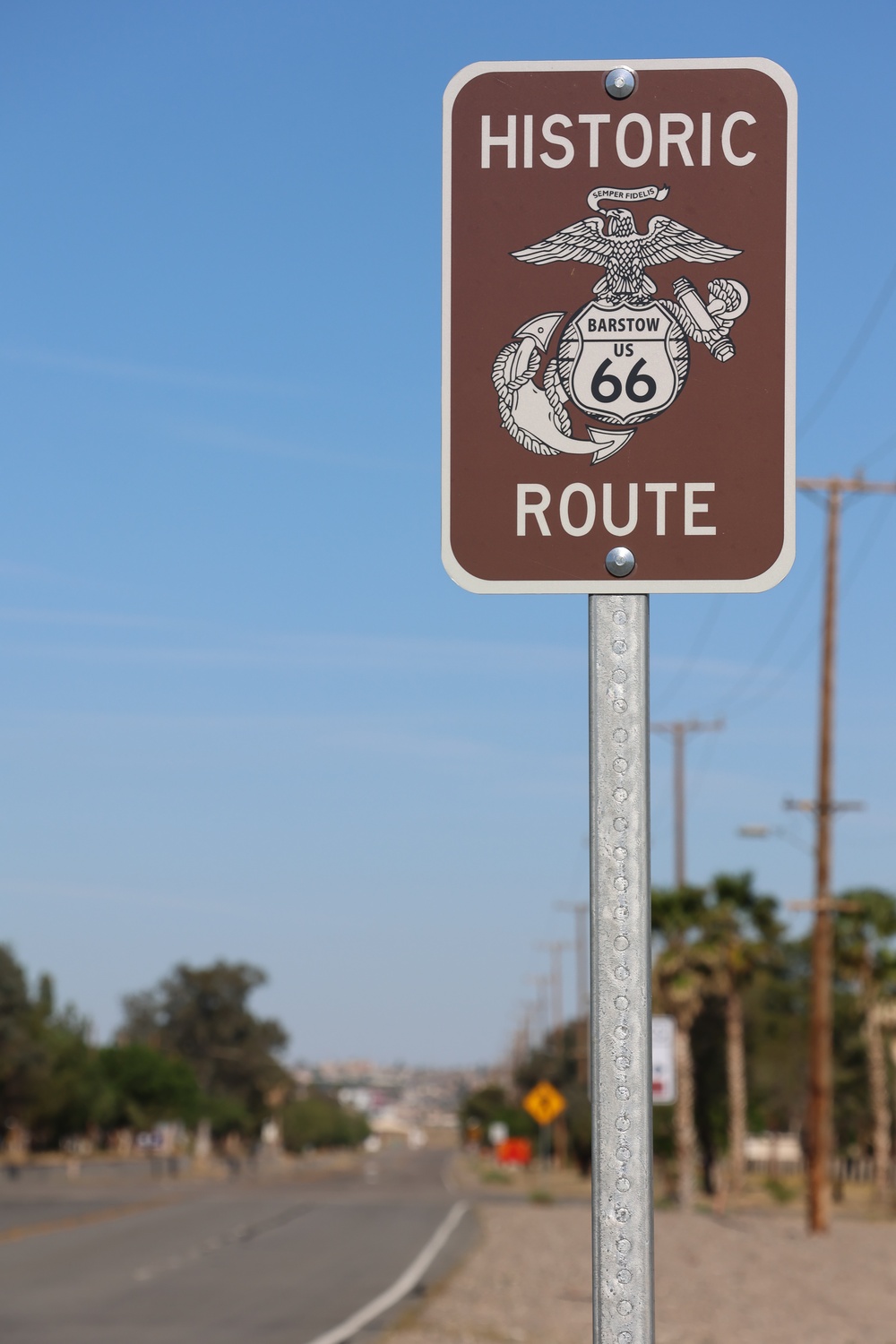
As Route 66 marks its 100th anniversary in 2026, Marine Corps Logistics Base Barstow is highlighting its unique and enduring connection to one of America’s most iconic highways.
Established in 1926, Route 66—often referred to as the “Mother Road”—became a symbol of American mobility, opportunity and resilience, stretching more than 2,400 miles from Chicago to Santa Monica and connecting communities across the nation.
For MCLB Barstow, that history is more than symbolic. The installation was established in 1942 alongside Route 66, leveraging its strategic location to support the rapid movement of troops, equipment and supplies during World War II.
“A century is a huge milestone, and for MCLB Barstow, it really highlights our shared history with the local community,” Sgt. Maj. Mario Virto, base sergeant major, said. “The base was stood up 28 December 1942, right alongside the highway, and the city of Barstow has been an incredible partner to us ever since. In my opinion, this centennial isn't just about celebrating an iconic road; it’s about recognizing the people, the equipment, and the massive logistical effort that traveled this route to defend the country. Our relationship with the city and its citizens provides us with a great opportunity to share this legacy with the High Desert community.”
Route 66 played a critical role in the nation’s wartime mobilization efforts, serving as a key transportation corridor that enabled the movement of military resources across the country. The base’s proximity to the highway helped position it as a vital logistics hub supporting operations in the Pacific theater.
Today, MCLB Barstow remains the only military installation with an original segment of Route 66 running directly through it. A 1.7-mile portion of the historic roadway, known on base as Joseph L. Boll Avenue, serves as a visible reminder of the installation’s connection to American and Marine Corps history.
Elizabeth Barron, former cultural resources specialist, says that connection continues to resonate more than a century after the highway’s creation.
“The story of Route 66 is interwoven with the history of the Marine Corps and the pivotal role MCLB Barstow played in major historical events like World War II,” Barron said. “Acknowledging this history fosters a deep sense of heritage and pride in the base's legacy and its contributions to national defense. It serves as a tangible connection for current Marines to the dedication and sacrifices of those who served before them.”
Beyond its military relevance, Route 66 has long represented the spirit of exploration and perseverance, carrying families west during the Great Depression, fueling economic growth and shaping American culture through decades of travel and innovation.
“It sends a very clear message: you can have the best personnel and gear in the world, but if you can't get them where they need to go, it doesn't do you much good,” Sgt. Maj. Virto said. “Route 66 was the original lifeline out west and proved how critical a solid road network is to national defense. Today, we build on that legacy as the largest railhead in the military. Whether we're relying on those modern rail lines or the interstates, the concept remains the same: strong infrastructure is the absolute backbone of our ability to deploy and sustain our forces.”
In recognition of this legacy, MCLB Barstow has taken steps to preserve and honor its portion of the historic route, including signage, roadway markings and monuments that highlight the connection between the Marine Corps and Route 66.
“The Marine Corps base did not emerge in isolation. It developed because Barstow already functioned as a transportation and logistics hub tied directly to Route 66 and the Santa Fe rail system,” Brendan O’Brien, Route 66 Museum coordinator said. “In many ways, Route 66 brought America to Barstow, and the base turned Barstow into a permanent strategic logistics city. Classic Route 66 businesses in Barstow (motels, diners, gas stations, repair shops) historically served both tourists and military traffic simultaneously. That overlap is one reason Barstow’s Route 66 culture feels more authentic and utilitarian than purely nostalgic.”
As communities across the country celebrate the Route 66 centennial, MCLB Barstow’s role serves as a reminder of the highway’s dual legacy—both as a cultural icon and as a critical asset in supporting national defense.
“As a registered National Historic Highway, Route 66 is a cultural resource that embodies America's heritage of exploration and the pursuit of a better life,” Barron explained. “The preservation of the segment within MCLB Barstow is a tribute to the base's significant contributions during World War II. The base's Cultural Resources Program is tasked with managing and maintaining this historic landmark, a responsibility that also serves to highlight the installation's environmental history.”
The installation’s continued mission as a logistics hub reflects the same principles that defined Route 66 at its peak: connection, movement and readiness in support of a larger purpose.
| Date Taken: |
07.29.2026 |
| Date Posted: |
07.29.2026 15:08 |
| Story ID: |
571034 |
| Location: |
BARSTOW, CALIFORNIA, US |
| Web Views: |
319 |
| Downloads: |
0 |
PUBLIC DOMAIN

This work, MCLB Barstow highlights historic ties to Route 66 during Centennial Year, by Kristyn Galvan, identified by DVIDS, must comply with the restrictions shown on https://www.dvidshub.net/about/copyright.