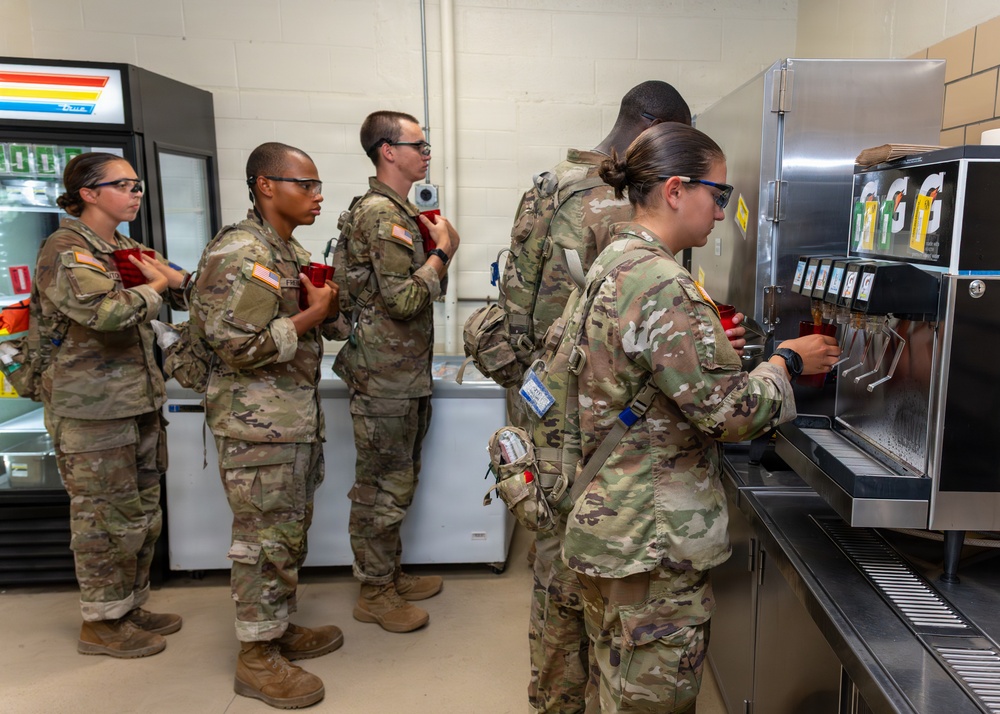
FORT LEONARD WOOD, Mo. — As Missouri heat indexes surge into the triple digits, Fort Leonard Wood units are driving hard on operational hydration to ensure every Soldier remains lethal, resilient and ready.
“Hydration and proper nutrition directly impact physical performance, mental focus, recovery and resilience to the elements,” said Capt. T.J. McClintock, Company F commander, 2nd Battalion, 10th Infantry Regiment, 3rd Chemical Brigade. “Timing carbohydrates to maximize muscle glycogen levels, high protein intake to repair muscle, and adequate hydration all fuel performance. Learning these critical lessons early is essential to build a stronger, more resilient Soldier.”
Capt. Franklin Muntis, the 3rd Chemical Bde. Holistic Health and Fitness Nutrition Program director and a performance dietitian, met with basic combat training Soldiers July 27, 2026, tomaximize their physical readinessthrough targeted nutritional fueling ahead of their Army Physical Fitness Test.
In addition to night-before and morning-of fueling, Muntis drilled the basic trainees on how to sustain optimal hydration levels for maximum performance.
“Hydration is an area of nutrition that can be somewhat underappreciated at times but has a profound impact on almost every aspect of our health and performance,” Muntis said.
He stressed that the importance of hydration cannot be understated.
“Our bodies are 60 to 80% water, and water is involved in almost every metabolic reaction in our bodies, so when we become dehydrated there are very few bodily processes that aren’t impacted,” Muntis said. “This becomes especially important for those doing vigorous exercise in high temperatures and humidity where we can sometimes see sweat rates that exceed 3-liters per hour.”
Muntis warned that losing as little as 2% of body weight through sweat can cripple a person’s ability to tolerate heat, putting them at immediate risk of heat illness, “which can increase the likelihood of heat illness and reductions in both physical and cognitive abilities.”
He added that dehydration triggers sharp drops in physical power, strength and endurance, while severely degrading alertness, reaction time and tactical decision-making.
According to Muntis, some of the first signs of dehydration include thirst, darker urine color, headaches, dizziness, dry mouth or fatigue.
“As thirst doesn’t appear until we are already experiencing dehydration, it is not a reliable indicator of your fluid needs. It’s important that people are intentional about consistently getting fluids in throughout the day,” Muntis said. “One way we can monitor our hydration status is to pay attention to our urine color. Pale yellow urine is an indication that you are well hydrated while darker colors indicate you are dehydrated. Brown or Amber urine can be a sign of a medical emergency.”
Muntis said he advises Soldiers to pre-hydrate with half a canteen of water, about 16 to 20 ounces, prior to any physical activity, and during exercise to three to six “big gulps,” about 4 to 8 ounces, every 15 to 20 minutes.
“When possible, use sports drinks for exercise events lasting more than an hour. Sports beverages are encouraged for the additional electrolyte content, but also importantly the carbohydrate content, which helps to improve fluid absorption and provides fuel to sustain performance during prolonged activity,” he added.
After exercise, Muntis advised Soldiers to drink more than they sweat.
“About three quarters of a canteen, or 24 ounces, for every one pound of fluid lost,” he said.
He also encourages incorporating foods higher in fluid and electrolyte content at meals and considering salting food on days with prolonged activity or high heat exposure to replace lost sodium andchanging uniforms more frequently on those days.
“When sweat rates are significantly elevated, replacing your uniform when possible, can help as sweat saturated clothing can increase heat stress by preventing your sweat from effectively evaporating from your skin,” Muntis said.
Drawing on his experience as a collegiate athlete, Pfc. John Tyler, a Soldier in training with Company F, 2nd Bn. 10th Inf. Reg., recognized the value of H2F nutrition training, stressing the importance of fueling their bodies as weapon systems.
“We can’t perform without fuel, so nourishing our bodies properly during basic combat training is essential right now,” Tyler said. “While much of this is a solid refresher for me, it’s a complete gamechanger for my battle buddies. This performance-enhancing discipline the Army is providing to us is knowledge we will carry with us for the rest of our lives.”
| Date Taken: |
07.29.2026 |
| Date Posted: |
07.29.2026 12:54 |
| Story ID: |
571015 |
| Location: |
FORT LEONARD WOOD, MISSOURI, US |
| Web Views: |
155 |
| Downloads: |
0 |
PUBLIC DOMAIN

This work, Sipping toward peak performance: Fort Leonard Wood enhances Soldier lethality through tactical hydration, by Melissa Buckley, identified by DVIDS, must comply with the restrictions shown on https://www.dvidshub.net/about/copyright.