
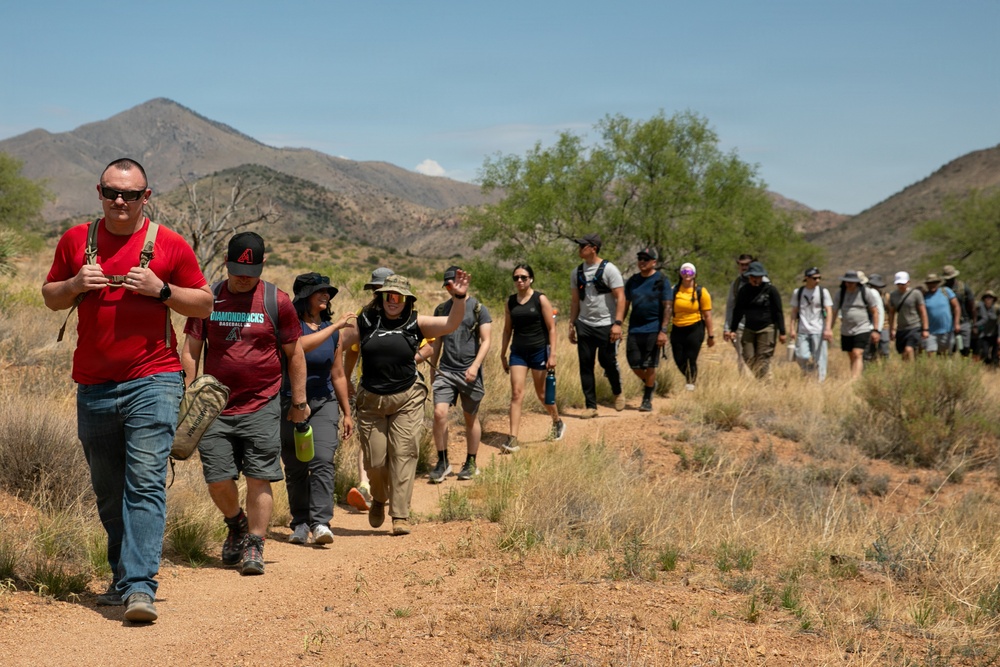
Photo By Sgt. Deliah Cottle | Arizona Army National Guard Soldiers hike through Apache Pass during a staff ride at...... read more read more
 Subscribe
FORT BOWIE NATIONAL HISTORIC SITE, Ariz. — Arizona Army National Guard enlisted staff stepped beyond their normal workspaces July 15-16, 2026, using an Apache Pass staff ride and Southwest survival course to strengthen leadership, communication, critical thinking and field skills.
The staff ride placed Soldiers in small groups and assigned them historical leaders, events and locations to research before the event. During a 3.2-mile route through Fort Bowie National Historic Site, each group delivered a 10- to 15-minute presentation at a designated point along the trail.
The format required Soldiers to prepare independently, communicate clearly and lead discussions among their peers. Rather than only receiving information from an instructor, participants became responsible for teaching portions of the material and connecting them to present-day military service.
“It gives them opportunities to learn, to study and to prepare their presentations,” said Major Justin Hafner, assigned to Joint Force Headquarters-Arizona’s Office. “Especially as we are looking to build junior enlisted Soldiers into NCOs or potentially future officers, a lot of that work is in the preparation.”
The Battle of Apache Pass provided a practical case study in leadership, sustainment and adaptation. During the 1862 battle, Union Soldiers attempting to reach Apache Spring faced extreme heat, limited water and Chiricahua Apache warriors who used the high ground and their knowledge of the terrain. The Army eventually combined infantry maneuver with mountain howitzers to reach the spring.
The historical discussion gave Soldiers a foundation for examining problems that remain relevant to the Army, including protecting supply lines, understanding the operational environment, communicating across cultures and adapting when an original plan is no longer effective.
“This particular experience was really valuable, especially to some of the newer Guard members,” said Sgt. Valerie Stepp, assigned to Joint Force Headquarters-Arizona’s Office of the Staff Judge Advocate. “It bridged the gap between why we’re here, what we’re doing now and what happened in history. It’s important to learn what happened and apply those lessons to the present day.”
Walking the terrain helped turn those discussions into observable conditions. Soldiers surveyed the surrounding high ground, examined the remains of Fort Bowie and considered how water, distance, elevation and resupply affected movement through the region.
The survival course then shifted the staff from historical analysis to hands-on preparation. Soldiers reviewed cutting tools, covering, combustion, containers and cordage, along with calories and casualty care. Instruction included locating and purifying water, building shelter, starting fires, providing first aid and using resources available in the surrounding environment.
The course also addressed the range of conditions Soldiers may encounter in Arizona, from extreme desert heat and limited water to high-elevation forests and rapidly changing weather.
“If you are without any resupply, I can train you how to feed yourself and take care of your needs from what nature provides,” said Jon Helleson, a Southwest survival instructor. “It allows you to be more mobile and to read the terrain, because you understand the resources others will need.”
Across the two training events, each activity challenged participants in a different way while building the preparation, confidence and adaptability required to support Army operations.
Together, the staff ride and survival course reinforced that readiness is developed through continued learning, practical experience and opportunities for Soldiers to lead. The training prepared enlisted personnel to think beyond their individual duty positions, operate with limited support and contribute more effectively to the readiness and preservation of the force.
| Date Taken: | 07.17.2026 |
| Date Posted: | 08.19.2026 17:46 |
| Story ID: | 570268 |
| Location: | ARIZONA, US |
| Web Views: | 50 |
| Downloads: | 0 |

This work, Arizona National Guard Connects Battle of Apache Pass Lessons to Desert Survival During Staff Ride, by SGT Deliah Cottle, identified by DVIDS, must comply with the restrictions shown on https://www.dvidshub.net/about/copyright.


No keywords found.




