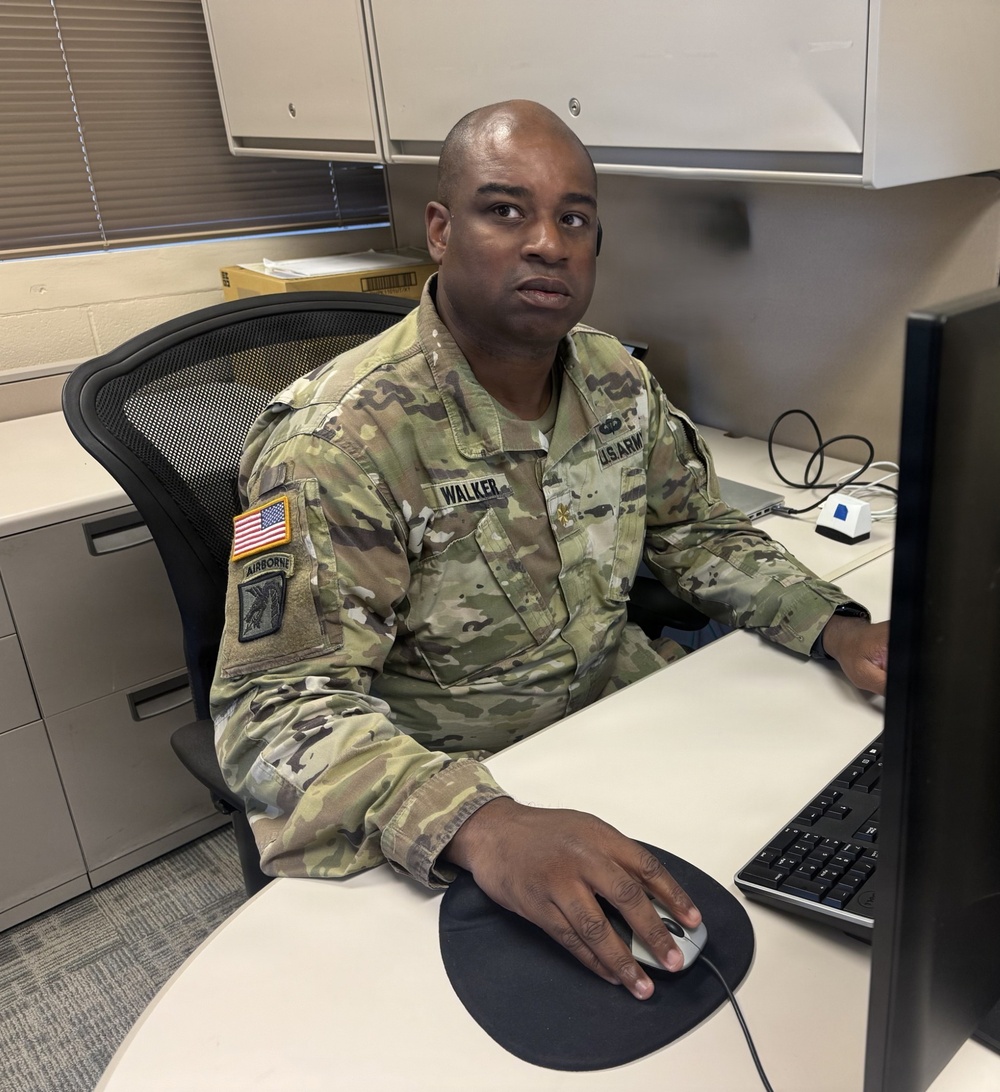
Photo By Master Sgt. Ershwyn Thibou | HONOLULU, Hawaii — U.S. Army Reserve Maj. CuRay Walker, 9th Mission Support Command, Deputy G6, reflects on his journey through Intermediate Level Education (ILE) during an interview at Fort Shafter Flats, July 10, 2026. Completed by mid-career officers, ILE prepares leaders to meet the operational demands of joint, interagency, intergovernmental, and multinational operations. see less
| View Image Page
ILE: More Than a Requirement — Forging Tomorrow’s Army Leaders
On the surface, the Command and General Staff College (CGSC) Intermediate Level Education (ILE) course may look like just another school for officers to complete on their career path. But for the men and women who walk through its doors, ILE is far more than a curriculum, it is a transformative experience. Officers from all Army components converge in one space, sharing their time, their struggles, and their hard-earned knowledge. This shared experience is not just a by product of the school; it is an integral part of the process itself.
To get a better understanding of the course's impact, one only needs to speak to the students walking across the graduation stage. One recent graduate, Maj. CuRay Walker of the 9th Mission Support Command (9th MSC), sat down to give an interview after completing the school to share his journey. His perspective sheds light on how he successfully navigated the process, overcame its challenges, and prepared himself for future leadership roles. He also highlighted an often-overlooked benefit of the course: the lasting bonds and lifelong connections forged along the way.
For Maj. Walker, a Signal officer with many years of experience working in the G6, sharing the experience with officers from different Army components was a vital part of the process. Coming into the course, he was told that Phase III would be the easiest of all the phases, but he was quick to point out that "nothing's easy in the military."
The most demanding hurdle proved to be Phase II Force Management. Despite having real-world experience in the field, the academic application presented a steep learning curve. The breakthrough came when he had to write a paper on the topic and synthesize all the concepts; it was then that the material began to gel and finally "click."
He identified another "aha moment" during the DSCA and stability operations block of instruction. Having worked in this area before, he found that the classroom environment made the concepts clearer, allowing him to contextualize operations he had previously seen in the real world. For him, this made the doctrine come alive in a more profound way.
While appreciative of the entire faculty, he had special plaudits for one instructor. Lt. Col. Kellen Axten he noted, made the history class come alive. Because of his methodology, he didn't just teach history; he bridged the gap between the past and the present. The way he drew a line from historical events to contemporary challenges was enlightening, making the subject's relevance stand out in an impactful manner.
For Maj. Walker, the curriculum was critical in preparing him for future leadership roles, but just as valuable were the lessons learned from his peers and the lifelong bonds they established. He noted that officers from various backgrounds, with different Military Occupational Specialties and experiences, all served to reinforce a key lesson: the importance of leveraging diverse mindsets to solve complex problems and better serve the Army. The classroom truly served as a melting pot for all three components, Active, National Guard, and Reserve.
On the last day of class, he was happy that it was over but also deeply thankful for the opportunity to share the experience with his peers. He wished them all success, hoping they would have opportunities to reconnect in the future, knowing that even if they didn't, the time they shared together will have a lasting impact.
Ultimately, Maj. Walker’s journey is a testament to the quality of education, mentorship, and collaboration fostered throughout the course. The 4960th Multi-Functional Training Brigade (MFTB), the premier training brigade of the 9th MSC stands ready to continue playing our role in preparing tomorrow's leaders and helping to create these transformative experiences for officers across the Total Army spectrum by ensuring our cadre is highly experienced, rigorously trained, and consistently held to the highest Army standards.