
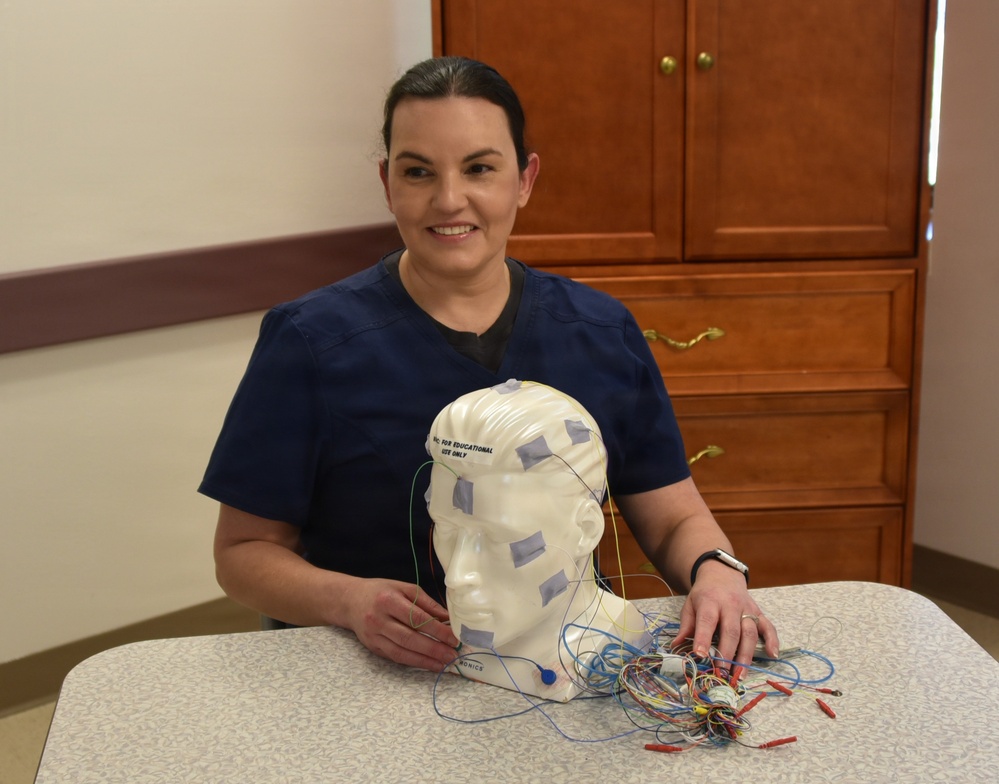
Photo By Keisha Frith | Womack Sleep Clinic is officially back in action. Cristina Cruz-Crespo, Sleep...... read more read more
FORT BRAGG, N.C. -- Womack Sleep Clinic is officially back in action. Having reopened its doors in March, the specialty clinic is dedicated exclusively to active-duty service members, focusing on one mission: keeping the warfighter healthy, alert and mission ready.
While access is strictly referral-based, securing a referral is highly accessible. Service members can obtain referrals from a primary care manager, occupational therapist or even a military dentist. Dentists frequently refer patients after noticing physical signs of sleep apnea, such as tooth wear or tongue placement.
While military culture often normalizes running on empty, the clinic’s dedicated staff is working to change the narrative. Proper sleep is not a luxury; it is a tactical necessity.
“While service members are trained to remain alert 24/7, that mindset can slowly destroy healthy sleep hygiene habits,” said Dr. Christina Cruz-Crespo, Sleep Disorders medical director. “Over time, the bedroom becomes associated with TV, phones and stress over the next-day duties rather than rest.”
One of the biggest hurdles the clinic faces is convincing Soldiers that sleep directly impacts physical performance. Under the common Soldier's perspective, many believe they are just naturally tired and can easily push through fatigue during physical training. The medical reality, however, is that muscle recovery happens primarily during deep sleep. Sleeping better directly translates to performing better on runs and daily duties.
Similarly, many Soldiers assume that if they are already sleeping poorly, getting more sleep won't help them run faster. In reality, proper sleep actively heals the body, leading to better run times, improved physical training scores and heightened daily alertness.
Another major red flag is the reliance on midday caffeine. Many Soldiers believe they need an energy drink after lunch to keep going, but relying on caffeine to survive afternoon crashes is often a primary indicator of underlying sleep disorders like sleep apnea or insomnia. The Womack team understands the unique demands placed on service members. The clinic carefully considers a Soldier's specific occupational hazards and deployment status before prescribing sleep medications or therapies, ensuring their treatment plan aligns with their military duties. This includes diagnoses such as obstructive sleep apnea.
“Many soldiers fear that needing a continuous positive airway pressure machine will end their military careers,” Cruz-Crespo said. The clinic staff is eager to set the record straight on the career impacts of seeking treatment: Myth: If I’m prescribed a CPAP, I’ll lose my deployment status. Reality: Soldiers using a CPAP remain fully deployable, promotable and eligible for military schools and training. Myth: I can’t take a CPAP to the field where there’s no electricity. Reality: The military provides specialized oral appliances — mouth guards designed for field environments without power. Myth: My spouse says I snore, but they’re probably exaggerating. Reality: You cannot hear yourself snoring while asleep. Partner reports of snoring, tossing and turning are the primary indicators of sleep apnea. Myth: Once I start using the CPAP, I am going to feel better right away. Reality: It takes time. After prolonged periods of poor sleep and severe sleep apnea, the body requires an adjustment period to heal. The team encourages service members to work collaboratively with them and maintain realistic expectations. Patients often expect a CPAP to be an instant fix, but after years of poor sleep, the body requires time to recover. Cruz-Crespo and her team monitor data directly from patients’ devices and schedule follow-ups at the four-week mark to adjust mask fittings and air pressures. The clinic advises service members to acclimate slowly. Do not put the CPAP on when frustrated and trying to sleep. Instead, wear it during a calming activity, like reading or watching a favorite show around 7 p.m., to get used to the sensation.
Cruz-Crespo also encourages retraining the brain. The bed should be reserved strictly for sleep and intimacy, not emails or movies. Furthermore, continuity of care is vital. If soldiers undergo a permanent change of station to a new installation, they should immediately request a new sleep referral so they do not lose their treatment support system.
Operating Monday to Friday from 7:30 a.m. to 4:30 p.m., the clinic is a hub of activity. If you’re waking up exhausted, struggling with your run or keeping your partner awake with snoring, staff members say it’s time to stop pushing through the fatigue. Talk to your provider to secure a referral to the Womack Sleep Clinic today. For more information about the Womack Sleep Disorder Clinic and services visit https://womack.tricare.mil/Health-Services/Specialty-Care/Sleep-Disorders-Clinic
| Date Taken: | 07.13.2026 |
| Date Posted: | 07.13.2026 16:58 |
| Story ID: | 569811 |
| Location: | FORT BRAGG, NORTH CAROLINA, US |
| Web Views: | 33 |
| Downloads: | 0 |

This work, Womack Sleep Clinic Powers Mission Readiness, by Keisha Frith, identified by DVIDS, must comply with the restrictions shown on https://www.dvidshub.net/about/copyright.


No keywords found.





