
Photo By Master Sgt. Lisa Gonzales | Patriotic holiday. Celebrating 4th of July safely. American flag on background of...... read more read more
 Subscribe
The 4th of July weekend is a time for service members and their families to travel, host cookouts, and enjoy the summer. However, unpredictable weather, increased road traffic, and fire hazards require strict situational awareness. Maintaining off-duty safety is a critical component of overall mission readiness.
"Safety doesn't take a holiday,” said Lt. Col. Sean Cross, 403rd Wing chief of safety. “Whether you are navigating unpredictable weather on the highway or managing a backyard cookout; taking a few minutes to plan ahead and assess your surroundings is the best way to protect yourself, your family, and our force."
Safety begins before you even leave home. Ensuring your vehicle is ready for the road is the first step in any safe holiday travel plan. Check the weather conditions during summer travel, because a change can occur at any time with a clear afternoon can quickly turn into a severe thunderstorm, and evening commutes often push into low-visibility conditions.
“Before you depart, review your route, check the weather, communicate your approximate arrival time, and ensure everyone is buckled up with children under 12 in the back seat,” said Cross.
TheAir Force Safety Centeralso emphasizes that before hitting the road, conduct a thorough vehicle inspection. Top off your oil, anti-freeze, and washer fluid, ensuring your windshield wipers are fully functional for sudden summer downpours. Check your tire pressure and tread depth, as properly inflated tires resist damage from potholes and road hazards. Finally, verify your headlights, taillights, brake lights, and turn signals are operational, and test your battery strength to avoid being stranded.
"Once you've made it safely to your destination, it’s easy to let your guard down, but firing up the grill requires that same situational awareness,"said Tech. Sgt. Alexander Perry, 403rd Wing occupational safety technician."Make sure your grill is out in the open and at least ten feet away from your house or deck. Most importantly, protect your family by giving kids and pets a solid three-foot 'no-go zone' around the heat."
If you are building a bonfire, choose a location clear of dry vegetation, trees, and power lines. Dig a 10-to-12-inch hole or use a designated rock-lined pit, clearing a ten-foot area around the flames. Burn only dry, seasoned wood, and never use accelerants like lighter fluid to start or boost the fire. Most importantly, never leave a fire unattended; always keep a hose, water bucket, or fire extinguisher nearby, and douse the ashes with water until completely cool before leaving.
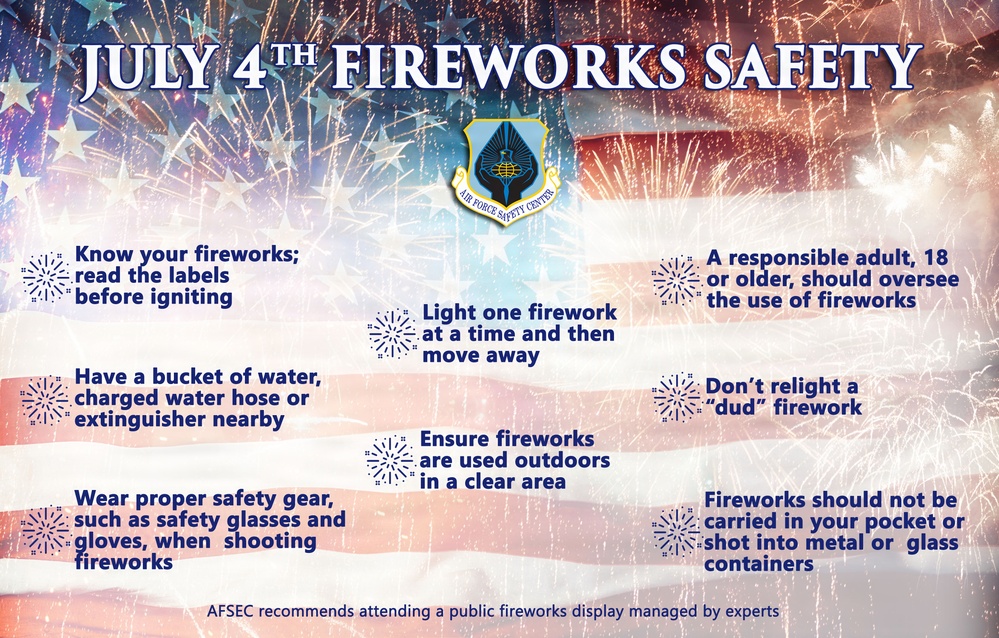
“Managing a grill or a bonfire is one thing, but handling fireworks safely requires a completely different level of caution," said Perry. “The safest approach is leaving high fireworks to the professionals by attending an organized public display. But, if you choose to use fireworks, verify they are legal in your local jurisdiction, and note that fireworks are not permitted on base.”
According to theAir Force Safety Center, when lighting authorized fireworks, personnel should start by establishing a wet zone with a charged garden hose or bucket of water. If any fireworks fail to ignite, do not stand over it or attempt to relight it. Instead, wait twenty minutes, soak the dud in water, and safely discard it.
"Ultimately, protecting the force this Independence Day comes down to preparation,"said Cross."Whether it is travel, fire and grill, or fireworks safety, by preparing in advance you are doing your part. Taking precautions throughout every phase of your holiday, ensures a safe weekend and a safe return to duty.”
| Date Taken: | 06.30.2026 |
| Date Posted: | 06.30.2026 17:12 |
| Story ID: | 569069 |
| Location: | KEESLER AIR FORCE BASE, MISSISSIPPI, US |
| Web Views: | 180 |
| Downloads: | 0 |

This work, Mission Ready for the 4th of July: Your Summer Safety Guide, by Jessica Kendziorek, identified by DVIDS, must comply with the restrictions shown on https://www.dvidshub.net/about/copyright.

No keywords found.




