
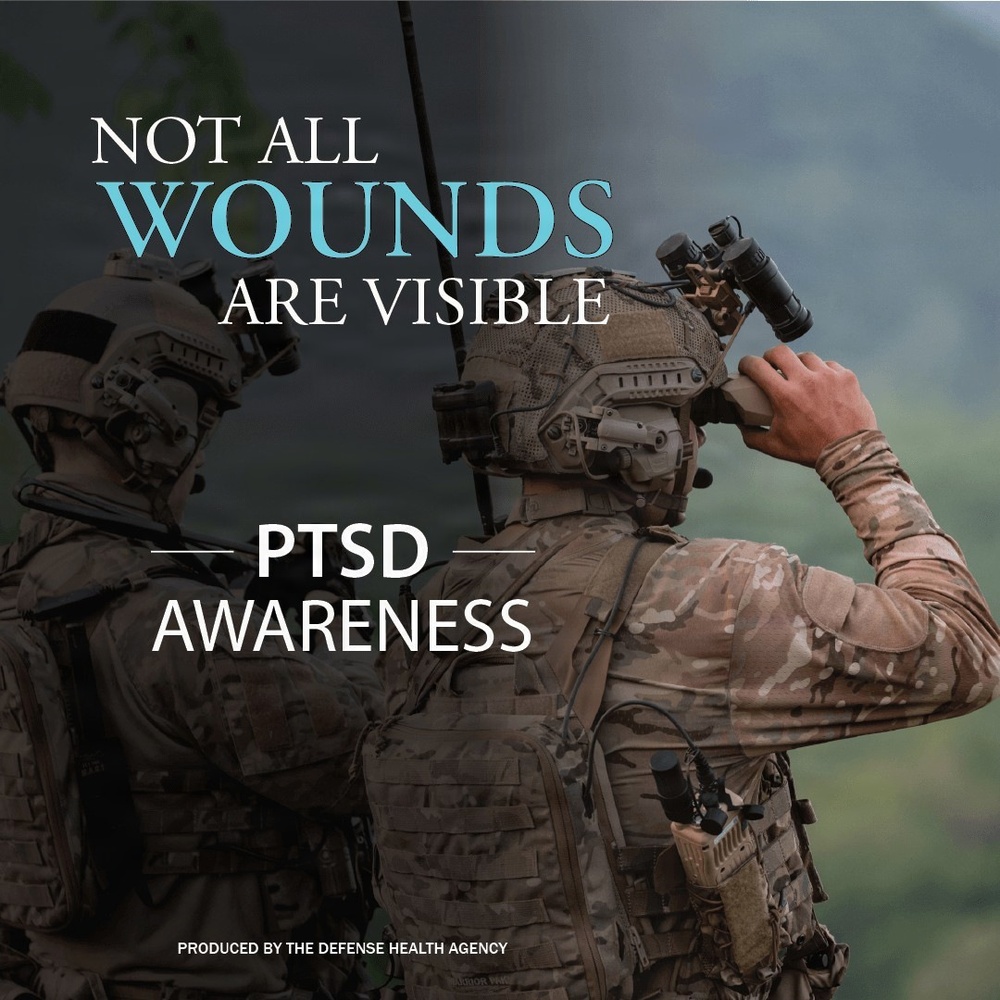
Photo By Rodney Jackson | June is National PTSD Awareness Month. It is a time to bring this condition out of the...... read more read more
Life is unpredictable, and many of us will face deeply distressing events at some point. Whether it is a severe car accident, a natural disaster, a sudden loss or a violent encounter, it is completely normal to feel shaken, overwhelmed or anxious in the aftermath.
For most people, time and support help these intense feelings fade; however, when those feelings grow stronger and interfere with daily life, it may be a condition called Post-Traumatic Stress Disorder.
June is National PTSD Awareness Month. It is a time to bring this condition out of the shadows, recognize its signs, and learn how to better support loved ones, neighbors, and veterans who are navigating the path to recovery. “For members of the military, the risk of developing PTSD is naturally higher due to the intense, life-threatening nature of combat zones and deployments,” said Col. Amit Gupta, CRDAMC chief of mental health. “Soldiers are trained to remain on high alert and to survive dangerous environments. When they return home, turning off that ‘survival mode’ can be incredibly difficult.”
While the military connection is profound, this condition is not limited to those in uniform. Anyone, regardless of age, background or profession can develop PTSD.
According to the National Institute of Mental Health, PTSD is broadly defined as: "A disorder that develops in some people who have experienced a shocking, scary or dangerous event."
This means PTSD can develop after a wide range of experiences, including: Surviving a severe physical assault or abuse Being involved in a major accident, like a car or train crash Living through natural disasters like hurricanes, tornadoes, or fires Experiencing a sudden, traumatic medical emergency
According to Gupta, the most empowering takeaway for PTSD Awareness Month is that PTSD is highly treatable.
“Mental health professionals have developed multiple effective therapies and techniques that help the brain process traumatic memories,” He said. “It is important to process these memories properly, so they no longer trigger an intense physical and emotional response every time they are recalled. In addition, processing the memories also teaches your brain that these memories are in the past, so it doesn’t react as if you are still in danger.”
If you know a veteran, a friend, or a family member who is managing PTSD, and wonder how to help, Gupta suggests the following:
Educate Yourself: Learning about the condition helps remove the stigma that comes from not understanding and shows that you care. Be Patient: Recovery takes time. Do not pressure them to talk about their trauma before they are ready. Listen Without Judgment: If they do choose to open up, simply listen. You do not need to offer medical advice or try to "fix" the problem. Saying, "I am so sorry you went through that, and I am here for you," is often exactly what they need to hear. Encourage Professional Support: Gently remind them that seeking therapy is a courageous and normal step.
PTSD Awareness Month is a reminder for us to work together to break the stigma surrounding talking about PTSD. Whether it is a Soldier returning from deployment or a neighbor recovering from a tragic accident, we can all play a role in ensuring no one has to face the aftermath of trauma alone.
| Date Taken: | 06.24.2026 |
| Date Posted: | 06.26.2026 15:32 |
| Story ID: | 568710 |
| Location: | US |
| Web Views: | 113 |
| Downloads: | 0 |

This work, Shedding Light on the Invisible Wounds of Trauma during PTSD Awareness Month, by Rodney Jackson, identified by DVIDS, must comply with the restrictions shown on https://www.dvidshub.net/about/copyright.

No keywords found.





