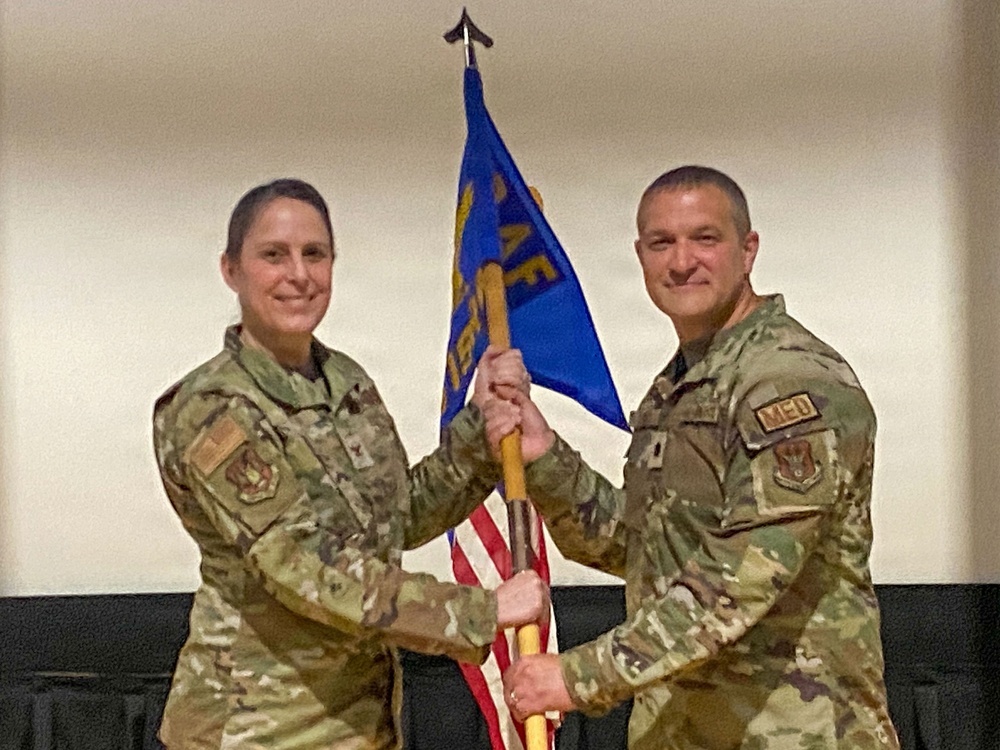
Photo By Capt. Wilson Wise | U.S. Air Force Col. Jennifer Mulder, commander of the 655th Intelligence, Surveillance and Reconnaissance Wing (ISRW), left, and Lt. Col. Michael P. Rebar, incoming commander of the 655th Aerospace Medicine Squadron (AMDS), conduct a guidon exchange during the squadron’s activation ceremony at Joint Base Langley-Eustis, Virginia, May 2, 2026. The ceremony formally established the unit and marked Rebar’s assumption of command. (U.S. Air Force photo by Maj. Wilson Wise) see less
| View Image Page
JOINT BASE LANGLEY-EUSTIS, VIRGINIA, UNITED STATES
655th ISRW activates Aerospace Medicine Squadron at Joint Base Langley-Eustis
JOINT BASE LANGLEY-EUSTIS, Va. — The 655th Intelligence, Surveillance and Reconnaissance Wing (ISRW) marked the activation of its newest squadron, the 655th Aerospace Medicine Squadron (AMDS), in a ceremony on May 2, 2026, during their May unit training assembly at Joint Base Langley-Eustis.
The activation follows years of planning and coordination and reflects the complexity of realigning medical units to better support mission needs.
“Changes don’t happen fast when it comes to organization, but I think this makes a lot of sense,” said Col. Jennifer Mulder, commander of the 655th ISRW.
“It’s just not flipping a switch,” Mulder said. “It requires a lot of behind-the-scenes work.”
Mulder emphasized the increasing demands on the wing and the importance of medical support to sustain operations.
“We have seen an intense increase in our operational tempo, especially in the last few months,” she said. “The mission of a medical squadron is essential to keeping our Airmen in the fight.”
She added that the activation reflects a broader shift in how the wing operates.
“We are very much not a strategic reserve, but an operational force,” Mulder said.
The 655th AMDS is expected to provide critical medical readiness, support for deployed Airmen and health services that enable mission execution across the wing’s geographically separated units. Lt. Col. Michael Rebar, who assumed command of the squadron, described the activation as long overdue.
“My speech could probably be summed up in one word — finally,” Rebar said. “This has been ongoing for a number of years. I can honestly say I’m excited that we’re finally here.”
Rebar acknowledged the challenges involved in standing up the squadron.
“When you’re going through a transition like this with no playbook, no real guidance, it’s challenging,” he said. “I look forward to building this very positive and productive relationship moving forward.”
Officials said the squadron will play a key role in ensuring medical readiness and supporting Airmen and their families as operational demands continue to grow.