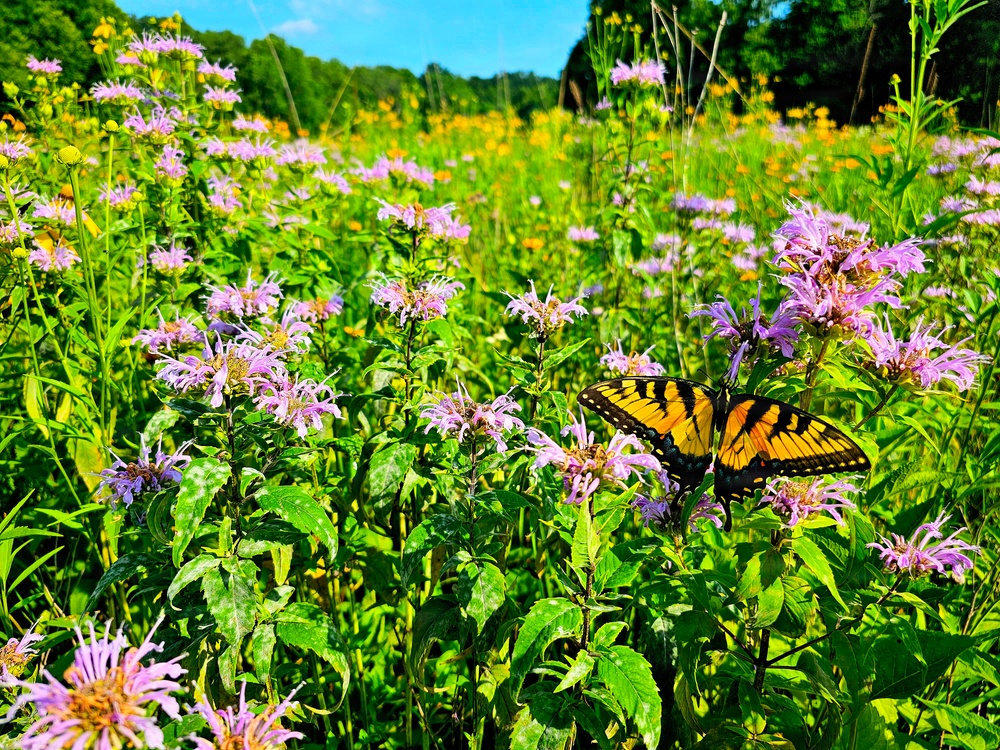
Pollinators play important role in nature and society
Photo By Michael Maddox |
Many of the projects and lakes across the Louisville District footprint have dedicated......read moreread more
Photo By Michael Maddox | Many of the projects and lakes across the Louisville District footprint have dedicated pollinator habitats that they manage. In addition to planting pollinator supportive flora, several projects also maintain active honeybee hives. see less
| View Image Page
Pollinators play important role in nature and society
Louisville, Ky. – Pollinators like butterflies are not only beautiful to look at but they play an important role in the ecosystem. As the flowers start to bloom every spring, thousands of insects, and some mammals, also appear to not only find nectar, but also help with spreading pollen to other flowers.
“Pollinators are species that play a critical role in the reproduction of flowering plants by transferring pollen between blooms as they forage for nectar, pollen, or other food resources,” said Chris DeSmit, natural resources management specialist and the Environmental Stewardship program manager for the Louisville District. “Through this process, pollinators support the production of seeds, fruits, and new plant growth. Common pollinator species include bees, butterflies, moths, beetles, hummingbirds, and bats.”
DeSmit said many of the projects and lakes across the Louisville District footprint have dedicated pollinator habitats that they manage. In addition to planting pollinator supportive flora, several projects also maintain active honeybee hives.
USACE manages pollinators and their habitats under its broader environmental stewardship authorities, including the Fish and Wildlife Coordination Act, NEPA, and ER/EP 1130-2-540. Additionally, a presidential memorandum established a national strategy to improve pollinator health and directed federal agencies to enhance pollinator habitat in 2014.
In response, USACE developed its own Pollinator Protection Plan, further prioritizing the protection and management of pollinator habitat across project lands.
“These habitats help sustain native plant communities, improve biodiversity, support fish and wildlife populations, stabilize soils, reduce erosion, and enhance water quality—ultimately supporting the Corps’ responsibility to manage public lands and waters for long-term ecological health,” DeSmit said.
He added that pollinators are extremely important because they are a foundational part of the food web and play a critical role in maintaining healthy, functioning ecosystems.
“Many native plants depend on pollination to reproduce, so pollinators directly support the health and sustainability of forests, grasslands, wetlands, and other natural communities,” DeSmit said. “Pollinator habitat is equally as important and can take on many forms, including native grasslands, wildflower plantings, forest edges, early successional areas, and riparian corridors.”
“All of these habitats provide benefits far beyond just bees and butterflies. These areas offer important food sources, nesting cover, brood habitat, and shelter for a wide range of wildlife species.”
In addition to their ecological importance, pollinators are also critically important to agriculture.
“Many crops rely on pollination to produce fruits, vegetables, nuts, and seeds. Healthy pollinator populations help support crop yields and agricultural productivity, making them important not only from a conservation standpoint, but also from an economic perspective,” DeSmit said.
The role of pollinators in the ecosystem is recognized each year during Pollinator Week, this year June 22-28. For those who would like to support pollinators in their communities, the U.S. Fish and Wildlife Service recommends planting a pollinator garden consisting of native plants to the area, avoiding using pesticides or poisons whenever possible and don’t disturb pollinator nests.
You can also visit pollinator fields at these locations: Caesar Creek Lake, William H. Harsha Lake, Patoka Lake, Cecil M. Harden Lake, Green River Lake, Barren River Lake, and both Newburgh and Cannelton Locks and Dam.