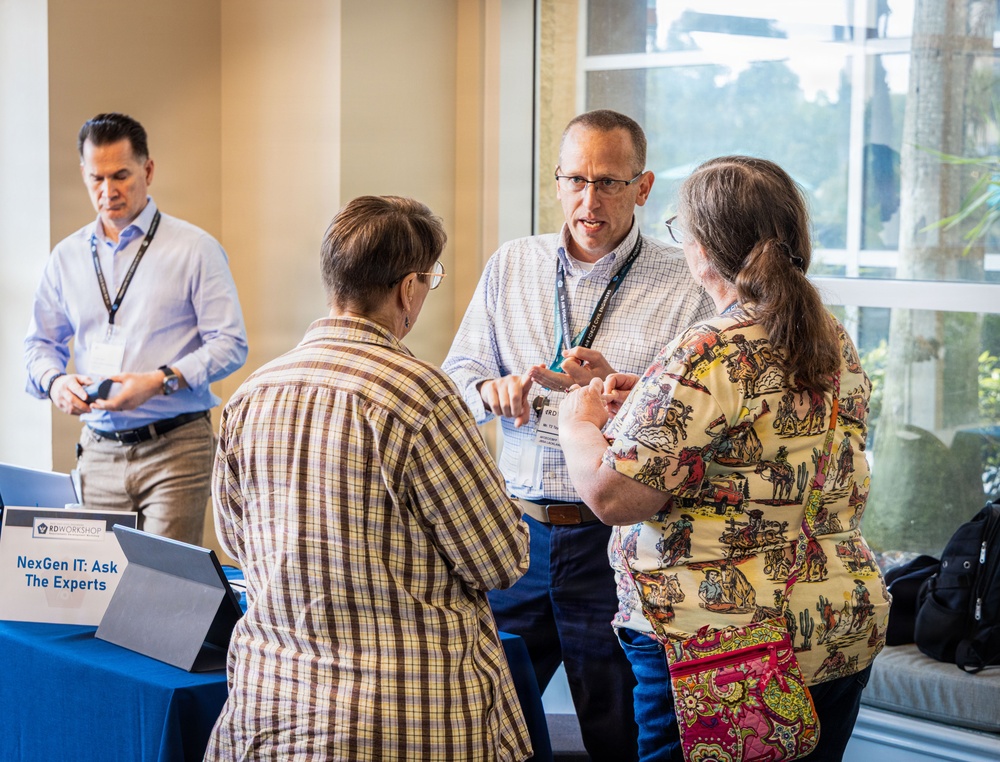
As the Air Force Civil Engineer enterprise accelerates infrastructure delivery, the conversation is shifting from what needs to be built to how fast it can be delivered. During this year’s Requirements Development Workshop held April 14-16 in Orlando, Florida, Amy Vandeveer, Chief of Program Development and Investment Division of Air Force Civil Engineer Center, led a breakout session titled “The Fast and The Flexible,” highlighting how new authorities and delivery methods are enabling Civil Engineers to move faster, think differently, and better support mission timelines.
At the center of the session was Other Transaction Authority, a tool that is rapidly gaining attention across the enterprise. With the Fiscal Year 2026 National Defense Authorization Act granting expanded authorities for OTA use in construction and infrastructure delivery, combined with recent senior leader guidance directing increased use of these authorities for future projects, the session provided timely insight into how Civil Engineers can leverage OTA to deliver infrastructure at the speed of need.
“My goal today is to give you some of the language and some of the tools that you need so that we can go fast, we can try new things,” Vandeveer said.
Vandeveer stressed that the push toward speed is not optional. It is driven by both the operational environment and expanding authorities that enable faster execution. Traditional acquisition and construction timelines, while structured, often do not align with mission urgency.
“We need to go fast, be efficient, and think differently,” Vandeveer added.
OTA represents a fundamental shift in how projects are scoped and delivered. Instead of requiring detailed designs upfront, Civil Engineers define the problem and desired end state, allowing industry partners to propose innovative and efficient solutions. This shifts the focus from prescribing solutions to clearly defining mission outcomes, enabling greater flexibility and innovation during execution.
“It is a two-to-three page statement that says this is the problem I have and this is the end game of where I need to be,” she said. “It does not require a full solution.”
This approach reduces the burden on planners and programmers while expanding flexibility in how requirements are met. It also fosters collaboration with industry earlier in the process, opening the door to new ideas and approaches that may not emerge through traditional methods.
For recurring facility types and scalable solutions, OTA also enables follow-on work without repeated competition, significantly reducing delivery timelines. In addition to OTA, Vandeveer highlighted Progressive Design-Build as another method enabling faster delivery. By combining design and construction under a single contract, the model reduces handoffs, improves coordination, and compresses timelines.
“You’ve probably saved yourself anywhere from a year to a year and a half,” she said when explaining the benefits of the method.
Additionally, Vandeveer addressed the growing role of industrialized construction methods, including modular and prefabricated facilities. These approaches shift construction activity offsite, reducing delays caused by weather, labor shortages, and installation constraints.
“Because the lion’s share of the work is being done offsite, it’s not going to be subject to rain delays,” Vandeveer said.
These methods not only accelerate delivery but also provide greater flexibility to adapt to changing mission requirements. In some cases, long-term permanence is no longer the primary objective.
“Sometimes we don’t need an asset to be in service for 50 or 60 years,” she said.
Sherrie Nymeyer, AFIMSC Chief of Program Development, reflected on how OTA will also allow the United States Space Force to move faster, ensuring the United States continues to have space superiority. The mechanism will now reward innovation instead of stifling it because it does not align with the norm.
“What the Fast and the Flexible session offered was permission for action officers to be confident enough to move out on utilizing new authorities without fear of reprisal for trying something new,” Nymeyer said.
“The demands on manpower using existing methods, as well as the often-lengthy timelines associated with cradle-to-grave construction, requires that we find a more logical and efficient way to support our missions,” she said.
A key takeaway from the session was the importance of mindset. Civil Engineers must begin with the mission need and remain flexible in how that need is met, rather than defaulting to traditional approaches or predefined solutions.
“We must think about what the customer needs before we think about how we deliver it,” Vandeveer explained.
This approach supports better requirement definition while preserving the ability to select the most effective and timely delivery method. It also aligns with broader enterprise priorities to improve speed, efficiency, and mission impact.
Vandeveer emphasized that successful implementation of these methods will require collaboration across multiple functional areas, including contracting, legal, finance, and engineering. It will also require a willingness to adapt and learn as the enterprise gains experience.
“We are all learning together as we take on this journey,” she said.
As the Air Force continues to prioritize faster infrastructure delivery, the tools and approaches are going to change. By leveraging OTA, embracing modern construction methods, and maintaining disciplined requirements, Civil Engineers can better align infrastructure timelines with mission demands.
Speed, flexibility, and innovation are no longer optional. They are essential to delivering infrastructure that supports the mission when and where it is needed most.
| Date Taken: |
06.08.2026 |
| Date Posted: |
06.08.2026 09:13 |
| Story ID: |
567108 |
| Location: |
US |
| Web Views: |
384 |
| Downloads: |
0 |
PUBLIC DOMAIN

This work, RDW 2026: The Fast and Flexible Approach to Infrastructure Delivery, by Kurien Thomas, identified by DVIDS, must comply with the restrictions shown on https://www.dvidshub.net/about/copyright.

 Subscribe






