
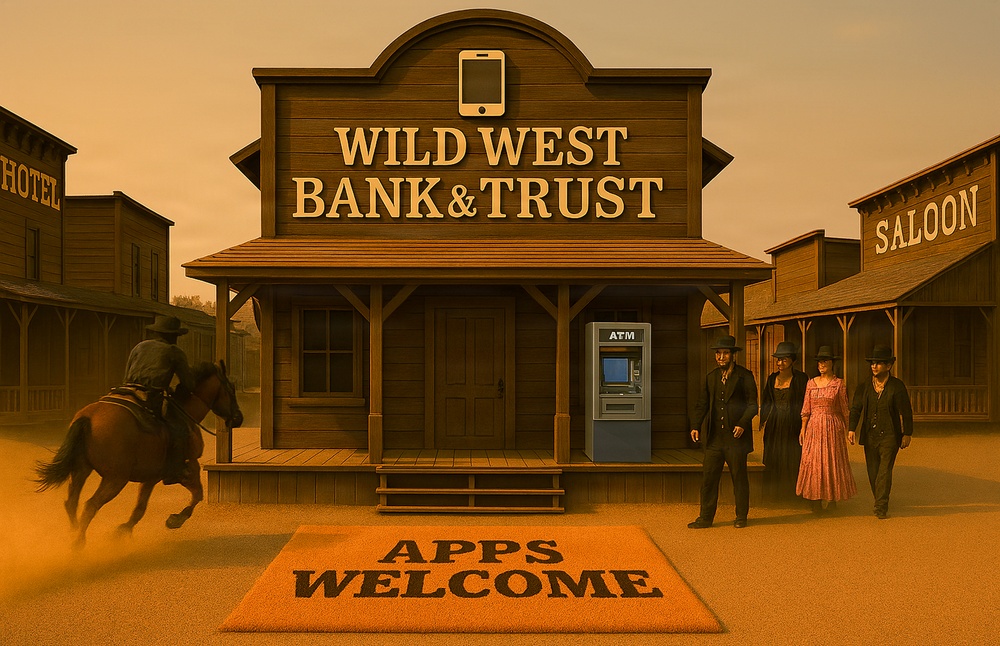
Courtesy Photo | The author warns that it is a Wild West of banking and economics today with the...... read more read more
FORT KNOX, Ky. -- The way we interact with our money today is almost unrecognizable compared to 10-15 years ago. As you have likely noticed, we have shifted from a physical, paper-based system a decade ago to a digital algorithmic one now.
There was a time when you visited the bank in person to conduct transactions, anxiously waited for your monthly statement to eventually come in the mail so you could balance the checkbook, and planned for each bank transfer to take three days to process.
Nowadays, everything is virtually instant. Paychecks are automatically deposited, a simple "tap" of the credit or debit card completes most transactions – sometimes without needing to type in a pin code, credit monitoring can instantly freeze our profile to prevent theft, and online banks offer highly competitive interest rates to brick-and-mortar institutions.
I hope you are paying attention to all the financial changes around you. Along with this convenience and systematic speed, we have also been introduced to new financial lingo, the reality of handling "invisible" money, and a shift in risks – from local physical thefts to global digital threats.
Security is a term that is being used more frequently than ever.
Banks now require two-factor authentication (2FA) because scammers have outsmarted traditional passwords. Biometrics like facial or fingerprint recognition are becoming standard. Fraud detection algorithms monitor our internet habits, browsing history and social media usage to track spending patterns and cater them to us while theoretically flagging unusual activity.
Your phone and email are now the keys to your financial life. Your entire financial footprint is tied to your email, smartphone, apps and cloud accounts. If these are compromised, everything is at risk. As in EVERYTHING.
Investing has also been completely transformed.
You needed a broker 15 years ago. Trades cost money, and investing often felt intimidating. Today, platforms like Robinhood, Fidelity, and Schwab offer free trades, you can buy fractional shares for $5 to $15, and Crypto has emerged as a completely new asset class and, in some cases, a do-it-yourself business. While it is much easier to get started, it also creates an environment for uninformed decision-making. Investors now must do their own homework to ensure they are making sound financial choices.
And the scams? We also must navigate a new landscape of recurring expenses: streaming services, cloud storage, software subscriptions and "box" memberships, recurring monthly or quarterly deliveries for beauty, medical supplies, etc.: all designed to build loyalty through convenience. While indeed convenient, these small unmonitored charges can quietly drain your budget if they are not checked regularly.
But wait! There’s more — Apps collect your location, spending habits, contacts and other data, making you a prime target for privacy breaches or even identity theft. Scammers now successfully impersonate your bank, mortgage lender, Medicare, the police, and – most disturbingly – your family members. Clicking the wrong link or replying to a fake text can immediately lead you to a phishing site.
Oh, and then there are romance scams, too, where criminals build your trust only to siphon your money, gift cards or crypto. Crypto itself is full of scammers exploiting victims with promises of "guaranteed returns" or "insider opportunities.”
These defrauders target our emails, our SIM cards, and just about any social media platform we frequent. They can infect our computer with malware or go old-school by stealing physical checks from our mailbox to wash and rewrite them for higher amounts.
Oh, my goodness – I know I sound like a Debbie Downer, but now more than ever we must pay even closer attention to our money. Today, it moves lightning fast and is "more integrated into our digital lives," as one author recently suggested. With that, we must be cognizant of the risks that accompany convenience.
To build a safer financial platform, consider these smart moves to protect your assets.
· Protect your accounts by securing your phone, computer and digital wallet. Utilize strong passwords and two-factor authentication.
· Slow down – think twice before acting on urgent messages. Verify the facts before clicking.
· Verify authenticity - treat all unexpected messages, calls or links with suspicion.
· Audit your finances – review your bank and credit card accounts regularly. Check unused subscriptions, apps or auto-payments.
· Educate your team – communicate with your children, talk to your spouse and review your bank’s security procedures.
Wait a minute; we aren’t done yet!
Research this year indicates new scams are on the horizon and are now being generated by using artificial intelligence. It is no longer just about suspicious emails; it involves high-tech social engineering.
· The “grandchild” scam: Scammers use a 3-second audio clip of a loved one’s voice (lifted from social media) to call you. The AI voice claims they are in trouble and begs you to wire them money or do a crypto transfer. HANG UP! Then call the actual family member directly to verify that it was a scam.
· QR code tampering, called quishing: This is a blend of QR codes with phishing. Fake stickers are placed over legitimate QR codes, such as on parking meters, restaurant menus or public kiosks, that redirect you to malicious sites hunting for your passwords or downloading malware into your device. Inspect QR codes closely before scanning them. If it looks like a sticker was placed over the original code, DO NOT SCAN IT!
Accidental Payment Refunds: A stranger sends you $500 on Venmo or Zelle by mistake and asks you to send it back. The original $500 was sent from a stolen credit card. When the bank reverses the stolen charge, you are left with $500 less. Never send the money back. Tell the person you will contact the app’s support to reverse the transaction.
Fake fraud department: This has become the most popular scam. You get a call or text from your bank’s fraud department. They tell you your account is compromised and you must move your money into a “safe account.” Hang up immediately! Then call your bank directly using the number on the back of your card; never use the number they give you. And never EVER give out your account or debit card numbers.
If you don’t do anything else regarding your money, remember that you are now an participant in the Wild West of digital economics and financing.
Now let’s take a few minutes to kick off our reboots, put on our ten-gallon skeptic hats, and reflect on what Ronald Reagan should have said: “Never trust, and always verify.” Use caution, reject the proposal first, then verify if the text, link or identity is credible.Remember: If it sounds too good to be true, it is – until it’s not.
For more advice, call502-624-5989to make an appointment with an Army Community Service financial counselor in-person or request a virtual appointment.
| Date Taken: | 06.01.2026 |
| Date Posted: | 06.01.2026 10:50 |
| Story ID: | 566539 |
| Location: | FORT KNOX, KENTUCKY, US |
| Web Views: | 159 |
| Downloads: | 0 |

This work, Path to Pro$perity: The Wild West of digital finance and economics can be draining, must comply with the restrictions shown on https://www.dvidshub.net/about/copyright.


No keywords found.





