Showing Up: Inside BJACH’s Response to Trauma and Loss
Photo By Jean Graves |
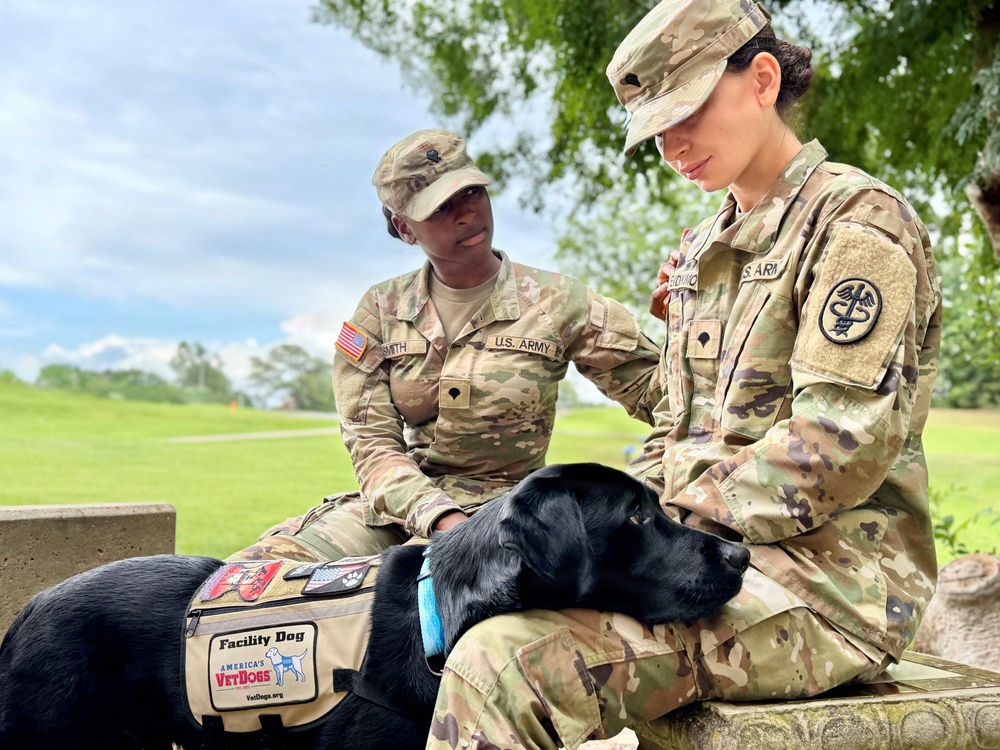
Spc. Dejzanna Smith, left, a mental health specialist assigned to Bayne-Jones Army......read moreread more
Photo By Jean Graves | Spc. Dejzanna Smith, left, a mental health specialist assigned to Bayne-Jones Army Community Hospital, and Master Sgt. Sunny, the hospital’s facility dog, comfort Spc. Mariya Yevdokimova, a mental health specialist assigned to BJACH, during a posed photo illustration for a story about Traumatic Event Management at the Joint Readiness Training Center and Fort Polk, Louisiana, May 19. TEM teams from BJACH provide support to Soldiers and units following traumatic events, helping preserve readiness, resilience and unit cohesion. see less
| View Image Page
Showing Up: Inside BJACH’s Response to Trauma and Loss
FORT POLK, La. — In the aftermath of a traumatic event, silence often fills the room before words do.
Soldiers sit shoulder-to-shoulder, processing grief, confusion and shock while leaders search for the right way to support their formations. Then the mental health team from Bayne-Jones Army Community Hospital arrives — providers, mental health specialists and, often, a black Labrador retriever named Sunny.
Before long, Sunny is moving quietly through the room, resting his head in a Soldier’s lap as conversations slowly begin.
For the BJACH Department of Mental Health, moments like these are part of Traumatic Event Management, or TEM — the Army’s structured response to help Soldiers and units recover after critical incidents ranging from suicides and serious accidents to operational or training-related tragedies.
Lt. Col. Ivan Gonzalez, installation director of psychological health and chief of the Department of Mental Health at BJACH, said TEM helps Soldiers, Families and units process and recover after critical incidents while preserving the strength of formations.
“It is not just about mental health care — it’s about preserving the strength of our formations,” Gonzalez said.
The Defense Health Agency identifies mental health as a critical component of military readiness, emphasizing that psychological health support helps service members remain mission capable while reducing the long-term impacts associated with distressing experiences.
At Fort Polk, TEM responses are tailored to each situation and involve close coordination between mental health providers, unit leadership, chaplains and support agencies across the installation.
“When an event occurs, our response is immediate and coordinated,” Gonzalez said. “We prioritize speed, visibility and accessibility so Soldiers know support is there from the start.”
According to the Army, TEM provides leadership consultation, psychological first aid, critical event debriefings and follow-up support to help units process tragedy and reduce long-term psychological impacts.
Sgt. 1st Class Elizabeth Waltz, noncommissioned officer in charge of mental health at BJACH, said supporting Soldiers during times of crisis begins with presence.
“Dropping everything and showing up,” Waltz said. “Being available, listening, normalizing responses and focusing on the whole human, not just their job.”
Waltz oversees the preparation of mental health specialists assigned to support TEM responses across the installation. Newly assigned Soldiers attend a weeklong TEM certification course before shadowing experienced responders during real-world engagements.
“As NCOs it is our responsibility to set the example,” Waltz said. “There has always been a stigma attached to seeking mental health. One of the ways we can combat the stigma is not just by saying that we support mental health, but by being present.”
That visibility extends beyond providers and technicians.
Master Sgt. Sunny, BJACH’s facility dog, has become one of the team’s most recognizable and effective assets during TEM engagements and mental health sessions.
“The entire atmosphere tends to relax when he arrives,” Waltz said. “He very quickly works the room and makes contact with everyone attending.”
Sunny regularly supports individual counseling sessions, group therapy and rapid crisis responses alongside providers and mental health specialists.
“It’s amazing, but not surprising, how quickly people open up when they’re petting Sunny,” Waltz said. “It’s almost like you can see the walls they’ve put up coming down right in front of your eyes.”
Gonzalez said Sunny’s presence has significantly enhanced participation during these critical engagements and has helped create opportunities for Soldiers to engage with mental health resources who may not otherwise seek support.
“Seeking support is not a sign of weakness — it’s a sign of professionalism and commitment to the team,” Gonzalez said. “Just like physical injuries require attention, so do psychological stressors.”
Army and DHA leaders continue emphasizing the importance of psychological readiness across the force, recognizing that unresolved stress and trauma can impact operational effectiveness, decision-making and long-term force health.
Col. Patrick W. Miller, commander of Bayne-Jones Army Community Hospital, said tragic losses affect more than individuals — they impact entire formations, Families and communities.
“As leaders, we have a responsibility to show up for our Soldiers, create space for them to process difficult experiences and ensure they know they are not facing those moments alone,” Miller said. “Programs like Traumatic Event Management are critical because taking care of people is fundamental to readiness.”
Gonzalez said TEM helps leaders care for Soldiers while preserving trust and cohesion inside formations during some of the most difficult moments a unit can face.
“Combat readiness is directly tied to psychological readiness,” Gonzalez said. “What we do in those moments can have a lasting impact on individuals, Families and entire formations.”
As Mental Health Awareness Month continues across the Department of Defense, BJACH leaders hope increased visibility of programs like TEM will continue reducing stigma and encouraging Soldiers and Families to seek support early.
For Waltz, the work remains deeply personal.
“It’s one of the hardest parts of my job, but I wouldn’t change it for anything,” she said. “Being part of a team that has the skill, knowledge and compassion to help others through their worst moments is one of the most rewarding parts of my career.”