
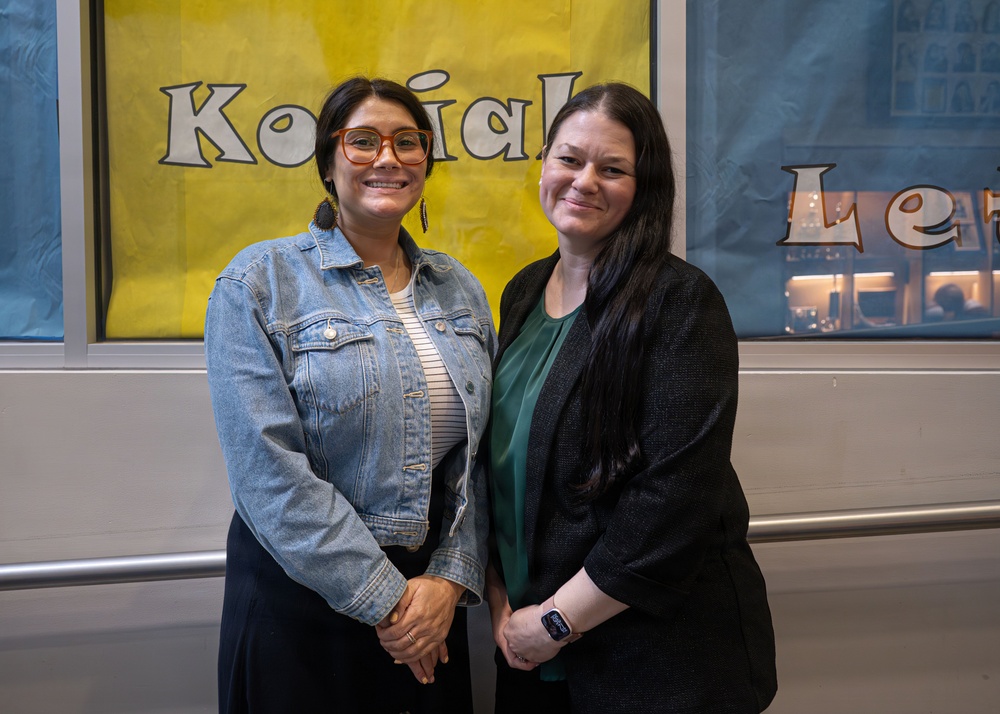
Courtesy Photo | Nichole Miles (left) and Sarah Arneson, the Kodiak Area Native Association's vice...... read more read more
From May 9-20, more than 2,000 residents in Kodiak, Alaska received no-cost medical, dental, vision, nutrition and behavioral healthcare services during Kodiak Arctic Care 2026, a collaborative mission between the Kodiak Area Native Association and the Department of War Innovative Readiness Training program.
Established in 1992, the IRT program provides service members real-world, hands-on training that improves readiness in contingency environments while strengthening partnerships with civil leaders and addressing the needs of American communities.
Nichole Miles and Sarah Arneson, KANA’s vice president of public affairs and clinic operations officer, respectively, worked alongside military personnel, tribal health organizations, local agencies, volunteers and community partners to plan Kodiak Arctic Care 2026.
Nichole led community engagement, logistics and partnership coordination while Sarah oversaw clinic operations, village communication and service delivery coordination.
Over nine months of planning, Nichole and Sarah helped turn the Alaska Army National Guard Readiness Center into a fully operational clinic equipped with X-ray machines, dental chairs, sanitization stations and other medical equipment, where more than 240 joint service members provided care to Kodiak residents.
During the 11-day mission, patients could be seen trying on new glasses, getting their blood pressure taken, and receiving dental cleanings other essential healthcare services.
“A mission like this takes a tremendous amount of collaboration behind the scenes, especially in rural Alaska,” said Nichole.
Sarah emphasized the rural nature of Kodiak, highlighting the importance of IRTs for Kodiak’s village communities.
“While we always have an advanced practice provider in the villages, some providers only rotate through the villages on a biannual, quarterly or monthly basis,” she said. “IRTs give village residents access to services they would otherwise have to travel to Kodiak or Anchorage to receive.”
Planning Kodiak Arctic Care 2026 did not come without challenges. Nichole noted that weather, transportation, shipping timelines and limited infrastructure all affect operations in rural Alaska. Sarah added the federal government shutdown in October 2025 and a mid-mission leadership transition created additional obstacles.
“This mission had the most logistical challenges of any I have supported,” she said. “However, the leadership team has been fantastic. Even when things became very challenging, they had a positive attitude, problem-solved quickly and pivoted to the next step.”
Military personnel said the same adaptability and commitment from KANA helped keep the mission moving forward.
“Working with KANA was wonderful,” said 1st Lt. Anneth George, Kodiak Arctic Care 2026 officer in-charge. “Their desire to give back to Kodiak was truly inspiring. When we faced challenges, we knew we had to do everything possible to overcome them and ensure the IRT mission made it to Kodiak.”
Despite the logistical hurdles, the mission’s impact on the Kodiak community was evident. From smiles at check-in and check-out to laughter and high-fives between providers and patients, community members expressed appreciation for the care they received.
“The service I received exceeded my expectations,” said Robert Smith, a Kodiak resident who visited the optometry clinic during the mission. “My eye exam was one of the best I’ve ever had, and the level of professionalism was phenomenal.”
For Nichole, moments like that reflected the purpose behind months of preparation, as well as service member’s professionalism that she said set a strong example for future missions and partnerships moving forward.
“I’m incredibly proud of the partnership and collaboration that made the mission possible,” said Nichole as she recalled how service members and local partners stayed late to support patients, adapted to changing circumstances and remained focused on making people feel cared for and welcomed.
Sarah chimed in, sharing her appreciation for how the mission allowed her to give back to her community. She also shared that her favorite part of the mission was working at the check-in desk at the clinic, where she spoke directly with community members and heard their positive feedback about the IRT.
Nichole and Sarah hope to bring Kodiak Arctic Care back to Kodiak.
“KANA plans to apply for another IRT mission in 2028,” said Sarah. “IRTs bring tremendous benefits to our community and help address needs that continue to exist.”
As service members packed up equipment and prepared to leave Kodiak, the impact of the mission remained visible throughout the community. Residents left with new glasses, treated dental issues, preventive health guidance and, for many, access to healthcare services they may not otherwise have received.
“Arctic Care is a powerful example of what can happen when people come together in service of community,” said Nichole. “This mission brought together military and civilian teams, all working toward the same goal of caring for the people of Kodiak. In rural Alaska, partnerships like this matter, and we’re incredibly grateful to everyone who helped make this mission possible.”
| Date Taken: | 05.19.2026 |
| Date Posted: | 05.20.2026 09:38 |
| Story ID: | 565707 |
| Location: | KODIAK, ALASKA, US |
| Web Views: | 153 |
| Downloads: | 4 |

This work, Kodiak Area Native Association, IRT brings healthcare to thousands in Kodiak, by SSgt Shayna Hodge, identified by DVIDS, must comply with the restrictions shown on https://www.dvidshub.net/about/copyright.


No keywords found.





