
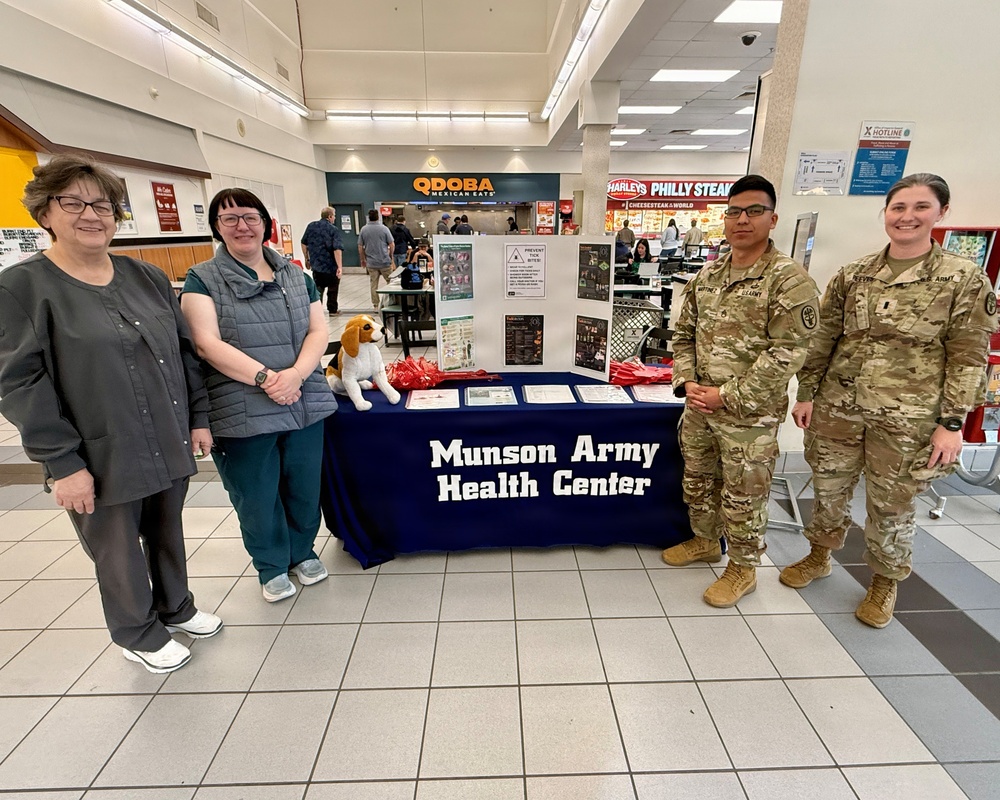
Photo By Maria Christina Yager | Munson Army Health Center Public Health officials discussed ticks, associated...... read more read more
FORT LEAVENWORTH, Kansas —Public Health Department officials from Munson Army Health Center discussed ticks, associated tick-borne illnesses and the MilTICK program during a community outreach event May 8 at the Fort Leavenworth Post Exchange.
During the event, public health personnel reminded the community to take precautions against ticks as outdoor activity increases across the region.
“Ticks may carry bacteria, viruses and parasites that cause serious illnesses, most notably Lyme disease, Rocky Mountain spotted fever and Powassan virus,” said Staff Sgt. Francisco Martinez, preventive health specialist and NCO of charge of Munson’s Public Health Department. “They can also cause Alpha-gal syndrome, a red meat allergy, and in rare cases, tick paralysis.”
Symptoms associated with tick-borne illnesses can include fever, fatigue, rash or muscle aches. Anyone with a tick bite should seek medical care if symptoms develop.
Ticks are commonly found in grassy, wooded and brush-filled areas, making routine outdoor activities such as yard work, walking pets or enjoying local trails potential points of exposure.
“Ticks are active throughout the warmer months, and it’s important for individuals and families to take preventive steps anytime they spend time outdoors,” said Michelle Grant, public health nurse at Munson.
Grant said that using EPA-approved insect repellents, wearing long sleeves and pants when possible, and conducting thorough tick checks after being outside can significantly reduce risk of exposure.
Munson's Public Health Department officials also emphasized that even if you protect yourself, pets can also play a role in bringing ticks into the home if not properly protected.
“Protecting your pets is an important part of protecting your family,” said Spc. Emily Shipula, animal care specialist at the Fort Leavenworth Veterinary Treatment Facility. “We recommend treating pets year-round with veterinarian-approved products designed to kill fleas and ticks. This helps keep your pets healthy and can also help prevent flea and tick infestations in your home.”
MilTICK (Military Tick Identification/Infection Confirmation Kit)
Officials also highlighted the MilTICK Program, which allows eligible beneficiaries to submit ticks for identification and disease testing following a bite.
To participate in the MilTICK program: • Carefully remove the tick using fine-tipped tweezers, grasping as close to the skin as possible and pulling straight out. • Place the tick in a sealed container or bag and bring to MAHC’s Public Health Department for shipment to the Defense Health Agency testing site, or visit the MilTICK website at https://ph.health.mil/resources/ento-miltick-forms.pdf to complete the required submission form and mail the tick as instructed for identification and testing. •Review results provided through the program and consult a healthcare provider if symptoms develop.
The program helps service members, families and retirees make informed decisions about follow-up care after a tick bite. MilTICK does not accept ticks pulled from pets.
Munson Public Health Department officials stress that awareness and early prevention remain the best defense against tick-borne illnesses and encourage community members to make tick checks part of their regular outdoor routine this spring and summer.
| Date Taken: | 05.14.2026 |
| Date Posted: | 05.14.2026 10:14 |
| Story ID: | 565257 |
| Location: | FORT LEAVENWORTH, KANSAS, US |
| Web Views: | 123 |
| Downloads: | 0 |

This work, Munson Army Health Center public health officials offer tips for tick prevention, by Maria Christina Yager, identified by DVIDS, must comply with the restrictions shown on https://www.dvidshub.net/about/copyright.

No keywords found.





