Bringing your pet to Okinawa: What to expect and who’s here to help
Photo By Natalie Stanley |
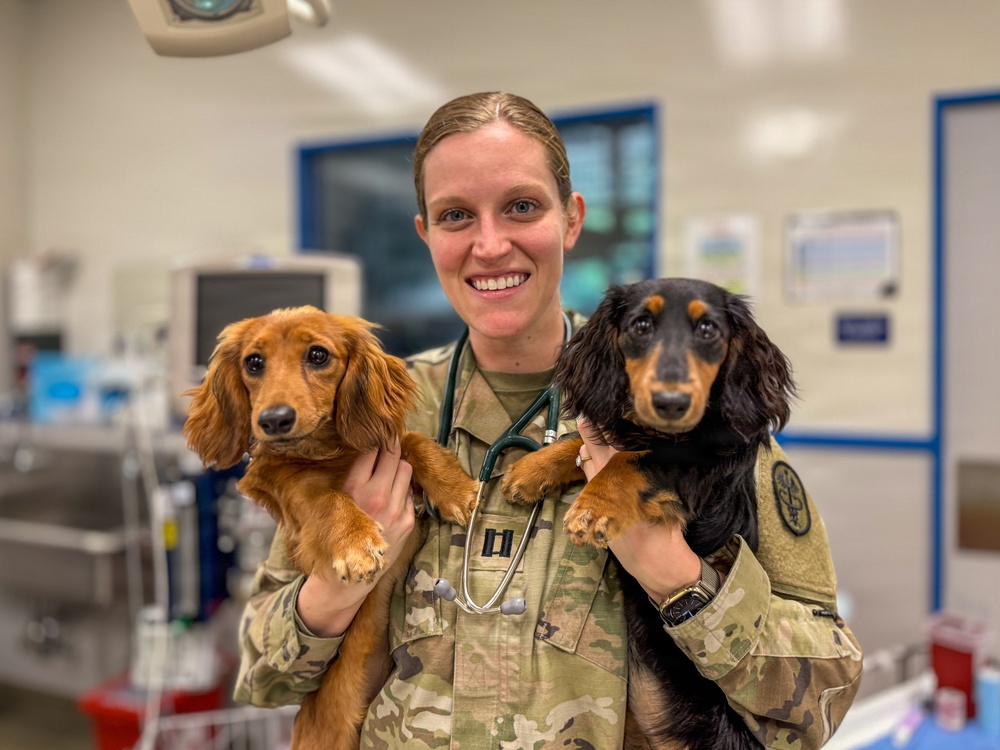
U.S. Army Capt. Laura Harms, Veterinary Corps officer, Kadena Veterinary Clinic, poses......read moreread more
Photo By Natalie Stanley | U.S. Army Capt. Laura Harms, Veterinary Corps officer, Kadena Veterinary Clinic, poses with her dogs at the Kadena Veterinary Clinic, April 10, 2026, Kadena Air Base, Japan. Each year, veterinarians and staff care for thousands of animals, making the clinic one of the largest facilities in the Pacific. Its services range from routine wellness care to advanced surgical procedures. see less
| View Image Page
Bringing your pet to Okinawa: What to expect and who’s here to help
TORII STATION, Japan – For military families, moving overseas often means navigating tight timelines, new languages and unfamiliar processes. For those moving to Okinawa, Japan with pets, the process can become more complex and stressful.
At the Kadena Veterinary Clinic, staff help families understand the requirements, navigate the process and care for their pets throughout their time on island.
Each year, veterinarians and staff care for thousands of animals, making the clinic one of the largest facilities in the Pacific. Its services range from routine wellness care to advanced surgical procedures.
While privately owned pets make up a large portion of that workload, more than 13,000 across Okinawa, they are only one part of the clinic’s mission.
The team balances multiple missions including care for military working dogs, public health operations and food safety inspections.
"We wear a lot of hats within veterinary services," said U.S. Army Capt. Laura Harms, Veterinary Corps officer, Kadena Veterinary Clinic. “There’s a lot more happening behind the scenes than people realize, but we’re here because we care about the animals and the people who love them.”
That support begins even before families arrive on island.
From rabies requirements to quarantine length, the PCS process includes strict guidelines and little room for error. Pet owners are encouraged to follow the Japanese governments step-by-step import instructions to ensure all requirements are met before travel.
Pets must have an up-to-date rabies vaccination series, a microchip for identification and a rabies antibody test completed at least 180 days before arrival. All documentation must be accurate and properly endorsed, as even small errors in paperwork or timing can result in extended quarantine periods.
“Follow it to a T. It will work,” said Harms. “The most common mistakes we see are on the paperwork and timing aspects. If that form is messed up, they automatically get 180 days, or until the form can be corrected by issuing veterinarian.”
Quarantine is one of the biggest concerns for pet owners moving to Okinawa, and it is directly tied to how well those PCS requirements are met.
Pets that meet all vaccination, testing and documentation requirements may have little to no quarantine time. However, missing or incorrect paperwork — even a single error — can result in extended quarantine upon arrival.
During quarantine, pets must remain on base and have limited movement, making preparation before travelling critical for both the animal and the owner.
“It is up to the owners to reach out and make sure everything is correct,” said Harms. “We’re here to provide answers so people can make the best decision for their pets.”
For more information on PCS requirements for pets, visit the official Japanese government import guidance website at [https://www.maff.go.jp/aqs/english/animal/dog/import-free.html](https://www.maff.go.jp/aqs/english/animal/dog/import-free.html) or contact the Kadena Veterinary clinic.
A future story will highlight how the clinic supports families during their stay in Okinawa.