
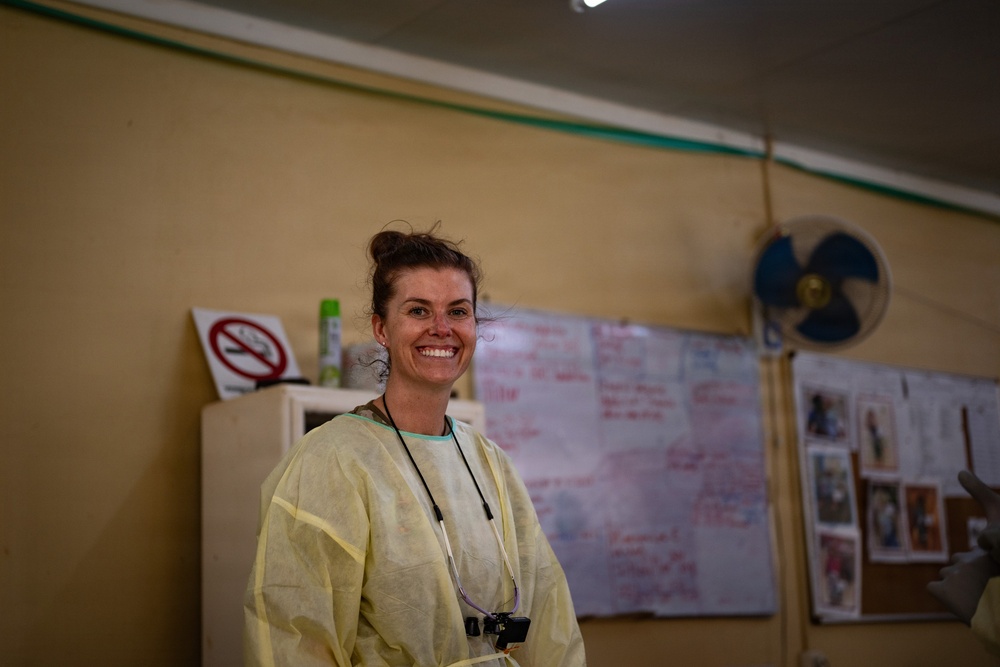
Photo By Staff Sgt. Madeline Herzog | U.S. Air Force Reserve Maj. Kelsey Geiger, 434th Aerospace Medicine Squadron dentist,...... read more read more
 Subscribe
BROWNSWEG, Suriname – The line forms early before the day’s heat fully sets in, and for many, the reason is the same: urgent and often critical need for care. Some patients walked miles, eagerly waiting their chance to be seen by the U.S. Air Force medical teams providing medical and dental care during the Lesser Antilles Medical Assistance Team (LAMAT) 2026 mission.
Maj. Kelsey Geiger, a dentist from 434th Aerospace Medicine Squadron, Grissom Air Reserve Base, Indiana, stood on familiar ground as she began her second medical mission supporting Air Forces Southern. As part of LAMAT 2026, Geiger is among 47 medical and support personnel who traveled to Suriname as part of a health security cooperation mission to integrate with partner nation medical systems and serve underserved communities across the country. The engagement is designed to improve the readiness of U.S. medical and support personnel while also helping patients in need.
A traditional Air Force reservist, Geiger found the work in Suriname had little similarity to the work she performs in her civilian role as a dentist. Back in Indiana, she is dedicated to preventative care and teaching young adults how to care for their teeth.
“At home, I focus a lot on prevention; teaching patients, talking about nutrition, trying to stop problems before they start,” said Geiger.
In Brownsweg, which lies on the edge of the Amazon Rainforest, the majority of patients arrive with more immediate issues like sharp pain and infections, so the focus shifted from prevention to immediate relief. Operating in resource-limited environments strengthens providers’ ability to adapt, innovate and deliver care under conditions they may face in real-world contingencies.
“Here, we don’t have the capabilities we do at home,” said Geiger. “You’re working with limited visibility, so it requires a different level of clinical judgment and adaptability. It changes how you approach each case.”
One of the only options for eliminating pain in austere environments is extracting teeth. Geiger and her counterpart experienced an intense extraction on the second day that shifted their mindset for the rest of the mission.
For nearly two hours, they worked to remove a tooth from a 28-year-old patient, navigating limited equipment in a resource-constrained environment.
“We were sweating, our glasses were fogging up, and we had to keep stopping just to wipe them off,” said Geiger. “That was the first case where we really understood our limitations based on the equipment we had, and it kind of triggered an emotional response for me that carried through the rest of the week.”
The emotional weight of the work extends past the physically demanding procedures. Treating both adults and young children, many who’ve never seen a dentist before, forced a shift in perspective for Geiger.
“It’s kind of brutal at times,” she said. “Especially when you’re pulling teeth from kids or adults and you don’t know what’s going to happen to them long term. There are a lot of other priorities in their lives and oral health isn’t always at the top. It changes how you think about what really matters in the moment.”
Not every patient interaction carries the same emotional weight. At the start of the third day, a 10-year-old Surinamese girl anxiously walked into dental, but gained confidence and curiosity while she waited for her turn for care.
The young girl peeks her head in the door throughout the day, and then during her appointment she tells Geiger that she wants to be a doctor when she grows up.
“She was really interested in what we were doing, but you could tell she was a little nervous,” said Geiger. “So I told her she could check my teeth if she let me check hers.”
Once she began to relax, Geiger invited her to take part in the exam.
“I gave her gloves and a mask, and she helped examine my teeth,” she said. “It’s not something you forget. It’s about building trust and giving them a positive experience, especially if they’ve never been in a dental setting before.”
While much of the work done in Brownsweg was about relieving pain and treating infection, it's moments like these that reflect the lasting impact of the mission.
Through LAMAT 2026, U.S. service members worked alongside local partners to improve access to care and build lasting relationships, efforts that go beyond immediate treatment.
For Geiger, that impact is in both the relief of pain and the connections formed along the way.
“I think the most rewarding part is leaving people better than when I saw them,” she said. “Even if it’s just helping with an infection or giving them education they can carry with them, it makes a difference.”
| Date Taken: | 04.20.2026 |
| Date Posted: | 04.23.2026 19:28 |
| Story ID: | 563469 |
| Location: | US |
| Web Views: | 148 |
| Downloads: | 1 |

This work, Adapting under pressure: a dentist returns to serve during LAMAT 2026, by SSgt Madeline Herzog, identified by DVIDS, must comply with the restrictions shown on https://www.dvidshub.net/about/copyright.


No keywords found.




