
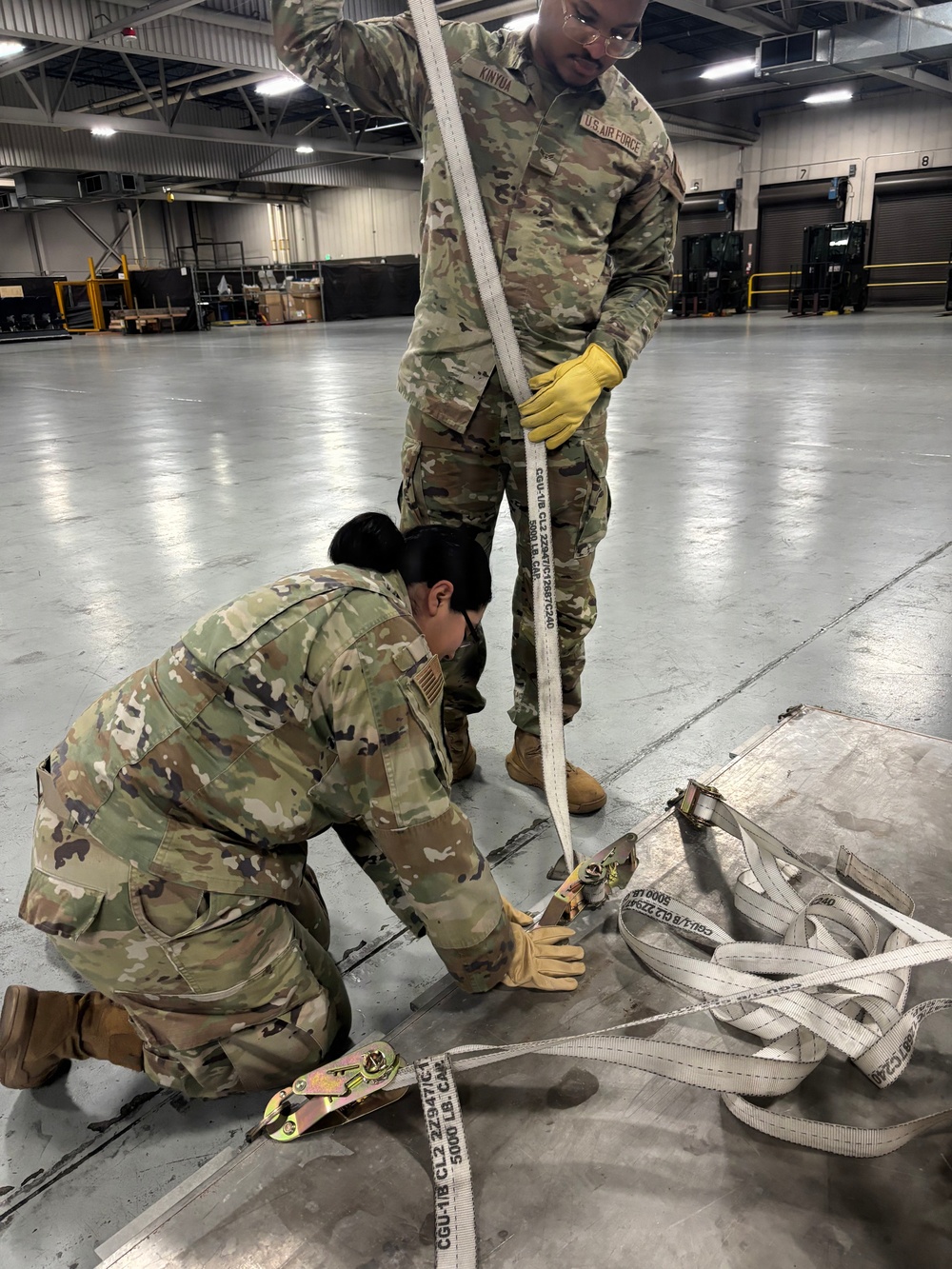
Courtesy Photo | U.S. Senior Airman Esmeralda Leathem, 62d Comptroller Squadron financial analysis...... read more read more
Introduction:
In an era of increasing global competition, our unit is not just preparing for the future fight; we are actively forging the financial warfighters required to win it. Our strategic role in the Pacific demands a level of readiness that is both broad and deep, and we have answered that call by transforming how we operate. We execute a high-tempo mission, conducting 60 Paying Agent (PA) operations and deploying $800,000 in just the past year, all while increasing our Cash Holding Authority tenfold to guarantee operational agility. We've moved beyond the slide deck, adopting a "hands-on" training philosophy that starts with our youngest Airmen. By systematically lowering the dollar thresholds to bring finance for PA missions in our Wing Operations manual and building robust partnerships with flying squadrons, we are deliberately creating more opportunities for high-stakes, real-world experience. This isn't just about managing finances; it's about building a team of sharp, adaptable, and seasoned FM professionals. This commitment to total readiness—from restoring lost logistical capabilities to honing our Airmen’s skills under pressure—is best illustrated by two recent successes from our very own Lieutenants.
Safe on Plane – Lt Tu:
When asked how we can be ready for a China fight in the next six months, our Comptroller challenged us to put our safe on a jet. The squadron’s only deployable equipment UTC is the safe. It had not been deployed in so long that the knowledge of how to do so had been lost. In response, we appointed new Cargo Increment Monitors to restore this vital capability.
These monitors received extensive training from the Aerial Port Squadron on the procedures for securing the safe onto a pallet. They also completed the Logistics Module (LOGMOD) course to document the safe's weight and dimensions for airlift. Before the safe could be cleared for flight, it underwent a Joint Inspection, a crucial safety check conducted by aerial porters and our Cargo Increment Monitors to ensure it was safe for transport.
The culminating step was the coordination of a ground trainer with the Operations Support Squadron to put the safe on a jet, which integrated all aspects of the process: LOGMOD data entry, palletization, and the Joint Inspection. As a result of these efforts, we are prepared to deploy to a bare-base environment with our safe, ready to support the mission. This process was not simulated or assumed; it was earned through eight weeks of dedicated training.
Local Paying Agent Mission – Lt Moore:
True readiness isn't just about preparing for a deployment—it's about being sharp, adaptable, and effective right here at our home station. My Financial Operations Flight is tackling this head-on by moving beyond traditional training. We've developed a new hands-on model that builds critical financial skills through a monthly local paying agent (PA) program, ensuring our Airmen are prepared for any financial scenario they might face.
To put this into practice, my team executed a local PA mission where one of our Airmen was entrusted with $20,000 in cash to settle a $5,000 payment for our Honor Guard—a task typically handled by a simple Government Purchase Card (GPC) swipe. We intentionally had the Airman carry more cash than required to simulate the high-stakes pressure of real-world operations and drive home the critical importance of accountability.
This mission's success, providing invaluable, hands-on experience far beyond what a textbook could offer, marks a significant step forward in our training philosophy. Our Comptroller's challenge to enhance our readiness for the future fight empowered us to develop and execute this innovative approach. Moving forward, we will build on this momentum by increasingly replacing GPC transactions with cash-based local PA missions, ensuring our Airmen are not just trained, but truly prepared for the complexities of financial operations in any environment.
This initiative is already making our teams better, faster, and more prepared. My Airmen are building a deep well of operational experience, ensuring they are ready for any mission, anytime, anywhere.
Conclusion:
The successes at 62 CPTS are more than just isolated achievements; they are a blueprint for a new standard of readiness. They prove that true combat readiness is forged not by checking boxes, but by actively seeking out and solving the toughest problems. One officer restored a lost logistical capability essential for deployment, while the other created a high-stakes training environment to build resilience and accountability here at home. Both answered the call to be ready.
Now, the challenge is yours. We urge you to look at your own mission sets and ask the hard questions. What is your "safe on a plane"—the critical capability you haven't tested? How can you replace routine training with realistic, pressure-filled scenarios that build true operational experience? Leave your training cash behind—money is our mission… are you ready?
| Date Taken: | 01.22.2026 |
| Date Posted: | 04.24.2026 10:50 |
| Story ID: | 563464 |
| Location: | JOINT BASE LEWIS-MCCHORD, WASHINGTON, US |
| Web Views: | 33 |
| Downloads: | 0 |

This work, 62d Comptroller Squadron: the money mission, must comply with the restrictions shown on https://www.dvidshub.net/about/copyright.


No keywords found.





