Team Robins CBRN defense class: Training for invisible threats
Photo By C Arce |
Team Robins Airmen look at an M8 paper to identify the type of agent present during a......read moreread more
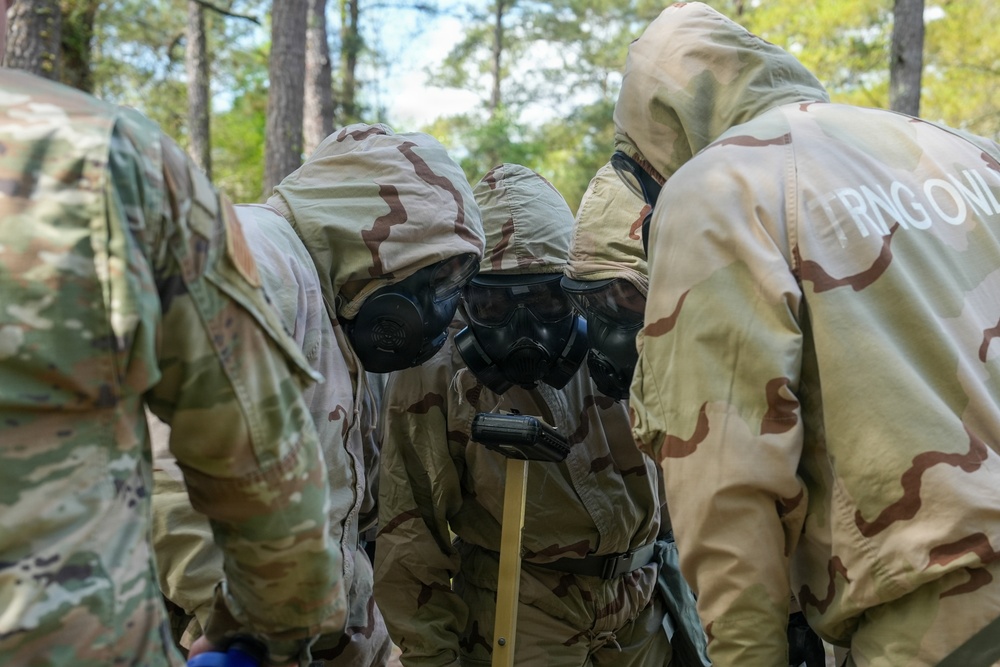
Photo By C Arce | Team Robins Airmen look at an M8 paper to identify the type of agent present during a chemical, biological, radiological and nuclear defense class at Robins Air Force Base, Georgia, April 2, 2026. During the simulation, the paper was used to identify whether it was exposed to a nerve or blister agent, which determines how Airmen will report the issue up the chain of command. (U.S. Air Force photo by C Arce) see less
| View Image Page
Team Robins CBRN defense class: Training for invisible threats
The chemical, biological, radiological and nuclear defense class at Robins Air Force Base, Georgia, trains Airmen to stay vigilant in a world where the threats are often invisible.
In just four hours, they learned to navigate a simulated toxic environment where stakes were high to make life-or-death decisions.
The training was a mixture of classroom learning and performance objectives. In class, students learned the proper and timely way to put on their mission-oriented protective posture gear, including their gas mask, to ensure a proper seal and avoid contamination.
“Ultimately, students need to know how to operate in a contaminated environment while in full MOPP gear,” said Staff Sgt. Timothy Roberts, 778th Civil Engineering Squadron Emergency Management noncommissioned officer in charge. “Knowing the proper MOPP-gear level can prevent casualties.”
Roberts said they also learn about contamination avoidance and decontamination. This included learning how to identify, report and mark contaminated areas, as well as procedures for decontaminating personnel and equipment.
During the performance objective, the students learned how to identify agents. They used M8 paper to identify the type of agent present in the air. The M8 paper changed colors depending on the agent that touched it – yellow and green for a nerve agent, and red for a blister agent.
They also learned how to use M9 tape, which is typically placed all over their MOPP gear, and also changes colors once it detects an agent.
Airman 1st Class Caleb Brooks, 778th CES emergency management specialist, emphasized the importance of properly reporting these findings up the chain of command.
“Once the agents are identified, we teach them how to report back to their Unit Control Center,” he said. “While they’re conducting a post attack reconnaissance route, known as the PAR route, they report any changes they see in their area of responsibility to their UCC.”
From there, the CBRN team, who will have arrived on site after initial notification of an agent being found, will identify the types of chemical warfare agents used, and validate the area of contamination. They will then map out how the weather or environment will affect the contaminated area and use that information to give the installation commander recommendations to help continue operations.
While the mission relies on precise protocol, its success ultimately depends on the accountability of every Airman on the ground.
“Always look out for your fellow service members,” Brooks said. “One slight opening in the gas mask can be the reason someone doesn’t get to go home. Being in those situations is a very-nerve racking experience, but it’s of utmost importance to stay vigilant to make sure you and your brothers and sisters in arms can stay safe.”
The 778th CES is responsible for providing CBRN training to all Team Robins military personnel, which they conduct every two weeks. The training has predesignated performance objectives from the Air Force Civil Engineer Center that must be met to receive qualifications.