
Photo By Ana Henderson | True austere tropics are places like Panama in Central America and Suriname in South...... read more read more
 Subscribe
When most think of the tropics they picture Hawaii with its sandy beaches, swaying palms and endless sunshine.
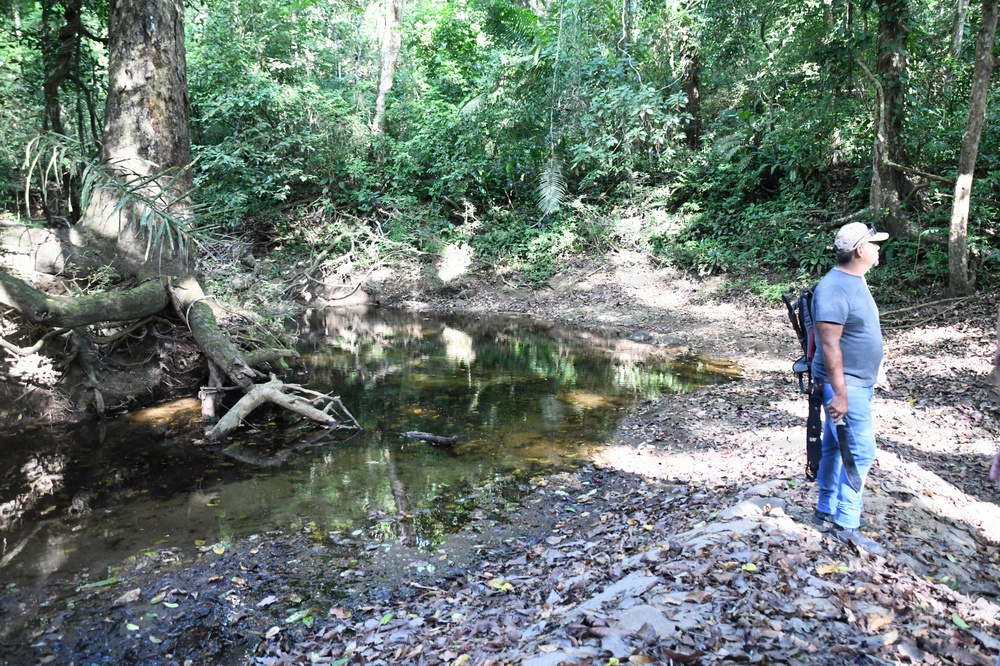
However, Hawaii is sub-tropical and the true austere tropics are places like Panamá in Central America and Suriname in South America, mud slick roads, triple canopy trees blocking the sunlight from breaking through, and torrential rain.
U.S. Army Yuma Proving Ground (YPG), the Army’s premier extreme natural environment test center, has test centers in both these locations to test equipment to its limits in a demanding tropical environment.
YPG Commander Col. John Nelson said, “You can learn some things in Hawaii, but it is sub-tropical, so you are not going to learn the whole breadth of tropical impacts to your equipment. So, what can happen is that you can learn those lessons later, at a potential cost to life and equipment —when you really want to learn those lessons upfront.”
Lessons such as rapid corrosion, electrical fires caused by electronics not insulated properly from the humidity, poor radio signal due to the triple canopy jungle, delamination of boot soles due to the humidity or locked up brakes because of mud caked on the vehicle undercarriage. All real-world examples of what can happen in the jungle environment.
The Tropical Factors
In the testing world, a tropical environment consists of extreme parameters for rain and humidity. Robert Dunn, Deputy Program Manager for Tropic Test Support Services explains, “Anytime Hawaii has enough rainfall temperature drops and falls outside of established tropic definition. Anytime that it has the temperature it doesn’t have the requisite rainfall.”
Another factor to consider are human factors for operations and survival in the harsh jungle environment. From poisonous plants, venomous animal life, disease carrying mosquitos, constricting boas and anacondas, howler monkeys and more, the jungle has it all.
“Your interaction with the environment is very different," explains Dunn. “Operating in a hot, humid tropical jungle—where venomous or poisonous plants, insects, and animals are common changes how you interact with both your equipment and the environment. For example, setting down your gear and later discovering a poisonous snake taking shelter beneath it alters how you approach and handle that same piece of equipment.”
Capabilities
Both Panamá and Suriname test centers have the capability to support austere weather testing of various types. Panamá offers road courses and jungle training ranges like the Cerro Tigre Manpack Portability Course which is a man-portability trail through the jungle suited for various other types of testing.
“We have done vehicle and small arms testing recently. In the past there’s been sensors [testing] there’s been communication [testing] that has been done. So, we can do the full gamut,” explains Mel Nickell, Tropic Test Support Services Program Manager.
Suriname’s Afobaka location offers road courses, a landing strip for UAVs or drones, and internet connectivity along with sleeping and dining accommodations. While remote, Suriname has access to stable electricity being that its next to the country’s main hydro-electric damn.
Dunn said, “Because of the dam’s importance to the country, it requires solid infrastructure to maintain reliable access to it, so we’re able to piggyback off the infrastructure that needs to be there for the dam, while taking advantage of the low population density at the same time.”
Why the tropics is topical
The Joint Security Cooperation Group-Panamá is currently running a jungle warfare school in Panamá to learn what is needed for Soldiers to succeed in this austere environment. Soldiers learn skills including jungle tactics, survival training, combat tracking, and waterborne operations.
With the focus on the Indo-Pacific conflicts, warfighter’s equipment must be tested in this environment so they can execute their mission without failure.
Nelson points out, “If you wait until later and you don’t reduce risk there in the jungle then it’s going to cost you life and treasure in the end because you can do it on a couple of products, a couple of systems in the jungle, learn those lesson then start to go into production. Once you go into full-rate production you need to go fix a thousand things instead of fixing two things.
Even the type of clothing Soldiers will need is different from standard gear. From jungle boots, uniform trousers with net-lining to keep out bugs, tops made of lightweight breathable fabrics. It’s markedly different and should be tested in the proper environment.
TRTC Technical Director Ernie Hugh who has seen TRTC grow to meet the emerging needs said, “There is a time and place for modeling and simulation, but ultimately, equipment and personnel must execute in austere environments. Time and time again, the tropics has shown critical failure and design issues which can be decisive for warfighters’ effective outcomes in the battlefield.”
| Date Taken: | 04.14.2026 |
| Date Posted: | 04.14.2026 11:22 |
| Story ID: | 562603 |
| Location: | YUMA PROVING GROUND, ARIZONA, US |
| Web Views: | 66 |
| Downloads: | 0 |

This work, The true austere tropics: why tropical testing is topical, by Ana Henderson, identified by DVIDS, must comply with the restrictions shown on https://www.dvidshub.net/about/copyright.


No keywords found.




