
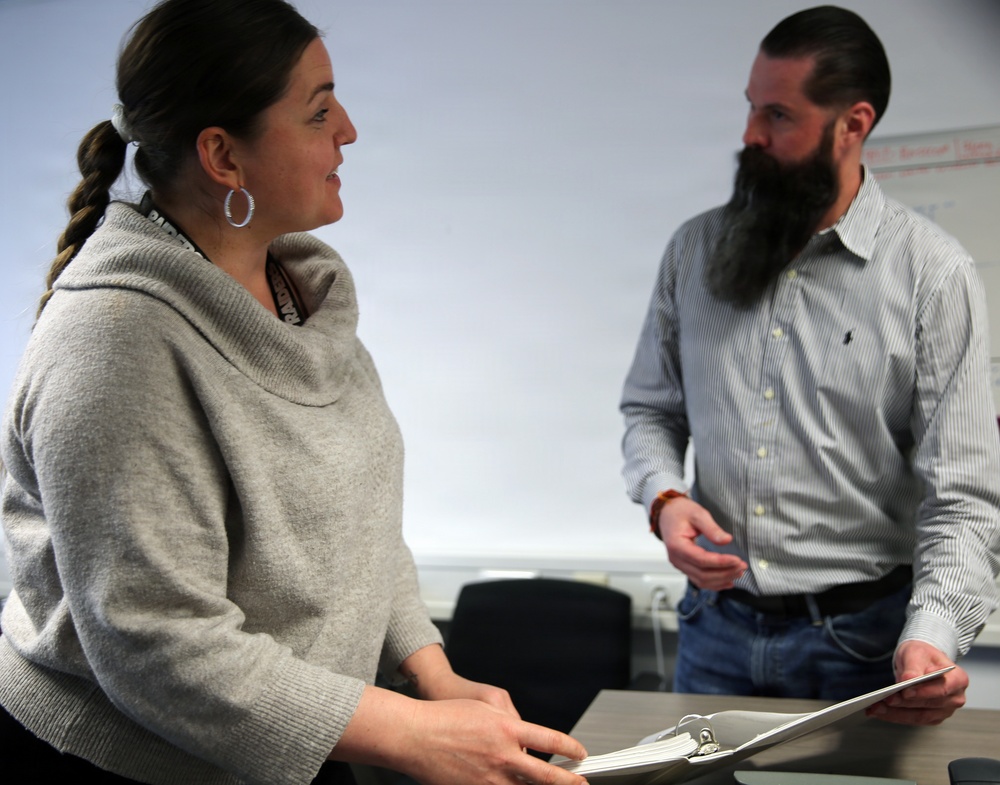
Photo By Candy C Knight | Ms. Katharina Prignitz, Management Support Specialist, explains the PCS out processing...... read more read more
WIESBADEN, Germany — When the time comes to leave a post overseas, even the most seasoned professionals can feel overwhelmed by a maze of paperwork, entitlements, and deadlines. Recently, the 2d Theater Signal Brigade’s Human Resources Directorate took a bold step to change that narrative.
With the rollout of a dynamic new out-processing brief spearheaded by Ms. Katharina Prignitz, the brigade’s Management Support Specialist, departing personnel now have a clear, supportive pathway through one of the most stressful phases of their careers.
Identifying the Need for Change
The motivation behind the new out-processing brief was born from a simple yet profound realization: the process of leaving an assignment, especially overseas, is inherently stressful.
“We wanted to provide additional support for our departing employees,” Ms. Prignitz explained. “Understanding how stressful a PCS move can be, we are trying to create a forum that allows enough time for each employee to ask questions, as well as a chance for the HRO to share helpful information and resources the employee might not be aware of.”
Building a Collaborative Solution
To ensure the brief addressed employees' real needs, Ms. Prignitz and her team collected frequently asked questions over several months and carefully analyzed which parts of the process caused the most anxiety. She reached out to section leads to verify the accuracy and completeness of the out-processing requirements.
While responses varied, the team remained committed to regularly updating their materials based on feedback and suggestions from each session.
“We are very open to suggestions,” she emphasized.
Overcoming Obstacles and Fostering Openness
One significant hurdle was employee reluctance—many preferred to seek answers from colleagues rather than directly from Human Resources.
“We are hoping to create a forum where employees feel more comfortable reaching out to the subject matter experts directly,” Ms. Prignitz said.
By acknowledging these struggles and proactively addressing them, the new brief aims to foster a supportive atmosphere where questions are welcomed and answers are readily available.
Measuring Early Impact
The effects of the new process were quickly apparent.
“We did hear more than once, ‘Oh, I wasn’t aware of that,’ this is what we were hoping for,” Ms. Prignitz said. “Enhanced awareness of entitlements, faster reimbursement of PCS costs, and increased transparency are just a few of the tangible benefits already observed. Most importantly, employees are leaving with a better sense of preparedness and satisfaction.”
Adapting Through Feedback
Feedback is not only welcomed but actively sought. The team plans to implement a digital out-processing checklist in tandem with their knowledge center, ensuring easy access to up-to-date information and progress tracking.
After each session, the team reviews comments and suggestions and makes relevant updates to the materials.
“Ask for honest feedback,” Ms. Prignitz advises others seeking to improve their administrative processes. “Most employees value the chance to enhance existing processes and ensure a better workflow for those who follow.”
Balancing Innovation and Compliance
Navigating regulatory requirements while pursuing process improvements can be challenging. Ms. Prignitz stressed the importance of viewing innovation and compliance as complementary, not competing.
The team maintains close relationships with regulatory bodies, such as the Civilian Human Resources Agency – Overseas Benefits Branch, and the garrisons, to ensure all improvements remain within established guidelines.
Looking to the Future
Long-term, the vision extends beyond the out-processing brief. Ms. Prignitz and her colleagues are working closely with the brigade’s Data Engineering team to further digitalize and automate administrative processes. Their commitment to listening to employee feedback remains central.
“Continuing to use the resources available to us to digitalize/automate our processes and listening to employees’ feedback ensures the procedures are tailored to our target audience,” Ms. Prignitz said.
A Culture of Continuous Improvement
The success of the new out-processing brief highlights the value of openness, adaptability, and collaboration.
Additionally, early feedback points to a sense of relief and renewed confidence, as the monthly sessions promise to turn a once-daunting administrative process into a model of clarity and care.
“We appreciate the input of each employee and leadership, and we are hoping to better assist our staff throughout their entire time at 2d Theater Signal Brigade,” Ms. Prignitz stated. “Our goal is not only to make the process easier, but also to help prevent the employee from issues resulting from wrong or late submissions. There is a lot of room for improvement, but we need the help of everybody to identify those.”
The out-processing brief serves as a model for other organizations seeking to streamline administrative transitions, proving that, with the right motivation, teamwork, and a commitment to feedback, even the most complex processes can be transformed into empowering experiences for all involved.
| Date Taken: | 04.02.2026 |
| Date Posted: | 04.07.2026 07:55 |
| Story ID: | 562142 |
| Location: | WIESBADEN, HESSEN, DE |
| Web Views: | 84 |
| Downloads: | 0 |

This work, New Out-Processing Initiative Transforms Administrative Transitions, by Candy C Knight, identified by DVIDS, must comply with the restrictions shown on https://www.dvidshub.net/about/copyright.

No keywords found.





