
Photo By Jacob Wologo | In a climate where new technology must hit the battlefield quicker and cheaper while...... read more read more
 Subscribe
When an Army technology goes from concept to prototype to program of record, it may undergo years of development and, in many cases, overcome obstacles before it gets into the hands of Soldiers.
In a climate where new technology must hit the battlefield quicker and cheaper while still meeting the Soldier’s needs, the U.S. Army Space and Missile Defense Command is transforming in contact to accelerate the fielding of necessary capabilities while reducing cost and integrating Soldier feedback.
“One thing our Chief of Staff of the Army constantly highlights is the ability to take a capability and not wait for it to maturate over several years and then get it to the warfighter, but to get it to the warfighter now” Lt. Gen. Sean Gainey, commander of USASMDC, said in a recent speech addressing industry. “Our Technical Center team has taken a capability that they worked from conception to prototype in around a year. That kit is now being used by our forces in deployed environments because they were transforming in contact, and it was deployed in theater whereas traditionally they wouldn’t have gotten that gear for three to four years.”
“Transformation in contact remains critical,” he said.
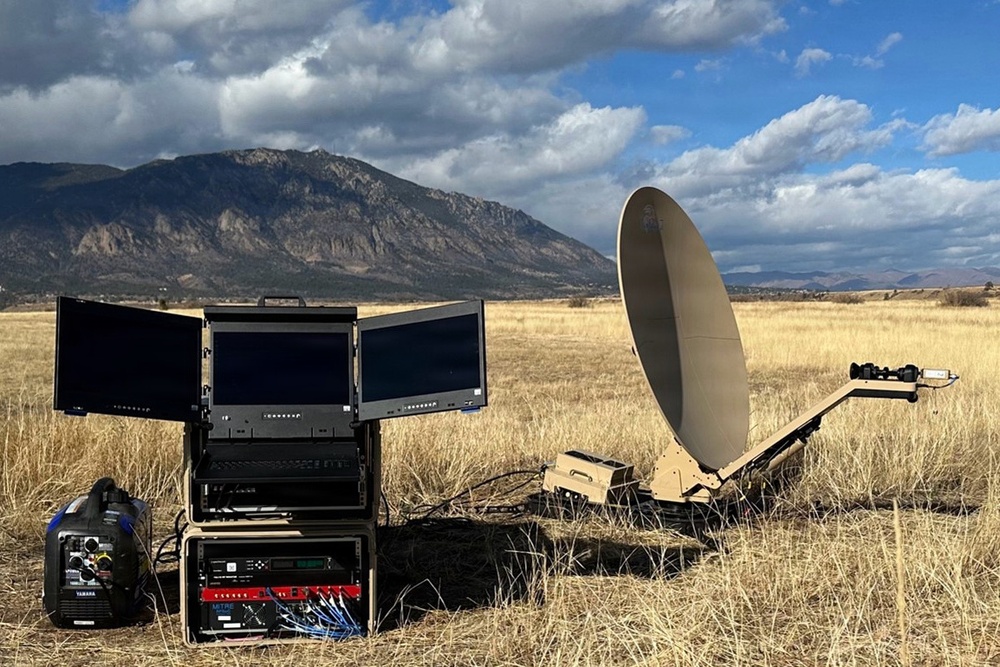
The Technical Center has recently developed a smaller form factor Tactical Integrated Ground System. Its one-year timeline shows how quickly the USASMDC procurement process can deliver a superior product and how transformation in contact ensures Soldiers’ needs are integrated into the end product. TIGS is a space interdiction system – one of the many tools USASMDC’s operational units of action use to target adversaries’ space-enabled capabilities. The TIGS V2 Prototype, the newest iteration, takes the dump truck-sized system and miniaturizes it to fit in three military transit cases – the result of implementing Soldier feedback to make the system easier to use.
“The project started out as a request by the program office to find a better Software Defined Radio for TIGS, and the Technical Center not only identified a quality SDR, but also provided other technical advances with software integration and a more responsive server,” Felicia Cochran, SMDC Technical Center supervisory general engineer and original product leader of the TIGS V2 prototype, said. “The resulting product was more robust and technically advanced than the current TIGS infrastructure. The Technical Center moved so quickly to meet Soldiers’ needs that we ended up building the small form factor prototype to demonstrate the SDR capability. The Soldiers loved the smaller footprint provided by the transit case solution so much that it became the TIGS V2 prototype.”
Unique funding circumstances, flexible requirements and USASMDC’s in-house prototyping capabilities meant the smaller prototype could be produced in record time. However, it was the unique feedback loop between the technology developers, procurement teams and the Soldiers in the field that allowed this weapon system to enhance warfighter capabilities beyond the legacy systems.
Once requirements were met, the Technical Center had multiple touchpoints with Soldiers to refine the user interface and meet their real needs—not just those on paper.
“My small engineering team didn't stop at just the requirements, we integrated what the Soldiers in the field asked for,” Cochran said. “When the SDR proved more capable than the legacy systems’ server could support, we developed a prototype system to prove out the SDR’s capability. The prototype system proved itself in the field, not only meeting the original request, but provided a more mobile, highly agile system made from commercially available off-the-shelf products. My team and I delivered such a well-designed system, the Product Office decided to issue it as TIGS V2.” The new technology made the hardware more user-friendly for Soldiers. Robust feedback from users in the field allowed the Technical Center to create a highly-mobile, easy-to-operate system. The system enhanced warfighter capabilities so effectively that it is set to replace internal hardware and software in all currently-fielded large TIGS systems.
“There’s not a significant training gap between the TIGS and the new V2s,” said Lt. Col. Michael Masty, lead capability developer and transformation lessons learned manager for Space Interdiction for Transformation Integration Directorate for Space Superiority at the Center of Excellence. “We got feedback from the people actually using it, and the new operating system is a lot more intuitive. Eventually, it will completely replace the TIGS operating system and all of the TIGS already in the field will be retrofitted with this new system.”
While the feedback from Soldiers led to a system that enhanced USASMDC's space interdiction capabilities and warranted upgrading already fielded units, it also indicates that the command is committed to developing the tools and procedures to fully support its Soldiers.
“I want every Soldier to know we’re in their corner—and that their voice matters,” Masty said. “The process can feel slow from the outside, but it exists for a purpose: to ensure we don’t rush subpar equipment into their hands. At every echelon, people are working relentlessly to remove friction, accelerate approvals and deliver real, reliable capability to the field.”
| Date Taken: | 04.01.2026 |
| Date Posted: | 04.01.2026 12:46 |
| Story ID: | 561744 |
| Location: | US |
| Web Views: | 649 |
| Downloads: | 0 |

This work, The Soldiers’ voice: How transformation in contact at USASMDC integrates Soldiers’ needs to deliver warfighting capabilities, by Jacob Wologo, identified by DVIDS, must comply with the restrictions shown on https://www.dvidshub.net/about/copyright.


No keywords found.




