Volunteers strengthen JBLM’s prairies, training lands
Courtesy Photo |
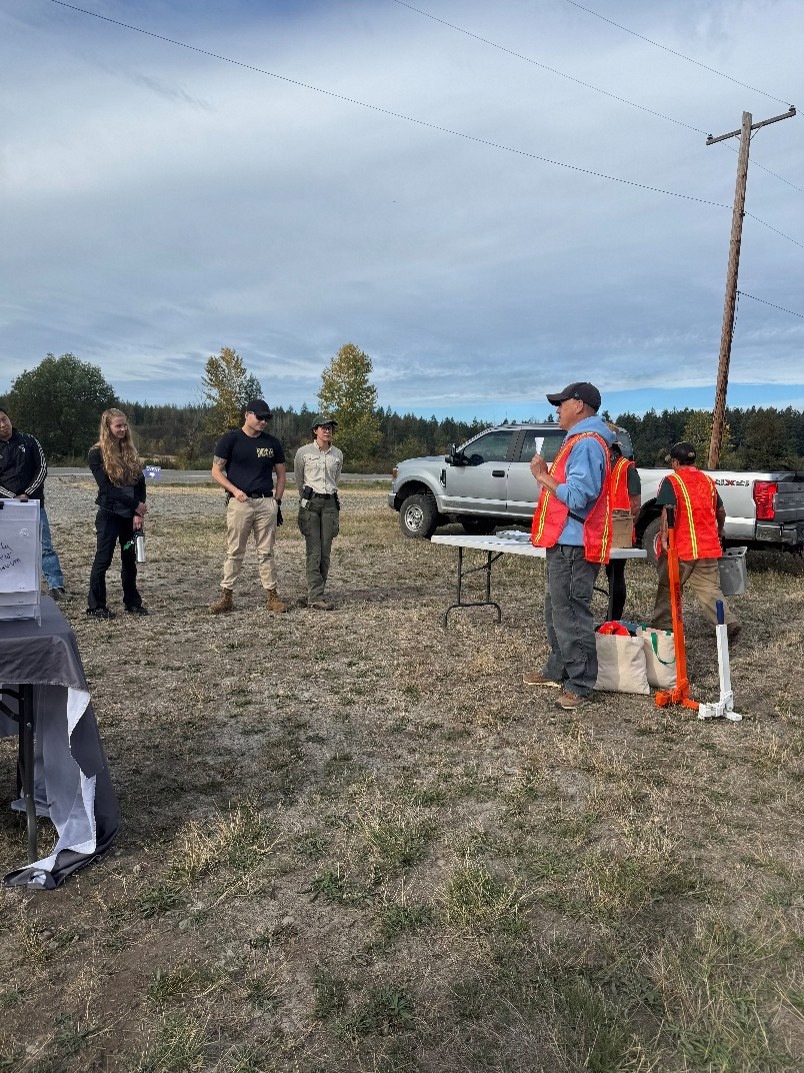
Dennis Buckingham, JBLM DPW Fish and Wildlife biologist, educates volunteers on native......read moreread more
Courtesy Photo | Dennis Buckingham, JBLM DPW Fish and Wildlife biologist, educates volunteers on native bats and how to protect their habitat. (Photo by Hailey Dunn, DPW Environmental Division, AGEISS) see less
| View Image Page
Volunteers strengthen JBLM’s prairies, training lands
By Hailey Dunn, DPW Environmental Division, AGEISS
JOINT BASE LEWIS-McCHORD, Wash. –Joint Base Lewis-McChord contains the largest remaining stretches of historic glacial outwash prairie in the United States. Only about 5% of these prairies remain across their historic range, and JBLM contains approximately 95% of what is left. This provides a unique opportunity for the installation to preserve and restore this rare ecosystem.
A recent volunteer effort at Clear Creek Prairie, hosted by JBLM Fish and Wildlife in partnership with the National Environmental Education Foundation, illustrates the ongoing work to restore and maintain the prairie ecosystem. Clear Creek Prairie sits adjacent to habitat for the endangered Taylor’s checkerspot butterfly, a species that depends on open grassland to survive. Volunteers joined JBLM biologists to remove invasive Scotch broom that had persisted along tree lines and ditches after a prescribed burn. By the end of the day, two full dump trucks of vegetation had been cleared, opening space for native plants to return and expanding suitable habitat for the butterfly.
Volunteers also helped support native pollinators by installing mason bee boxes across the prairie. These reusable wooden structures contain paper-lined tubes where solitary mason bees can safely lay eggs and create mud-sealed cells for their young. By placing the boxes strategically throughout the landscape, volunteers contributed to long-term pollinator health and the overall resilience of JBLM’s prairie landscapes.
Following the restoration work, volunteers joined JBLM biologists for a guided tour of the training lands. The tour highlighted the unique relationship between military readiness and natural resource management on the installation. Wildland fire, artillery impact and planned prescribed burns, combined with targeted restoration efforts, help maintain both rare habitats and open, functional training areas for military units.
Reflecting on the broader mission, JBLM Fish and Wildlife biologist Dennis Buckingham notes that, “The Department of War hosts more rare species than any other U.S. government entity, and military bases often serve as critical hotspots of biodiversity. Events such as this and other volunteer activities help JBLM accomplish landscape stewardship objectives to support these ecosystems while supporting military training, flexibility and readiness.”
Events like this one demonstrate how community volunteers and the installation’s land management programs work together to support endangered species, pollinators, and the long-term sustainability of both the prairie ecosystem and JBLM’s mission readiness.
JBLM hosts environmental volunteer opportunities throughout the year, offering the community a chance to take part in caring for these unique natural resources. Those looking to get involved in future restoration efforts can explore upcoming volunteer events at [https://home.army.mil/lewis-mcchord/my-Joint-Base-Lewis-Mcchord/all-services/public_works-environmental_division/outreach](https://home.army.mil/lewis-mcchord/my-Joint-Base-Lewis-Mcchord/all-services/public_works-environmental_division/outreach).