MAXWELL AIR FORCE BASE, Ala. —U.S. Air Force Maj. Jonathan “Copen” Hagan is concluding his tenure at the School of Advanced Air and Space Studies with a sharpened ability to make decisions in complex operational environments — an outcome senior leaders prioritize as essential to maintaining decision advantage across the joint force.
Programs like SAASS are designed to develop officers who can think, decide and integrate airpower faster and more effectively than adversaries. After stepping out of the tactical execution cycle — where timelines are compressed and decisions are made at the speed of the fight — Hagan spent the past year immersed in rigorous strategic and historical study, strengthening his ability to assess risk, connect tactical action to strategic objectives and apply airpower in support of national-level goals.
Before returning as an F-16 instructor at Holloman Air Force Base, New Mexico, Hagan operated in a different intellectual battlespace. Inside a SAASS seminar room, officers move beyond tactics, techniques and procedures into operational art, strategy and the integration of airpower within joint and coalition operations, preparing them to translate battlefield success into strategic outcomes.
“There were a ton of moments where I could say that my mind was changed about something,” Hagan said. “But the real value has been the cumulative effect of coming to class, challenging assumptions and refining how I think over time.”
That refinement directly contributes to improved decision-making under pressure, where speed, judgment and context determine mission success. SAASS seminars are intentionally designed to create friction, bringing together officers from different services, partner nations and warfighting communities to stress-test assumptions and expose cognitive blind spots.
“We go into a seminar and address that head on,” he said. “You have to understand there are other ways of looking at the problem set, and that two things can be true at the same time.”
As operational problems grow more complex, understanding context — and recognizing the limits of one’s own perspective — becomes critical to reducing risk and improving outcomes. That broader perspective is reinforced by peers in the program, who view SAASS as essential to developing leaders capable of linking tactical execution to strategic objectives.
“In recent conflicts, operational success hasn’t always translated to political outcomes. SAASS develops leaders who bridge the gap between the means of war and the ends of strategy, ensuring actions support the political goals set by civilian leaders,” said Maj. Lauren Harrison, a SAASS student. “That culture of collaboration and respect is exactly what SAASS fosters, and Copen embodies it. He’s a true professional and a first-rate wingman.”
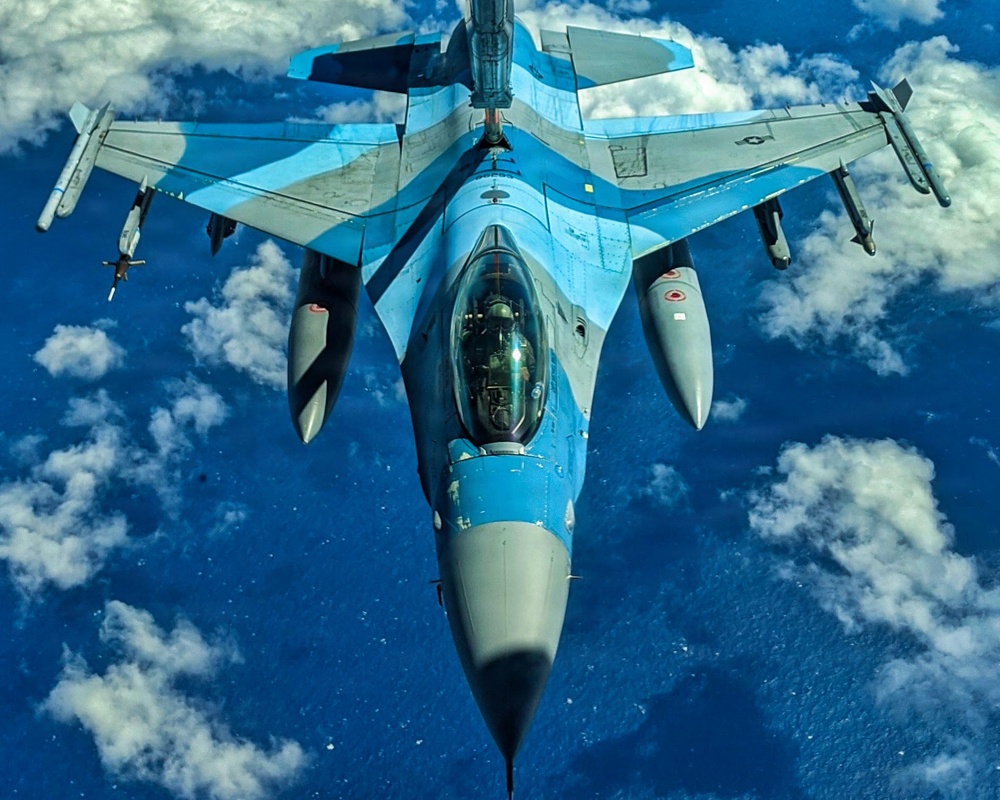
Before arriving at SAASS, Hagan built his career in the F-16 community, flying across the full mission set, including air-to-air, suppression of enemy air defenses and close air support. He also served in an aggressor squadron in Alaska, replicating near-peer adversary tactics during large-force exercises, and contributed to test and integration efforts with European and Pacific partners.
“All of those experiences gave me a clearer understanding of what tactical airpower can deliver — and just as importantly, where its limitations are,” he said.
SAASS builds on that foundation by developing officers who can integrate those tactical capabilities into broader operational and strategic frameworks, ensuring airpower is applied effectively in future conflicts where tactical success must support national objectives.
Hagan did not initially set out to become a fighter pilot but was drawn to the Air Force by a desire for challenge, purpose and opportunity. Mentorship played a key role in his path to SAASS after a squadron commander emphasized the importance of developing officers who can think critically beyond the tactical level.
While SAASS did not change his definition of strategy, it expanded his perspective. Studying history, policy and international relations reshaped how he evaluates risk, prioritizes objectives and makes decisions in complex environments where trade-offs are unavoidable.
“You can’t optimize for everything,” Hagan said. “When you prioritize one objective, you’re inherently accepting risk somewhere else.”
The most valuable skills he will carry forward are the ability to synthesize large amounts of information into clear, actionable insights, solve complex problems and answer critical questions — capabilities that directly improve readiness and reduce risk across the joint force.
“If you’re the type of person who wants to be challenged and rethink how you approach complex problems, this is the kind of environment that develops warfighters who can operate not just in the cockpit, but across the full spectrum of conflict,” Hagan said.
Hagan’s experience reflects how Air University, America’s Airpower University, educates and develops joint airpower warriors who deliver decision advantage, strengthen readiness and enable the joint force to compete, deter and win.
| Date Taken: |
03.23.2026 |
| Date Posted: |
03.23.2026 12:21 |
| Story ID: |
561118 |
| Location: |
MAXWELL AIR FORCE BASE, ALABAMA, US |
| Web Views: |
59 |
| Downloads: |
0 |
PUBLIC DOMAIN

This work, SAASS builds decision advantage for the Joint Force, by SrA Tanner Doerr, identified by DVIDS, must comply with the restrictions shown on https://www.dvidshub.net/about/copyright.

 Subscribe






