“Harpoon 1-2, this is Midnight Sun 1, radio check, over.”
A brief pause stretches across the 545 miles of Arctic terrain, mountains and tundra between Joint Base Elmendorf-Richardson and Nome.
“Midnight Sun 1, this is Harpoon 1-2. I read you loud and clear. How me?”
The response cuts clean through the static.
In Alaska, that simple exchange is more than a radio check, it’s reassurance that when distance, weather or infrastructure fail, communication does not.
Exercise Arctic Connect was designed to test exactly that.
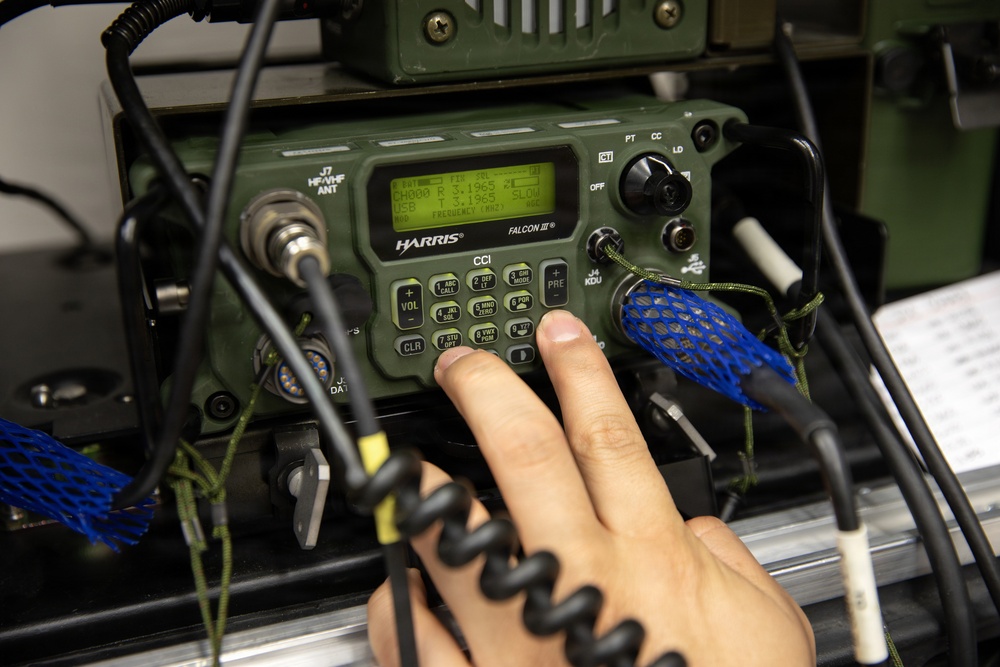
The exercise brought together more than 30 radio operators positioned at 28 locations across Alaska, linking a network of federal, state and volunteer organizations.
Participants represented elements of the Alaska Organized Militia, including the Alaska Army and Air National Guard and the Alaska State Defense Force, alongside members of the Civil Air Patrol, the State of Alaska Division of Homeland Security and Emergency Management, and representatives from the National Guard Bureau. Together, they worked to validate high-frequency radio pathways and strengthen Alaska’s statewide communications plan.
In a state where communities are separated by vast terrain, and severe weather can isolate regions without warning, resilient communications are not optional, they are essential.
“High-frequency communications are inherently influenced by environmental conditions,” said Lt. Col. Herbert Gladwill, Alaska National Guard joint staff director of communications and cyber. “Weather, space weather and propagation variability all play a role, especially in Alaska. Arctic Connect allowed us to identify those challenges, communicate through them and strengthen the network before we need it in a real-world event.”
Some stations established strong connections immediately. Others required adjustment.
Signal personnel inside the Joint Operations Center on JBER could receive transmissions clearly, but outbound traffic was not initially confirmed, a reminder that in HF operations, antenna alignment and power output determine whether a signal carries cleanly or fades into static.
Teams collaborated in real time, refining configurations, adjusting frequency tuning, and working methodically to move yellow indicators back to green.
The exercise became less about a single transmission and more about a network of professionals learning, adapting and reinforcing one another.
That collaboration reflects Alaska’s broader emergency response framework. Each mission partner plays a distinct role in supporting communities during disasters and contingency operations.
“Our responsibility is to the people of Alaska,” said Col. Christy Brewer, AKNG director of joint operations. “That means ensuring we can maintain command and control across a state where terrain, weather and distance test every system. This exercise validates the partnerships and redundant pathways that allow us to respond decisively when communities need us.”
Arctic Connect reinforced the Guard’s role as a communications bridge across Alaska’s vast and often unforgiving landscape. The exercise ensured that leaders and responders can remain connected when it matters most.
“Resilience in communications isn’t accidental,” Gladwill said. “It’s built deliberately. Every antenna we tune, every alternate pathway we validate, and every adjustment we make strengthens the architecture that supports our mission.”
When the next call goes out, “Midnight Sun 1, this is Harpoon 1-2,” the answer will not rely on perfect conditions. It will rely on preparation.
| Date Taken: |
03.05.2026 |
| Date Posted: |
03.05.2026 21:18 |
| Story ID: |
559505 |
| Location: |
JOINT BASE ELMENDORF-RICHARDSON, ALASKA, US |
| Web Views: |
349 |
| Downloads: |
0 |
PUBLIC DOMAIN

This work, Arctic Connect validates HF communication across Alaska, by Dana Rosso, identified by DVIDS, must comply with the restrictions shown on https://www.dvidshub.net/about/copyright.

 Subscribe






