
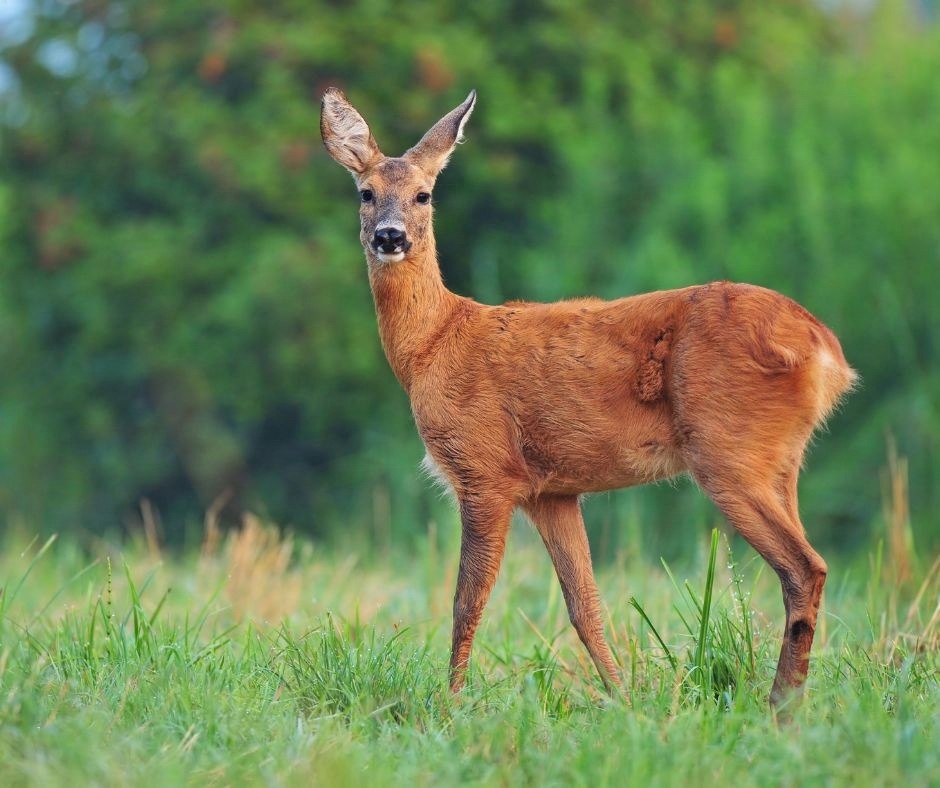
Photo By Gloriann Martin | A smaller deer cull than past years’ is set to take place here March 9 – 12, in a...... read more read more
 Subscribe
FORT GEORGE G. MEADE, Md. – A smaller deer cull than past years’ is set to take place here March 9 – 12, in a continuing effort to manage a deer population confined to the installation with no known predators.
“For the first time since we began herd reduction efforts, a sustainable herd can be achieved by taking only 75 deer,” said Julie Adkins, Directorate of Public Works Natural Resource Manager.
Since 2014 the Directorate of Public Works has worked with the U. S. Department of Agriculture to reduce herd size and increase the health of the herd here through an annual cull of up to 150 mature deer.
The reduction to the cull is just one indicator of an increasingly healthy herd.
“The decline in number from previous year’s demonstrates that consistent management is effective in reaching a sustainable herd level through control of breeding age deer,” said Adkins. “The better health of the remaining herd can be seen with a general increase in body weight, which indicates less food stress for the herd.”
This also means newly planted forests, landscape areas and residential vegetation is less likely to be disturbed by hungry deer, she said.
The deer here present unique challenges to the installation, said Matt Shaffer, Director of Public Works. These challenges include increased deer-vehicle collisions, increased tick-population and tick-born disease exposure, damage to forests and habitat.
“Unconstrained by natural predators’ deer will populate to the point of starvation – weakening the herd, exposing them to greater risk from disease, hunger and traffic accidents,” said Shaffer.
The Director of Emergency Services confirmed recent data showed significant reduction in vehicle incidents involving deer and endorsed continued herd management to maintain a low-risk environment and commitment to the safety of all personnel, residents, and visitors, said Adkins.
The reduction operation is conducted by two teams made up from four USDA sharpshooters, an animal control officer from DPW here and a DES officer (for safety and rapid response). The operation is conducted at night because deer are most active at that time and the chance of public interaction is minimized.
To determine the size of each year’s annual reduction operation requires the use of thermal-imaging cameras to observe the number of deer on a particular piece of land, then a formula is applied to account for deer unseen (but assumed to be present) on that section of land. Those numbers are then reviewed by the Maryland Department of Natural Resources who issue a permit to allow the reduction of the herd by a specific number.
As in years past, a processor will prepare the meat for donation to the Maryland Food Bank. Fort Meade has donated tens of thousands of pounds of venison to the Maryland Food Bank since 2014. Most of the meat has been distributed to veteran-oriented charitable organizations.
The USDA Animal and Plant Health Inspection Service has a record of zero accidents and a 100 percent drop rate in these types of operations.
| Date Taken: | 03.05.2026 |
| Date Posted: | 03.05.2026 13:52 |
| Story ID: | 559455 |
| Location: | FORT GEORGE G. MEADE, MARYLAND, US |
| Web Views: | 37 |
| Downloads: | 0 |

This work, Fort Meade announces annual deer herd reduction measures, by Shaun Herron, identified by DVIDS, must comply with the restrictions shown on https://www.dvidshub.net/about/copyright.

No keywords found.




