
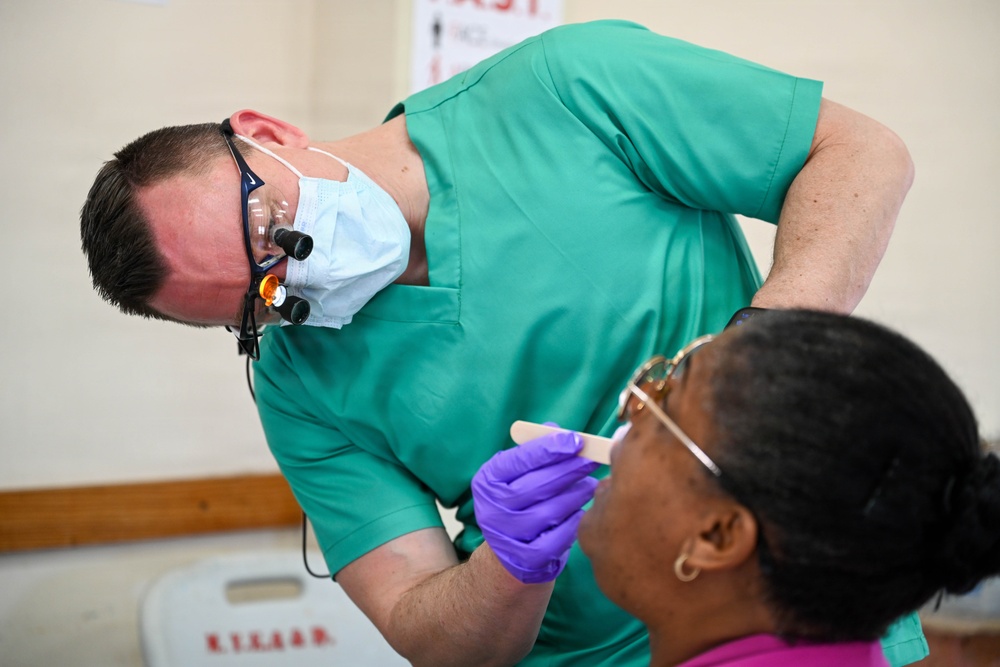
Photo By Staff Sgt. Dakota Carter | U.S. Air Force Reserve Maj. Nate Criddle, 926th Aerospace Medicine Squadron dentist,...... read more read more
 Subscribe
Residents of St. Kitts and Nevis turned out in strong numbers for Community Health Fairs hosted by the Ministry of Health in collaboration with the Lesser Antilles Medical Assistance Team (LAMAT) 2026 to deliver a day of care and health education.
Over the period of two days, held on each island, the events offered free health screenings, education and wellness services to individuals and families across the Federation.
For many attendees, the draw was simple: convenience and access.
Community members accessed a wide range of free services including blood pressure screening, blood sugar testing, height and weight measurements, body mass index (BMI) assessments, vision testing, HIV rapid testing, nutrition counseling, vision screening and general wellness checks. All with no appointment required, reinforcing the message that preventive care should be accessible and convenient for everyone.
LAMAT 2026 personnel worked alongside local healthcare professionals throughout the day, reinforcing the partnership’s focus on collaboration and capacity-building.
“This is about working together to support community health,” said Capt. Samantha Parks, a critical care nurse with the 349th Medical Squadron. “Through collaboration and knowledge exchange with the Ministry of Health teams, we’re building partnerships and providing referrals so people know where to go for follow-up care.”
The health fairs are about empowering people with knowledge, explained Novelia Rawlins-Nwosu, health educator with the Ministry of Health.
Events like the community health fairs allow residents to better understand their overall health while connecting them with follow-on care if needed.
“When people know their numbers—whether it’s blood pressure or blood sugar—they know where they are and where they need to start,” Rawlins-Nwosu said. “From there, they can receive referrals and take the steps needed to improve their health.”
The initiative forms part of LAMAT 2026’s broader mission to strengthen community partnerships and support regional healthcare systems through collaboration, education and service. Visiting U.S. Air Force medical personnel worked alongside local healthcare professionals to provide screenings and deliver targeted health education sessions.
In addition to screenings, education stations provided information on diabetes management, dental hygiene, nutrition, mental health awareness, bystander CPR, newborn care, and vision health with the event structured in a way allowing residents to move efficiently between stations while still having time to ask questions.
Bringing healthcare directly into communities helps expand access for individuals who may not otherwise seek preventive care, explained Parks.
“I think the most important aspect of this event is access … not everyone wants—or is able—to go to the hospital to see a doctor,” she furthered. “By bringing multiple screenings and providers together in one place, we’re improving access to care.”
Integrating services directly into communities also greatly reduces barriers to care.
“You're coming to them in a way like, ‘hey, we're here, all these services, all you have to do is show up and we'll take care of you,’” Rawlins-Nwosu said. “You're meeting them where they're at so they can get the simple stuff done and have that be the first step towards a healthier life.”
The expanded services also allowed residents to receive a more comprehensive look at their health during a single visit.
“Having all of these specialties under one roof creates a one-stop shop,” Rawlins-Nwosu said. “People don’t have to visit multiple clinics or appointments—they can come here, receive several screenings, and leave with a better understanding of their overall health.”
Individuals also engaged in nutrition demonstrations and discussions about healthier lifestyle choices, reinforcing both fair’s holistic approach to wellness.
While creating a welcoming environment is key to encouraging participation, community outreach is equally as significant in strengthening trust between the U.S. Air Force medical teams and local healthcare providers.
“Community-based outreach increases participation and awareness,” Parks said. “The community health workers serve this population every day, and they will continue that work long after we leave. – our role is to support that effort and strengthen those relationships.”
Even though this is a short-term exercise, the goal is long-term impact while improving health literacy and building trust, Parks explained.
As LAMAT 2026 continues its activities throughout the region, the success of the events highlights the power of collaboration between local health authorities and regional partners.
For residents across St. Kitts and Nevis, the events provided more than a couple of days of screenings … they offered information, resources and a clearer path toward maintaining their health.
“We’re bringing healthcare into the community and making it easier for people to access services,” Parks said. “I’m grateful to be part of this collaboration. Everyone involved has had direct interactions with patients, and those connections will have a lasting impact on both the community and the providers."
| Date Taken: | 03.03.2026 |
| Date Posted: | 03.04.2026 18:43 |
| Story ID: | 559400 |
| Location: | KN |
| Web Views: | 222 |
| Downloads: | 0 |

This work, LAMAT 2026 promotes community health in Saint Kitts and Nevis, by TSgt Jessica Smith McMahan, identified by DVIDS, must comply with the restrictions shown on https://www.dvidshub.net/about/copyright.


No keywords found.




