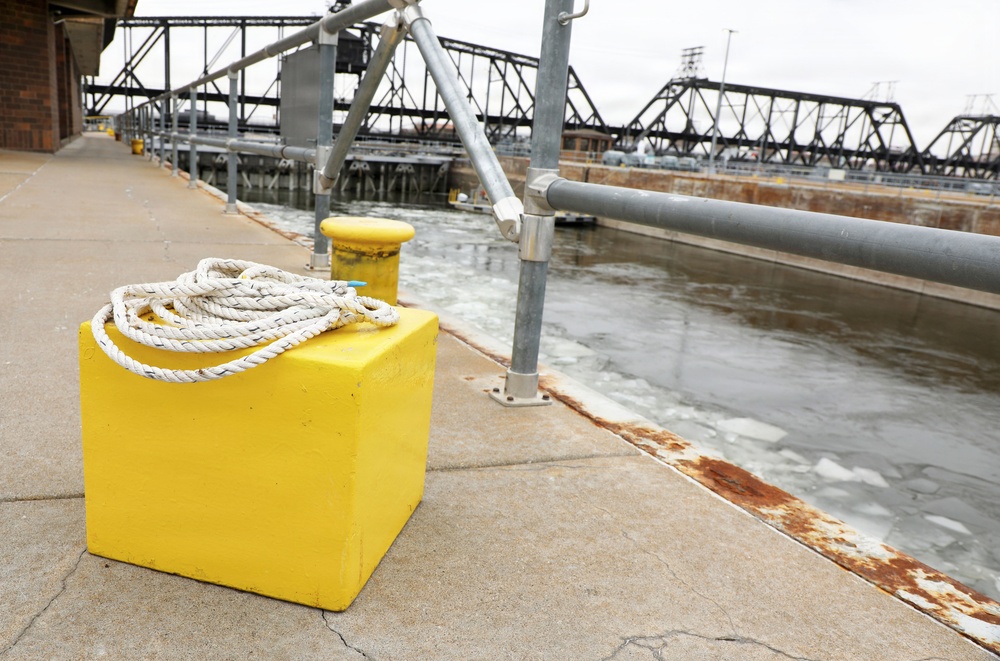
Photo By Frances Candelaria | Despite looking like an ordinary cement block, these aluminum crush blocks are rigid, watertight, and built to save a life. see less
| View Image Page
Lock chambers are inherently dangerous environments, especially when dealing with large vessels, moving water, and heavy equipment. There are several safety measures in place to protect personnel and ensure safe operations. Crush blocks, also known as safety blocks, are essential devices used within lock chambers to protect individuals from life-threatening situations.
Measuring 14 inches wide, 14 inches long, and 12 inches tall, these aluminium cubes are internally braced to enhance their rigidity. Built watertight, they float in water, ensuring quick and effective deployment during emergencies.
Their primary purpose is to safeguard individuals who may fall into the water within a lock chamber, specifically in the dangerous space between a barge or vessel and the lock chamber wall. This area poses a significant risk due to the potential for being crushed as barges move within the chamber. Safety blocks act as a physical barrier, preventing barges from moving closer to the wall than the block’s dimensions, thereby protecting the person in the water.
Safety blocks are utilized in emergencies when someone falls into the water between a barge or vessel and the lock chamber wall. Personnel stationed on the wall immediately throw one or more blocks into the water near the individual’s location. This action halts the movement of the barge, which can shift due to water flow, wind, or other forces. Given the immense mass of barges, the safety block’s intervention is critical to preventing fatal accidents.
Andy Barnes, Lock and Dam Section Chief, explained how critical these safety tools were during an incident at Lock 14 on September 28, 2025.
“An industry deckhand tripped while walking on the deck of a barge and fell into the water within the lock chamber,” Barnes said. “Recognizing the immediate danger, a lock operator, Dave Allardyce, quickly deployed a crush block into the chamber near the deckhand’s location. Fortunately, the deckhand had fallen close to a ladder recess and was able to climb back onto the barge deck, wet but unharmed.”
This quick action prevented a potentially fatal accident, highlighting the critical role these blocks play in emergency situations.
The exact timeline of safety blocks’ introduction within the Corps’ facilities is unclear, but they have been in use for many decades. While records of their usage are not formally maintained, incidents requiring safety blocks are fortunately rare. Within the Rock Island District, such occurrences are estimated to happen about once a year across the Mississippi River and Illinois Waterway.
Each step of establishing proactive safety protocols is vital in mitigating risks and ensuring that personnel are protected in such challenging environments. By combining other safety measures with the blocks, Rock Island District’s lock chambers are significantly safer for workers and visitors.