MAXWELL AIR FORCE BASE, Ala. -- At the Air Force Historical Research Agency, a dedicated team of historians and archivists are tasked with a critical mission: transforming lessons from the battles of yesterday into a decisive strategic advantage for today’s Airmen and Guardians. By maintaining the official repository for Air Force and Space Force history, AFHRA ensures decisions of the present are directly informed by the hard-earned wisdom of the past.
The agency delivers research and direct operational support to the Department of the Air Force, the Department of War, the White House, and major commands worldwide. Its work leverages historical analysis to better inform leadership decisions regarding lethality, deterrence, rebuilding the force and strengthening the warfighter ethos.
“We provide direct support to students and faculty at the Air Command and Staff College, Air War College and the School of Advanced Air and Space Studies,” said Samuel Shearin, AFHRA lineage, honors and heraldry division’s historian. “We ensure they have access to the archives.”
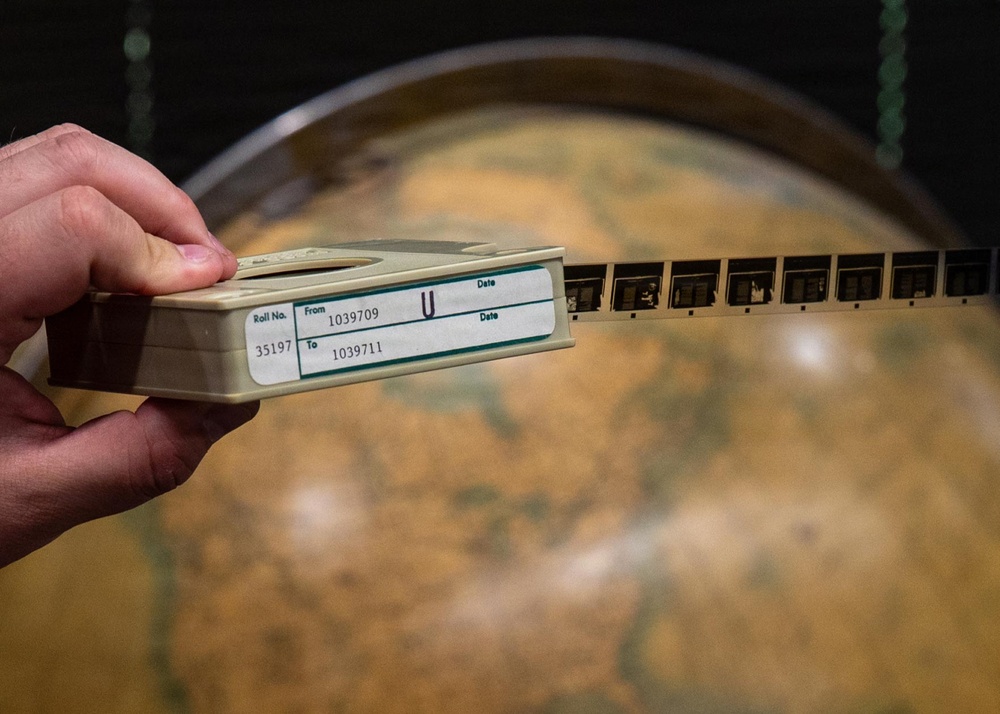
With roughly 40 historians and archivists, AFHRA manages approximately 300 million physicalfiles; and with the addition of digital files,700 million materials total. With some records dating to the post-Civil War and pre-World War I eras, the collection documents unit histories, operations, lineage, honors and lessons learned. Together, these records form a living archive designed to inform present-day operations.
When the Warrant Officer School was re-established at Maxwell, leaders turned to AFHRA to avoid past pitfalls and build on previous successes. This put into practice the core philosophy of the institution. Melissa Lahue, AFHRA research division chief, highlighted an archive should be a useful tool for decision-making, not just a static record. By providing historical context, the agency helped leaders solve modern challenges.
Historians retrieved earlier records detailing how warrant officers were previously organized and trained, allowing the major command to review past operations and identify important lessons learned.
“There were a lot of questions about the structure and the training and what was done in the past,” Lahue said. “Being able to turn those documents over let leaders say, ‘We already have a template of how we did this before. We can use the strong tools from this and learn from the weak points to create something even better this time around.’”
Lahue emphasized the ultimate purpose of unit history is to ensure future decisions are made from a place of strength and knowledge. She explained they are not just records of what occurred, but vital tools that inform present operations and ultimately strengthen the DoW.
AFHRA’s mission aligns closely with Air University’s role in intellectually equipping Airmen and Guardians while also providing services to the general public and the active-duty Air Force.
“With Air University specifically, we do outreach to let them know what resources we have here,” Lahue said. “They’ll be working on a project for a specific time period or operation and want to look at lessons learned as future commanders.”
The agency also partnered with Air University’s Commander’s Edge program to reconnect more than 1,000 new commanders with their units’ lineage and honors, reinforcing identity and warfighter ethos.
Among AFHRA’s most visible missions is oversight of Air Force and Space Force heraldry.
"The official heraldry emblem for each unit is the single item that connects the original unit members, the current unit members, and all future generations in service," Shearin said.
Historians maintain the lineage, honors and emblems of approximately 3,700 active and reserve units, tracing each organization from constitution through activations, redesignations, assignments and decorations.
Behind the scenes, AFHRA also supports the Department of Veterans Affairs, the Defense Personnel Accounting Agency POW/MIA and senior leaders seeking historical context for policy decisions.
"Our researchers spent years digging back through our World War II histories,” said Lahue. “That multi-year project ultimately resulted in 29 service members being posthumously awarded the Purple Heart for their actions at Pearl Harbor."
The archives provide a personal connection to the past, serving visitors who range from generals tracing their family lineage to veterans seeking information on past duty history or unit ties. For each, AFHRA has found ways to provide assistance without compromising historical documentation.
From rebuilding institutions to providing knowledge for lessons learned and strengthening commanders, AFHRA ensures today’s Airmen and Guardians can leverage the archives to make informed decisions, equipped with the hard-earned lessons of those who served before them.
Through preservation, research and direct operational support, the Air Force Historical Research Agency transforms history into a decisive advantage for the warfighter.
| Date Taken: |
02.27.2026 |
| Date Posted: |
02.27.2026 16:14 |
| Story ID: |
559139 |
| Location: |
MAXWELL AIR FORCE BASE, ALABAMA, US |
| Web Views: |
8 |
| Downloads: |
0 |
PUBLIC DOMAIN

This work, AFHRA: unlocking the archives, by SrA Tanner Doerr, identified by DVIDS, must comply with the restrictions shown on https://www.dvidshub.net/about/copyright.

 Subscribe






