
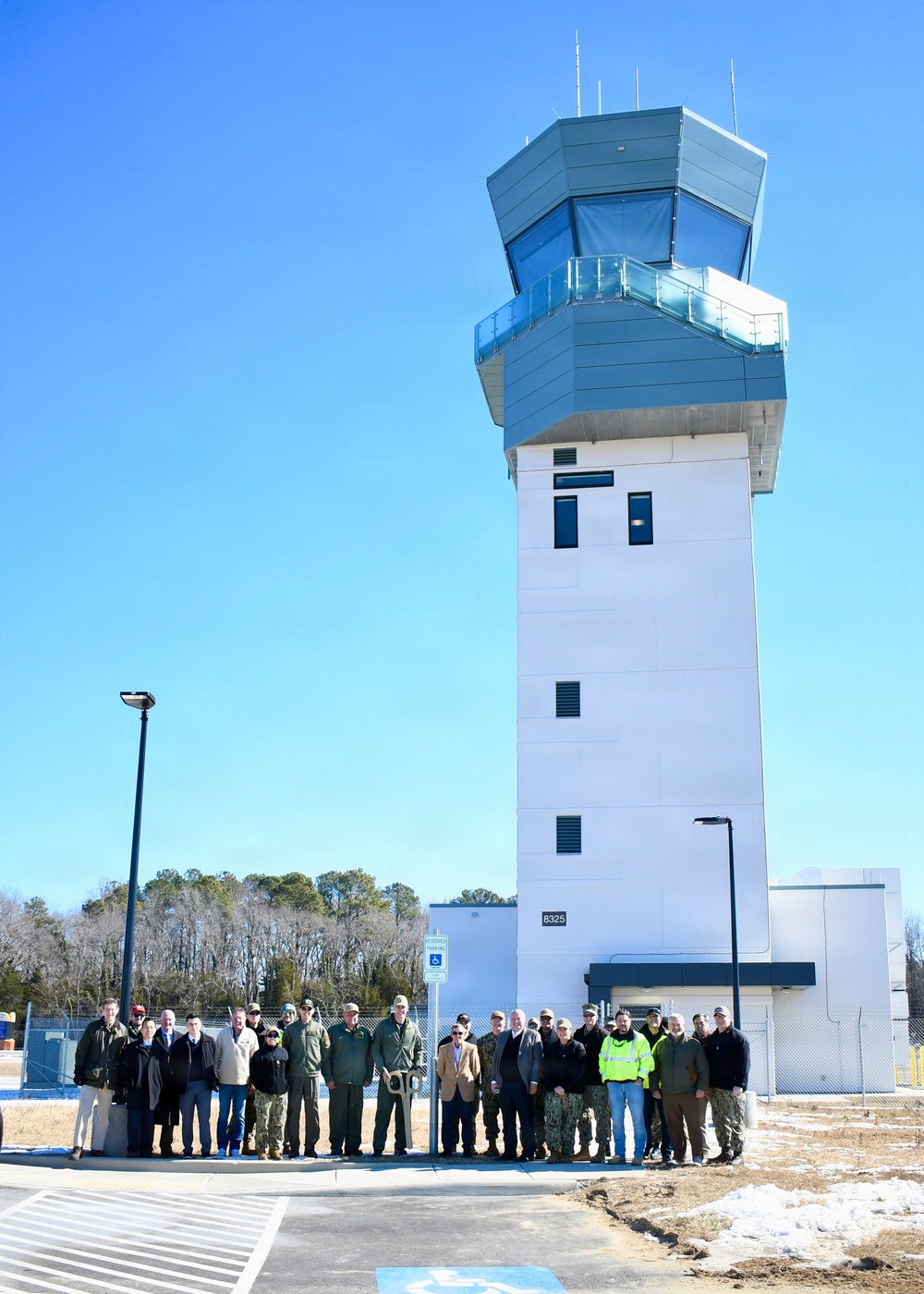
Photo By Chief Petty Officer Patrick Gordon | SAINT INIGOES, Maryland (Feb 9, 2026) - Representatives from NAS Patuxent River, Navy...... read more read more
 Subscribe
By ACAN William Wilson NAS Patuxent River Air Traffic Control
Webster Outlying Field, part of Naval Air Station Patuxent River, officially opened its new air traffic control tower with a ribbon cutting Feb. 9, 2026. The tower stands as a tangible investment in safe and efficient execution of the Navy’s research, development, test, and evaluation missions.
“For PAX Sailors and ATC personnel, it represents a modernized tower designed to meet operational demands with better technology, improved visibility, and a safer, more efficient environment to control aircraft,” said Cmdr. Stephen Porter, NAS Patuxent River Air Operations Officer. “For the tenant squadrons and operating aircraft, it reinforces confidence that their operations are supported by professional personnel and modern equipment. The tower is physical recognition of the Navy’s commitment to excellence in aviation.”
The multimillion dollar project reflects the persistence of sailors, leaders, planners, and advocates who recognized the need for modernization and never stopped pushing for it despite budget constraints. “I’ve been a part of this project since its inception,” said Richard Smith, project engineer. “I helped design the actual tower and equipment. I hold very dearly anything that supports the warfighter. My goal is to make sure the warfighter has a quality product that they can call their own.”
Long-term, the new tower strengthens the Navy’s ability to operate safely, efficiently, and technologically ahead of emerging threats, enabling integration of advanced systems and all flight operations at Webster Outlying Field. For the personnel working daily in the tower, the upgrade is more than a technical improvement—it’s a morale boost.
“I’m truly grateful for being a tiny part of this massive project full of people who are passionate about their work,” said Webster Branch Chief Cassandra Macko. “I’m excited for my ATC personnel to have the chance to work in a more spacious and more functional environment that supports operational requirements.”
Weather technician Charles E. Reichman added, “The new tower was really quite a necessity. The old tower was a temporary structure when it was first installed and ended up being here for forty years. So, it was due to be replaced. The controllers will have a few more resources available to them, so it’s a good thing.”
With modern technology, enhanced visibility, and advanced operational capabilities, the Webster Outlying Field Tower ensures that the Navy’s flight operations remain safe, efficient, and mission-ready for the challenges of tomorrow.
Webster Outlying Field is home to offices that develop and deliver airborne, shipboard, and shore-based rapid, organic Lead Systems Integrator (oLSI) capability engineering solutions for U.S. military, intelligence, and homeland security missionsanywhere around the world. Webster incorporates two active runways, thousands of square feet of instrumented lab space and an antenna range in a geographically littoral environment, which offers an isolated and actively managed electromagnetic environment to rapidly design, develop, test, and field oLSI solutions.
| Date Taken: | 02.10.2026 |
| Date Posted: | 02.10.2026 15:02 |
| Story ID: | 557861 |
| Location: | ST. INIGOES SHORES, MARYLAND, US |
| Web Views: | 656 |
| Downloads: | 3 |

This work, Webster Outlying Field Unveils New Air Traffic Control Tower, by PO3 William Wilson, identified by DVIDS, must comply with the restrictions shown on https://www.dvidshub.net/about/copyright.


No keywords found.




