Subscribe
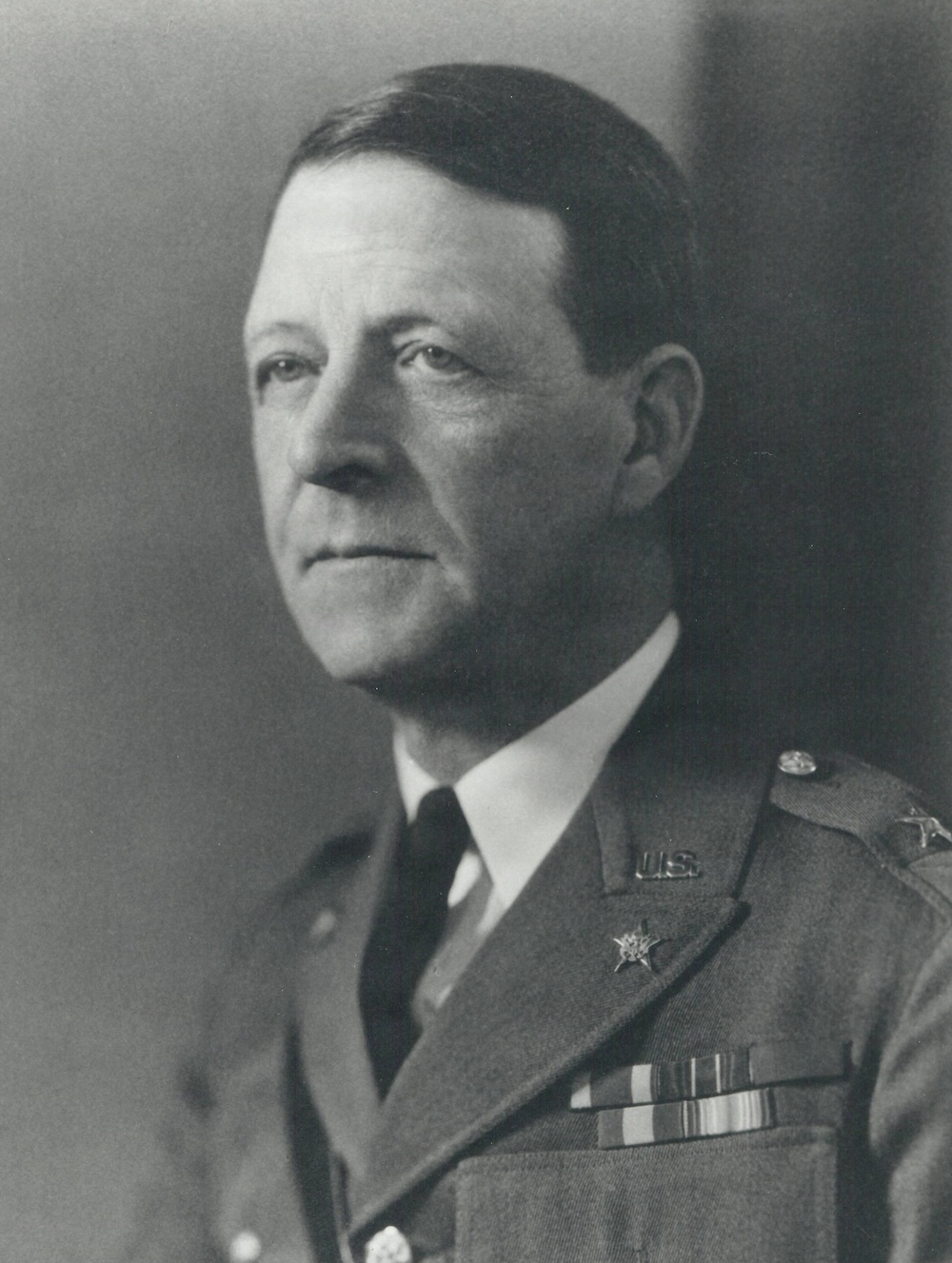
On Feb. 1, 1935, Brig. Gen. Harry E. Knight was named the Army’s ninth senior intelligence officer, a position then referred to as the assistant chief of staff (ACoS), G-2. For the next ten months, he steered Army intelligence through the ongoing challenges of the austere Depression Era.
Harry Edward Knight was born in Elizabeth, New Jersey, in July 1876. He attended Montclair Military Academy before transferring to Lehigh University in Bethlehem, Pennsylvania, where he was the football team’s quarterback and his class’s vice president. He enlisted in the 14th New York Volunteers early in the Spanish-American War but, in July 1898, accepted a direct commission as a second lieutenant of infantry in the Regular Army.
In the early 1900s, Knight served in Cuba, the Philippines, Hawaii, and throughout the United States. He was assigned to the War Department’s War Plans Division during the Great War but deployed overseas to command the 2d Brigade, 50th Infantry Regiment, in Coblenz, Germany during the post-war occupation. When his unit inactivated on Dec. 31, 1921, he took command of the 5th Infantry at Audernach. The next ten years saw Knight serving in staff and command positions throughout the United States. He was promoted to brigadier general in 1934.
On Feb. 1, 1935, General Knight became the ACoS, G-2, at the War Department. He quickly found that his $35,500 budget—one of the lowest in the G-2’s history—put significant stress on his office. This came at a time when the importance of counterintelligence surged as communist activities increased in the U.S. and its possessions. He reported, “Since June 1934, there has been a marked increase in the subversive activities directed against the military establishment… especially noticeable in the Ninth Corps Area and in the Hawaiian Department…and adjacent to the Panama Canal Department.” Knight lobbied for more Corps of Intelligence Police agents, imploring his superiors that “the purpose for which these men are requested is second to none in importance.” He further argued for more trained personnel dedicated to intelligence: “Corps Area G-2’s are now dependent upon men detailed to them for limited periods. This is unsatisfactory and not productive of the results the seriousness of the situation demands and which can only be assured by the use of personnel specially trained and permanently employed on such duties.” All Knight’s entreaties for more personnel were disapproved by Army Chief of Staff General Douglas MacArthur.
General Knight did have more success increasing his office’s external coordination and cooperation, particularly in relation to military attachés. He created a four-member Interdepartmental Intelligence Liaison Board to share security information and ensure maximum coordination for collecting information in the Canal Zone. He also instituted a series of round-table conferences for war planners, at which foreign ambassadors and attachés served as guest speakers. He arranged for a U.S. Army officer to attend the German General Staff College, renewed the American Military Mission in Guatemala, and detailed a captain to Ethiopia as an attaché during the Italian-Ethiopian conflict. Furthermore, Knight successfully petitioned for an increase in attaché appropriations for entertainment and the development of contacts, something previous G-2s had attempted but failed to achieve.
Finally, through a “judicious change in policy” but not funding, General Knight arranged active-duty tours for 117 MI Officer Reserve Corps company-grade officers, compared to only seventeen in fiscal year 1934. Some of these officers were placed on duty in the Civilian Conservation Corps, where they received beneficial military experience, albeit not specific to intelligence work.
On Nov. 25, 1935, after leading the Army’s intelligence organization for just ten months, General Knight was reassigned as the War Department’s ACoS, G-1. Two years later, he was promoted to major general and placed on duty with the Army Group, Washington, D.C. He retired on May 31, 1938 after a forty-year military career. General Knight died Mar. 12, 1951 in Walter Reed Hospital after a two-week-long illness. He is buried in Arlington National Cemetery.
Article by Lori S. Stewart, USAICoE Command Historian. New issues of This Week in MI History are published each week. To report story errors, ask questions, request previous articles, or be added to our distribution list, please contact: TR-ICoE-Command-Historian@army.mil.
| Date Taken: | 01.30.2026 |
| Date Posted: | 01.30.2026 13:52 |
| Story ID: | 557201 |
| Location: | US |
| Web Views: | 15 |
| Downloads: | 0 |

This work, Brig. Gen. Knight Becomes ACoS G-2 (1 FEB 1935), must comply with the restrictions shown on https://www.dvidshub.net/about/copyright.

No keywords found.