
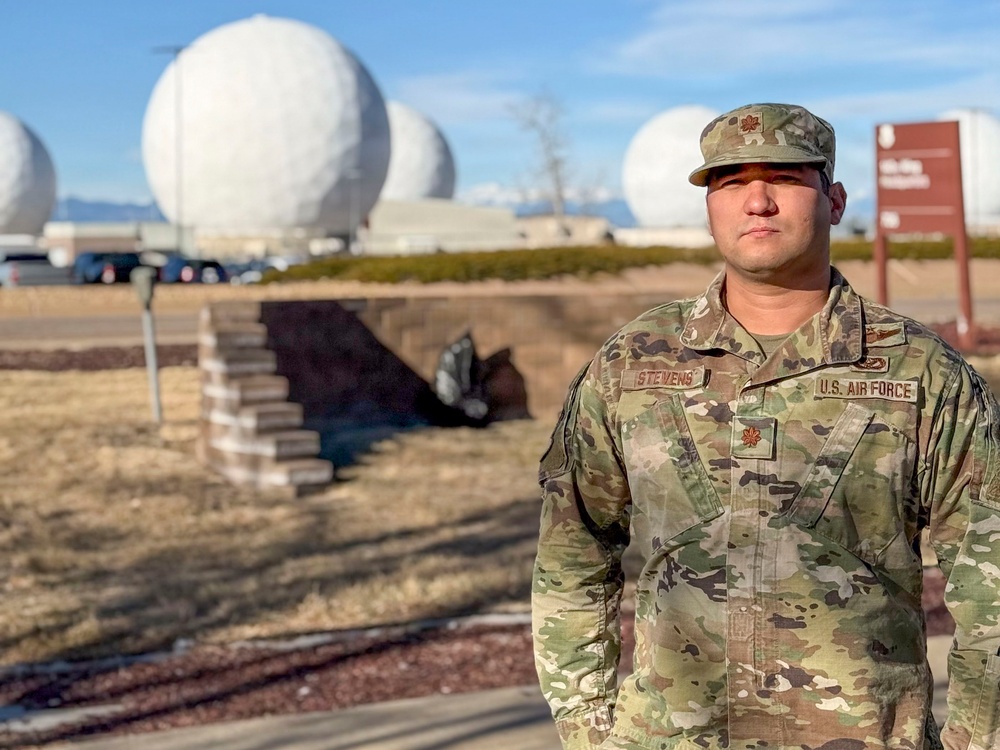
Photo By 2nd Lt. Stephanie Zimmerman | U.S. Air Force Maj. Joshua Stevens, a civil engineer assigned to the 240th Civil...... read more read more
 Subscribe
What began as a routine afternoon of physical therapy and a quick workout for U.S. Air Force Maj. Joshua Stevens, a civil engineer with the 240th Civil Engineer Flight, 140th Wing, turned into a life-altering moment when gunfire erupted at the high school next to the recreation center in Evergreen, Colorado, Sept. 10, 2025.
Stevens had just finished stretching when he heard commotion in the hallway. At first, it sounded like the usual noise of teenagers moving through the building. Then someone shouted that there was an active shooter.
“At that point, I stopped what I was doing, walked out into the hallway and asked what was going on,” Stevens said.
He walked into the hallway to confirm what he’d heard, then moved toward the front office to ensure someone had called 911. As staff began locking down the building, students fleeing the high school streamed toward the recreation center seeking cover.
Outside the entrance, Stevens saw a teenager trying to move as quickly as possible while wearing a medical boot and using a crutch. The teen was alone and struggling to reach safety. Stevens ran toward him.
“I couldn’t just watch him try to run alone,” he said. He took the student’s crutch, placed the teen’s arm over his shoulder and helped him up the steps and into the building before returning to the entrance to monitor the situation.
Inside, as staff directed evacuees toward safer areas, Stevens noticed another student receiving first aid in a nearby room. The injuries were significant, and while staff were applying pressure to the wounds, Stevens wasn’t sure if anyone had formal medical training. Drawing on CPR and Tactical Combat Casualty Care skills from his military service, he assisted where he could.
“When they got the first aid kit to the student, I asked them to get the AED (Automated External Defibrillator) too,” he said. “I knew CPR, and I just don’t think I could have lived with myself wondering if that would have made the difference.”
The student was badly wounded and drifting in and out of consciousness. Stevens focused on keeping him alert and responsive.
“I held his hand,” he said. “I asked him questions. I told him he was doing a great job. And every time his eyes started to roll back, I’d call his name until he came back.”
When emergency medical personnel arrived, Stevens stepped back to give them space to work.
Later, he washed the blood off his hands. He then helped staff gather the names of students sheltering inside and assisted with organizing information for parents desperate to locate their children.
Once the building was cleared hours later, he finally walked away from the scene, but the emotional impact followed him home.
“In that first month, it had a pretty great effect on me,” Stevens said. “Intrusive thoughts, loss of sleep. When I would recount the event, I felt a lot of emotion and then I’d feel really tired afterward.”
The lasting stress of the event surprised him. Even weeks later, he said he noticed irritability at home and difficulty managing the weight of what he witnessed. Conversations with fellow Airmen, family members, and others who had experience with trauma slowly helped him begin to process it.
“Talking about it made a difference,” he said. “Those initial discussions were very critical.”
Stevens has not met the student he helped and respects the family’s request for privacy, but he continues to reflect on that day. Stevens believes community conversations matter.
“Every little bit helps, and having small conversations with your neighbors keeps things going in the right direction.”
For Stevens, his actions came down to responsibility—to his neighbors, to the teenagers running for their lives, and to the training that prepared him to stay calm under pressure.
“On that day, he wasn’t just a civil engineer. He was a hero,” said U.S. Air Force Col. Carrie Worrell, chief of joint staff, Colorado National Guard. “He embodied everything we mean when we say ‘Citizen Airman,’ and he is one of our own. This is what we stand for. Behind every mission, every aircraft, and every uniform, there’s a neighbor, a friend, and fellow Coloradan.”
“This is the community I live in,” Stevens said. “These are our children.”
Stevens does not describe himself as a hero. He believes he was simply where he needed to be, drawing on skills learned through years of military readiness training.
“When you’re in the Air National Guard, you’re constantly put in environments where you feel minimally prepared, but you go out there and do it anyway,” he said. “I think being in that environment pushed me through the door to help that student.”
Stevens continues to heal, slowly, by sharing his story.
“Every time I tell it, it helps,” he said.
| Date Taken: | 01.30.2026 |
| Date Posted: | 01.30.2026 12:59 |
| Story ID: | 557197 |
| Location: | COLORADO, US |
| Web Views: | 357 |
| Downloads: | 0 |

This work, Colorado Air National Guard member responds to crisis at Evergreen High School, by A1C Eliana Raspet, identified by DVIDS, must comply with the restrictions shown on https://www.dvidshub.net/about/copyright.

No keywords found.




