
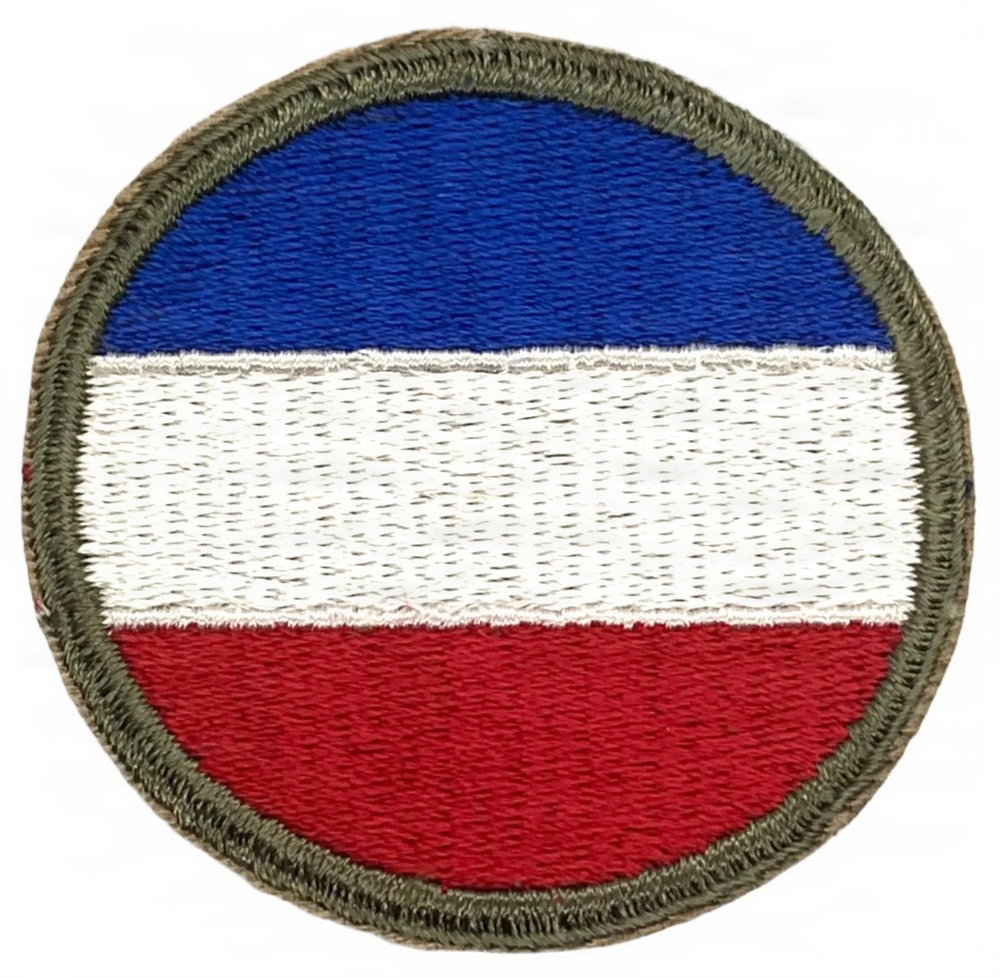
Photo By Erin Thompson | Established during World War II, the Army Ground Forces organized, trained, and...... read more read more
 Subscribe
On Jan. 31, 1947, the Army Ground Forces (AGF) issued the six-page “Intelligence Bulletin Number 2: The Peacetime Intelligence Officer.” This interesting document outlined “the place that a good G-2 or S-2 should fill in his headquarters during the peace years…in the hope that his war and peace potential may be increased.”
The bulletin stated, “one of the primary reasons for the lack of trained intelligence personnel and for intelligence failures in the last war was that intelligence officers did not fill their proper place in peace time.” It then laid out three general ways peacetime G-2/S-2s should practice their wartime mission. First, intelligence officers should perform responsibilities matching their wartime duties. In doing so, secondly, the officer “can make himself and his section a valuable working part of his peace time headquarters.” Finally, the bulletin stressed the need to “periodically take time to think—to deliberately start a train of thought looking toward future possibilities."
The bulletin devoted four of its six pages to describing eighteen areas that peacetime G-2/S-2s should perform in preparation for wartime service. These areas ranged from obtaining maps and aerial photographs and coordinating with other organizations to planning intelligence play in maneuvers and training and briefing the commander and staff. By performing these duties, the intelligence officer would get into the habit of fulfilling them; meanwhile, his commander and unit would look to him to accomplish them. For example, the intelligence officer’s anticipation and planning should make it “easier to get a map of any kind through G-2 than in any other way.” At the same time, the intelligence officer could use his assets to prepare sketches, route reconnaissance, and surveys of maneuver areas as training for wartime missions. To develop the practice of coordinating with other agencies, the bulletin prosaically suggested liaison with higher and other units on the post. However, it also imaginatively recommended the intelligence officer reach out to local police, forest rangers, state highway patrol, filling stations, and local newspapers for information: “information is where you find it and must be actively searched for.” Commanders and units “should develop the idea that if the intelligence officer is a source of information, that if he hasn’t got it, he will get it or can help in some way.”
After detailing these specific duties, the bulletin stressed the need to lay the foundations of coordination and cooperation with the G-3/S-3 in peace. Much of this and his other duties largely depended on the intelligence officer’s all-round abilities. “A good G-2 or S-2 must possess a certain quality of mind,” the bulletin stated, “of which imagination and a certain mental alertness are necessary parts.” It further noted that “if the prewar commanders and their subordinates had been in the habit of relying daily on a live-wire, accurate intelligence group for all information, they would have retained the habit during the war.”
In summing up, the bulletin encouraged the intelligence officer to devote some time to thinking about the future. Although this requirement was not specific to just the G-2/S-2, it pointed out that “an intelligence plan in war is simply organized thinking combined with a check system for implementation.” It concluded that an "organized and deliberate thought looking toward the future is a habit which can be cultivated—and is one of the most important parts of an intelligence officer’s training. He, more than any other officer, is expected to anticipate future events and eventualities in war—and he should develop and train himself in this mental quality in his peace time duties."
Article by Michael E. Bigelow, INSCOM Command Historian. New issues of This Week in MI History are published each week. To report story errors, ask questions, request previous articles, or be added to our distribution list, please contact: TR-ICoE-Command-Historian@army.mil.
| Date Taken: | 01.30.2026 |
| Date Posted: | 01.30.2026 13:52 |
| Story ID: | 557173 |
| Location: | US |
| Web Views: | 33 |
| Downloads: | 0 |

This work, Drawing Parallels Between War and Peace (31 JAN 1947), must comply with the restrictions shown on https://www.dvidshub.net/about/copyright.

No keywords found.




