
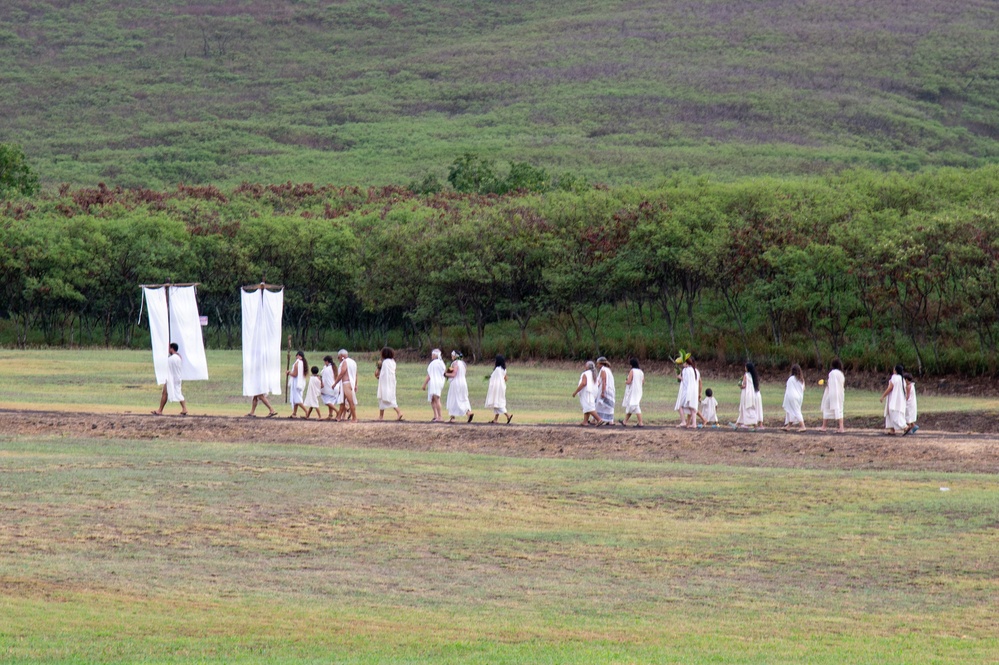
Photo By Bryan Cheplic | Native Hawaiian community members gather at Makua Valley on Dec. 14, 2025, for the...... read more read more
MAKUA VALLEY, Hawai‘i — U.S. Army Garrison Hawai‘i recently welcomed members of the Native Hawaiian community to Makua Valley to mark the Makahiki opening ceremony Dec. 14, 2025. Makahiki is a culturally significant season dedicated to Native Hawaiian reflection, renewal, gratitude, and preparation.
The event was facilitated by the Garrison’s Cultural Resources team, which provided safe access to Makua for cultural practices and land stewardship activities. These visits are conducted under the 2002 Cultural Access Agreement and the O‘ahu Programmatic Agreement, both of which support continued collaboration between the Army and Native Hawaiian organizations.
“This has and continues to be unprecedented for the Army to regularly open the gates of Makua Valley to the community, including overnight access,” said Vince Dodge, Malama Mauka board member. “It represents a major step forward in restoring cultural access and strengthening community involvement in the valley.”
The Cultural Resources section at USAG Hawai‘i is responsible for fostering mutually beneficial relationships with Native Hawaiians while increasing awareness and understanding of Native Hawaiian culture and issues. At the same time, the Army remains committed to providing sustainable installation support for the military community while protecting and preserving Hawai‘i’s lands and cultural heritage. Proactive dialogue with Native Hawaiians is leveraged to ensure informed decisions that respect the legacy of the Native people of Hawaii while still meeting the mission and goals of the Army.
“Our cultural resources team is constantly in close communication with scores of Native Hawaiian organizations, simply due to the numerous amounts of historic properties and cultural resources residing on Army training lands,” said Dr. Brian Padgett, U.S. Army Garrison Hawai‘i archeologist.
“This also reflects a greater level of responsibility our team has to the Native Hawaiian organizations who are essentially our neighbors here on the island,” said Padgett. "All of our cultural staff are required to exhibit a higher amount of diplomacy particularly when serving in the capacity as the liaison between the Army and the local community.”
“At first, it was difficult to trust the Army and view them as anything other than hostile,” Dodge says. “But we’ve come to understand that meeting them with anger and hostility was getting us nowhere. It wasn’t until our Malama Makua family re-considered our relationship with the Army through the perspective of Makua (which translates to parent) itself that it became clear: the Army is not our enemy – they are simply members of our extended ‘ohana (family) that either don’t understand or don’t appreciate the sanctity of the land we as Native Hawaiians do,” said Dodge.
“Respecting the traditions and cultures of all Native peoples is a priority for the Garrison’s Cultural Resources staff, as we support those who have a strong desire to preserve their rich history, culture, and traditions amid the various influences present in today’s society,” added Padgett.
| Date Taken: | 12.19.2025 |
| Date Posted: | 12.19.2025 15:15 |
| Story ID: | 555005 |
| Location: | HAWAII, US |
| Web Views: | 18 |
| Downloads: | 0 |

This work, USAG Hawaii hosts Native Hawaiians for Makahiki celebration at Makua Valley, must comply with the restrictions shown on https://www.dvidshub.net/about/copyright.

No keywords found.





