
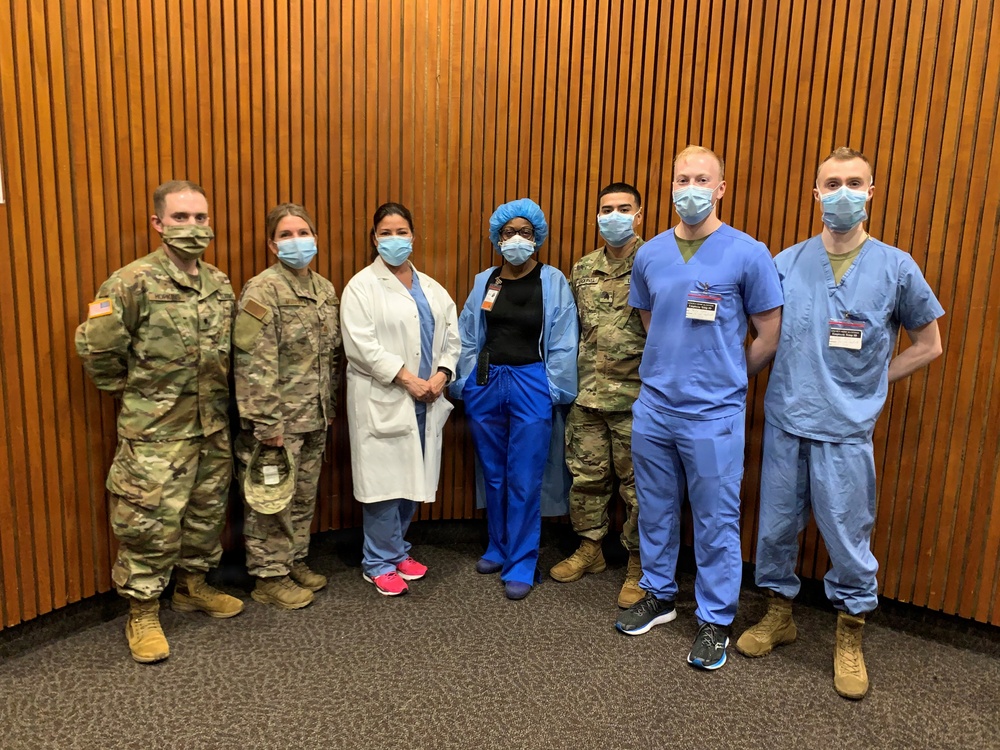
Courtesy Photo | U.S. Air Force Maj. Angela Murphy, IMA to the Chief of Force Development and Training...... read more read more
Air Force Reservists and Air National Guard make up more than one-third of Air Force personnel, according to a 2023 Military OneSource demographic report. Many are medics who work in civilian hospitals, clinics, and public health organizations while serving in uniform. Their dual roles promote a vital exchange of expertise between civilian and military healthcare systems, improving both readiness and patient care.
“It is critical, and it's an absolute. We've got to train with our civilian partners,” said U.S. Air Force Col. Mei-Ling Taylor, Individual Mobilization Augmentee to the Medical Forces Advisor to the Air Force Surgeon General. “There are things that they can learn from us just as much as we can from them, and I don't think that we have the answers to all when it comes to military medicine.”
[media:4:left:medium]Taylor, whose career includes active duty, the Guard, and the Reserve, also serves as chief of staff for Defense Health Network Central in her civilian role. Her background in defense contracting and state-level healthcare administration gives her a broad perspective on collaboration and resource management.
She said that the Air Force’s deliberate placement of Reserve and Guard units near military treatment facilities enhances deployment readiness.
“Our Air Force military treatment facilities are staffed with uniformed personnel, and they're going to deploy,” Taylor said. “And there are reasons why Reserve and Guard are co-located near our MTFs. We are here to deploy.” U.S. Air Force Col. Michelle Van Sickle, Medical Forces Reserve advisor to the Air Force Surgeon General, shares a similar perspective on readiness.
“They can be activated and have to be ready to go within 72 hours … we call it Ready Now … that’s our whole purpose in the Guard and the Reserve is readiness focus,” Van Sickle said.
Both leaders emphasized that civilian careers help Reserve and Guard members sustain critical skills to stay operationally ready - a balance essential to the Total Force mission.
Civilian experience as a force multiplier
Experience in civilian healthcare plays a critical role in maintaining military medical readiness. Reserve and Guard medics routinely treat higher patient volumes with a variety of cases at civilian major trauma level centers, reinforcing their clinical proficiency for deployment and contingency operations.
“Acuity and patient volume that they’re able to see in a civilian facility is often higher than what they’re able to see in the MTF,” said Col. Jason Arndt, deputy director of Air National Guard Medical Services. “When we pluck them from the civilian setting to put them into a military setting, they already have those advanced skillsets.”
Arndt has served more than two decades in the Air National Guard with prior civilian experience as an emergency care nurse, which translated into the skills needed to perform his flight nurse duties. He stated that the Guard’s dual federal and state mission, along with members’ civilian experience, ensures adaptability in diverse operational environments - from public health emergencies to large-scale military operations.
Additionally, Arndt noted that although most Reserve component medics are working clinically, a small portion are not. Some bring skills from fields like information technology or law enforcement - versatile expertise that becomes more important during large-scale or contested operations.
This blend of clinical and non-clinical skillsets, he said, strengthens the operational environment and supports the evolving mission.
Air Force Reserve Component in action
While Air Force medics enhance their readiness through civilian partnerships, they also contribute their extensive experience in crisis-response and clinical adaptability, adding value to these hospitals and healthcare organizations.
That adaptability was tested during the COVID-19 pandemic, when Reserve and Guard medics mobilized nationwide to support medical response efforts in 2020.
U.S. Air Force Maj. Angela Murphy, an emergency room nurse and IMA to the chief of the Force Development and Training Branch, was among those called to serve with less than 24 hours’ notice at the height of the pandemic. She explained that since most Reservists had cross-functional knowledge of civilian care and military emergency preparedness training, they integrated into overwhelmed civilian hospital systems with minimal onboarding during the pandemic.
“What stood out to me was how our military training prepared us to function in high-stress, resource-limited environments,” Murphy said. “We were used to working with minimal guidance, adapting quickly, and supporting each other in a mission-first mindset. That translated directly into improved patient care and teamwork on the civilian side.”
Ultimately, medical Reservists and Guardsmen contribute more than just their clinical skills. They bring leadership, resilience, and a service-driven mindset that benefits the broader healthcare system especially in moments of crisis.
The Total Force advantage
The experiences of medics like Taylor, Van Sickle, Arndt, and Murphy reflect the value of integrating military and civilian medicine. Civilian healthcare organizations benefit from the leadership and expertise of military-trained professionals, while the Air Force gains clinicians whose skills are sharpened in high-volume patient environments.
Together, the Air Force Reserve and Air National Guard help sustain Total Force readiness - a system built on collaboration, readiness, and the shared mission to deliver trusted care anytime, anywhere.
| Date Taken: | 12.22.2025 |
| Date Posted: | 12.22.2025 07:03 |
| Story ID: | 554333 |
| Location: | FALLS CHURCH, VIRGINIA, US |
| Web Views: | 263 |
| Downloads: | 0 |

This work, Reserve and Guard Medics serve a duality of military readiness, civilian healthcare, by Maristela Romero, identified by DVIDS, must comply with the restrictions shown on https://www.dvidshub.net/about/copyright.


No keywords found.





