JOINT BASE CHARLESTON, SC – The radio to your right crackles with a transmission from air traffic control: “Cleared on runway 35,” and you roll past the rain-soaked taxiway to a better view of dark grass lining the solid gray cement of an active runway.
Looking closer, you can see cropped weeds creeping up towards a bold yellow runway sign but still short enough to leave the sign visible for another few weeks. Turning the wheel, you continue down… wait, wheel? Aren’t airplanes flown by joysticks and yokes?
Actually, the sight of a specially outfitted pickup truck on the flight line is common at major airports, in addition to the planes cruising through. Why? In order for the planes themselves to takeoff safely, all areas of the airport must be cleared and inspected. While pilots are comfortable navigating the clouds, the ground portions of their takeoffs and landings fall within airfield management’s domain, a kingdom requiring constant diligence and attention to detail from their small career field.
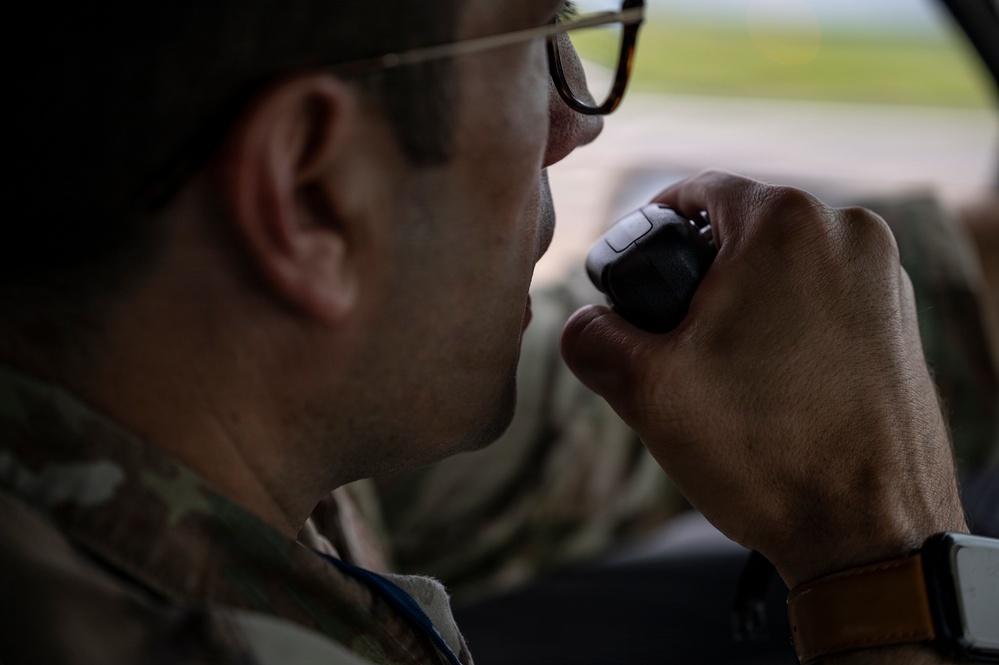
In coordination with Air Traffic Control, 437th Operational Support Squadron Airfield Management Airmen conduct regular inspections on the flight line, requesting their movements over radio to prevent accidents and maintain caution for active runways. A typical inspection starts from the Base Operations building, where they conduct the other administrative duties of their job. The Base Operations building serves as a bridge between the base and controlled flight line area, and any visitors must pass through the airfield management desk. Stepping outside towards the flight line, airfield management Airmen drive trucks with built-in radios tuned to the local airport’s frequency to safely traverse the airfield in vigilance of discrepancies.
The first item to look for on an inspection is presence of “FOD,” items like litter or lost hardware that could greatly damage an aircraft’s landing gear.
“FOD is an acronym that stands for foreign object damage,” explains U.S. Air Force Senior Airman Jacob Rivedal, 437th OSS Airfield Management shift lead. “Anything on the airfield that should not be there. FOD can do a great deal of damage to aircraft, ranging from anything as relatively small and simple as causing issues with the wheels that allow an aircraft to taxi, or the more serious damage is FOD can be sucked into the engines of an aircraft.”
Personnel working on the flight line are highly vigilant, checking vehicle tires at each flight line gate and maintaining accountability for all gear, but sometimes the wind can still move items or already-present parts of the runway like rubber sealant may come loose.
If any FOD is found during the daily inspection, ATC is contacted immediately. Any planes expecting to land on a runway with FOD will hear this news from ATC and may be asked to go around, circling in the aerial traffic pattern, while an airfield management Airman rapidly retrieves the FOD and clear the active runway.
“Sometimes, when we pick up FOD off the runway, you have to be on and off the runway in a hurry because there are planes either taking off or landing,” said Rivendal. “I would say it’s high pressure to make sure that the airfield is in tip-top shape, because you realize that not only can the aircraft be damaged, but you can also put lives at risk.”
Other hazards that airfield management protects aviators from include wildlife, broken signage, and nonoperational lighting. At Joint Base Charleston, one unique danger is the presence of alligators, as a creek by the approach lighting harbors at least one local gator. This scaly airfield visitor is nicknamed Charlie, due to living near taxiway C, and airfield management keeps an eye on him for when he trespasses into their space.
While less snappy, ensuring all signage and lights are up to standards is another constant challenge to watch for while cruising down an inspection. All discrepancies found on inspections fall on a range of independent fixability. Gators require a phone call to relocate, whereas other wildlife like birds can often be scared away, utilizing Bird/Wildlife Aircraft Strike Hazard, commonly known as BASH, pyrotechnic shotguns, and some lighting/marking/signage damage may be quick fixes while others require calls to maintenance or a commercial grass-trimming services.
Beyond these physical inspections on the flight line, the 437th OSS Airfield Management office completes essential administrative oversight duties as well: managing parking spots, coordinating airfield access, and maintaining readiness in case of aircraft accidents. They constantly ensure the airfield is accessible and in good working condition for all the maintainers, pilots, and enlisted aviators who need a safe surface to take off and land on.
Before any jet can fly into the aquamarine blue of a sunny day, they have to pass through the flight line – the responsibility of airfield management, maintained constantly through their diligence. Without airfield management, there would be an insurmountable gap between ground operations and all integral flights from the base.
| Date Taken: |
06.12.2025 |
| Date Posted: |
12.01.2025 16:16 |
| Story ID: |
552696 |
| Location: |
JOINT BASE CHARLESTON, SOUTH CAROLINA, US |
| Web Views: |
99 |
| Downloads: |
1 |
PUBLIC DOMAIN

This work, Airfield Management: Kings of the runway, by SrA Rachel Pakenas, identified by DVIDS, must comply with the restrictions shown on https://www.dvidshub.net/about/copyright.

 Subscribe






