CONTINGENCY OPERATING BASE BASRA, Iraq — "By utilizing crime-scene procedures and evidence-collecting techniques recognized world-wide, that evidence collected will withstand challenges proffered to the court and therein substantially increase the probability that the individual or individuals charged with the crime will be successfully prosecuted," said Edgar Lacy, a Law Enforcement Professional assigned to the17th Fires Brigade.
After a few short months of coordination, the 17th Fires Brigade legal team, Provincial Reconstruction Team and a team of experts in forensics evidence, crime scene investigation and technological exploitation facilitated Basra's first Crime Lab Familiarization and Forensic training course.
The course was held at the Provincial Joint Coordination Center and was designed to provide standardized evidence collection techniques and processes to the Iraqi Judiciary and Police from which they could incorporate, all or part, into the Iraqi jurisprudence system.
"It's imperative to get these two sides on the same page because the evidence collected directly connects the two groups and if the judges as the gatekeepers, aren't ready, willing and able to except and understand the evidence, then the training is pointless," said Capt. Jeremy S. Scholtes, 17th Fires Brigade Legal Office, Rule of Law officer in charge.
Back in November the PRT and 17th Fires Brigade, Rule of Law team, orchestrated a conference between the Iraqi police and judges which opened the lines of communication between the two sides. The conference helped to shed light on a lot of key issues and concerns that the two sides faced. This training course had its genesis from recommendations made during the conference.
Chief Judge Khaz'al Da'bol Qasim said only by working together will they be able to assess this current system, implement a strategy based from all the encompassing information and target key problems that they must improve.
During the conference, a debate was sparked on whether or not the investigation process between the IP and IJ was effective. Some judges blamed the lack of professionalism on the part of the IP. While the IP stood behind their lack of proper equipment and training as reasons for their failed job performance.
Sunday, both sides met at the PJCC with the intensions of following through on the statement made during the conference "to combine their efforts to increase effectiveness of making Basra safer."
"Everything depends on collecting the right evidence at the crime scenes," said Lacy. "We explained the process of securing the crime scene and its importance, evidence identification, proper collection and processing, as well as submission of evidence to the crime lab for examination. All of which is key to incorporating forensic evidence into their legal system," he added.
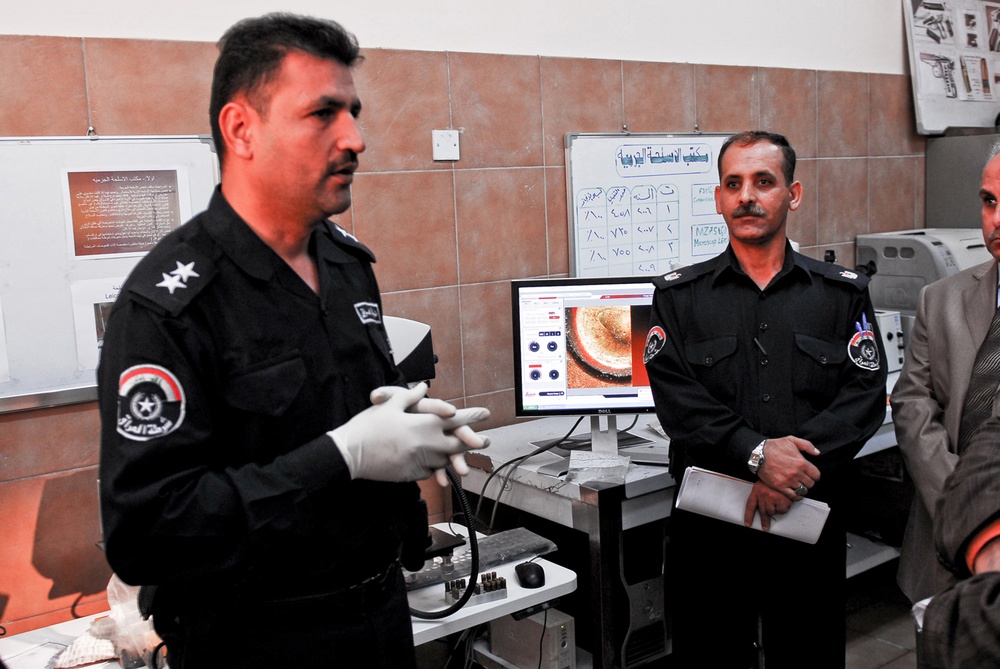
This month's course was divided into about two topics a day with classroom briefings beginning in the morning followed later in the afternoon by a demonstration in the IP's new state-of-the-art crime lab facility.
The techniques and procedures taught in the week-long course serve to significantly improve the Iraqi judicial system as both sides gain substantial feedback through open discussions.
"This was our first course, where Iraqi crime lab technicians and U.S. experts trained 17 Iraqi representatives consisting of judges, investigative judges and judicial investigators," Scholtes said.
Three more training iterations consisting of about 17 judges for each course are currently being scheduled for the next couple of weeks. Times and dates are being worked around the availability of the crime lab that will allow for more hands on training.
"Some of the judges are familiar with techniques and procedures the Iraqi police use and some are not. It's a continual learning process and this class serves as an avenue towards cohesion," said Lacy.
The Iraqi police gave thorough briefings to the judges on their ballistics identification tactics, crimes scene evaluations techniques and fraudulent document and monetary collection procedures.
"We have three different divisions set in place to review and classify evidence," said 1st Lt. Mohammad Adari, Ballistics Division Iraq police, ballistics officer. "Each of our divisions has an expert in their department. After we have consolidated the evidence and pieced together a report, each of the division experts must agree and sign-off on all reports before sending them to the prosecutors," he added.
The IJ brought up many questions throughout the weeklong course. One in particular was, "How can you preserve a crime scene?"
"Generally the most important factor in preserving the scene is to make sure it is secured from people contaminating it. It's essential to prevent cross contamination and loss of evidence," said Lacy.
Lacy added that access to the scene should be limited to those responsible for processing evidence in order to prevent the transference of evidence.
"Basically, by controlling the crime scene and collecting evidence through the use of recognized processes which follow established rules and presenting this evidence to the courts in a transparent manner this will ensure a fair and just system which the Iraqi people can place their trust in," said Lacy.
"It will take time to develop. However, from the looks of the cooperation level in this course it seems both sides are willing to invest in their country's development," he added.
| Date Taken: |
01.26.2010 |
| Date Posted: |
01.26.2010 07:28 |
| Story ID: |
44443 |
| Location: |
BASRA, IQ |
| Web Views: |
415 |
| Downloads: |
350 |
PUBLIC DOMAIN

This work, C.S.I.-Iraq the judiciary process develops in Basra, by SPC Maurice Galloway, identified by DVIDS, must comply with the restrictions shown on https://www.dvidshub.net/about/copyright.

 Subscribe






