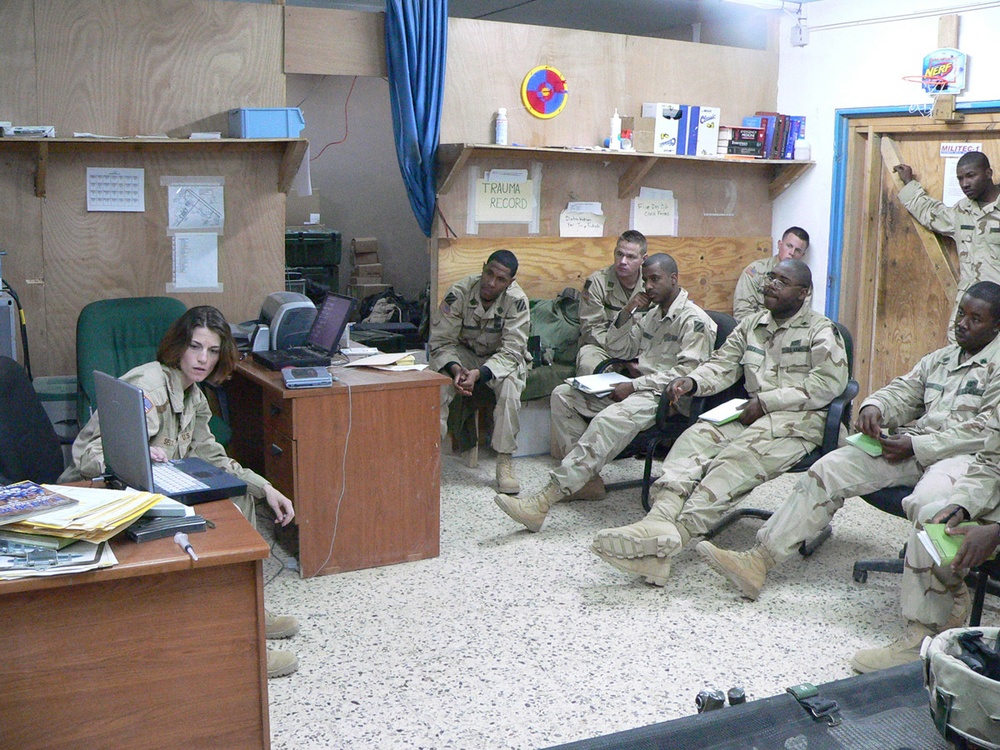
Soldiers and their families naturally change slowly over any period of time. When spending each day with one another, the adjustments to these changes come easily and differences may not be readily apparent. After a long period of separation, the image of how life at home will be versus the reality of how life is can lead to disappointments.
Managing disappointments is one key to a smoother transition to family life. Soldiers may be on a high when they first get home, said Staff Sgt. Philip Burke, the NCOIC of the 883rd Medical Company Combat Stress restoration team, but they need to understand they aren't the same people they were when they left.
"You're different whether you know it or not, and your family has changed too, especially children," Burke said. "Sometimes kids protect themselves against us leaving again, so the relationship may not be as warm and fuzzy as we expect it to be."
Things will evolve at their own speed, Burke said, and forcing them to develop faster may cause more problems than it will solve.
"We might not get as excited about things like we did before. Often we have a job here where there's been a lot of adrenaline rushes, and we might miss that," Burke said. "We have to learn again to appreciate the little things in life."
Burke also said good preparation and taking things easy are vital to a successful redeployment.
"You have to look at the tasks in front of you. It's no different than any other mission analysis. You have to think about being in the roles you haven't performed in for a while, be it friend, roommate or looking for a job," Burke said.
"The most important part is communication," Maj. Ed Michella, a psychiatric nurse, said. "Realize as you go home, your family has been isolated from you the same way that you have been isolated from them. Have patience and allow your family to express their feelings the same way we want to express ours."
Soldiers may often feel the need to make up for the recreation they missed during a deployment. People will want to celebrate the Soldier's return.
"The things that I get concerned about are food and alcohol. We're in an environment where we're deprived of some of the goodies that we like," Burke said. "People will often feel that they are entitled to a binge. "Everything in moderation" is a good motto."
The initial phase of returning home is usually a joyous occasion for Soldiers. At first, many may not realize the stress they are carrying with them from traumatic events that occurred in theater, Burke said. The best time to talk to Soldiers after a deployment is 60 to 90 days after they get home.
"They'll come in and say, "I have trouble with the heat being on again, it reminded me of this," or more often they're saying it gets too quiet," Burke said as he pointed at a noisy generator. "Sleeping right here is like sleeping at an airport. I can imagine that, going home, if it was too quiet in my neighborhood, I would expect to hear more medevacs coming into the hospital or jets taking off. For some people it may be that quiet is more disturbing than noise would be."
Capt. Jeffery Cox, the prevention team leader, said it's important for the unit to get information out to Soldiers about continuing medical support services after redeploying.
"Soldiers may need additional support, and we're going to be the first ones to identify additional resources after the deployment to best meet their needs," Cox said. A major source of stress for Soldiers who are redeploying is the awards they receive for their actions, Cox said.
"The battle over awards is a big issue. Soldiers come here thinking they'll get one type of award, and they get something else," Cox said.
Some Soldiers may feel neglected if the award doesn't meet their expectations. Cox said Soldiers should set reasonable expectations, and appreciate the medals they do receive.
"The most important award Soldiers will receive over here is the Iraqi Campaign Medal," Cox said. "That's where all of your veterans" benefits are coming from."
Cox said that putting a strong emphasis on preventative treatments and supporting that with long-term restorative care has had a strong impact on reducing the effects of combat stress on Soldiers serving in Iraq.
"We really want to keep Soldiers in the fight," Cox said. "We're committed to helping the Soldier. Nothing makes me happier than people going back after fighting this conflict and having a successful life. That's one of the factors that tells us we've been successful, if our Soldiers don't have long-term effects."
Cox said the prevention starts with the Soldier planning for the deployment.
"With the era of instant messaging and e-mail, what's happening back stateside is happening to Soldiers here, so they end up having the difficulties of managing life in a conflict zone at the same time as trying to balance a home life."
Some ways to mitigate the effects of that is family care plans and talking to family members.
Burke said planning is the best way to successfully balance the issues from home and in a combat zone.
"Part of doing that is trusting that the home front issues are going to take care of themselves because you have a plan in place," Burke said.
In extreme cases, Soldiers may need to be evacuated for more intensive care. Cox estimated that less than 1 percent of patients seen at his facility need to leave the theater.
"When someone has to leave the theater for combat stress issues, that means someone else has to pick up that job. Someone has to drive more, work longer hours in the supply shop, or man the guard tower more," Cox said. "What we really want is for the Soldier to be able to safely maintain themselves in place."
Some Soldiers may feel a little down about missing family celebrations during the holiday season.
"I would want Soldiers to think about this experience as a unique experience to take with them the rest of their life, and hopefully, it'll make each holiday season more special," Cox said. "You may not be with your family, but you're with a different family."
Cox encouraged units to set up group events. A unit dinner or a minor gift exchange can go a long way to helping Soldiers through the season.
"We want to promote units to have an effective celebration of the holidays. We shouldn't skip it," Cox said.
Many issues Soldiers deal with in theater didn't originate here, Michella said.
"Ideally, if combat stress control works, there are no behavioral health issues, but a fair number of people come to the theater with pre-existing conditions and need maintenance," he said.
Burke said that just because Soldiers have left the source of those pre-existing issues, it doesn't mean they haven't followed them here.
"Usually, whatever issues people brought to their unit on a regular basis are what they brought over here," Burke said. "So, we deal with a wide range of relationship issues and anxiety issues."
Burke said the unit is equipped to help resolve those issues.
"There's a lot of ways to deal with that, critical event debriefings, defusings, critical incident discussions. We give them a lot of different names but basically it's talking with Soldiers about the events that are sticking with them," Burke said.
Overall, the Soldiers of the 883rd feel they are making a difference in the fight against combat stress.
"We've been given a very good mission up here, and we're doing the best that we can to preserve the troops who are assigned to this area of operations," Burke said.
| Date Taken: |
01.05.2006 |
| Date Posted: |
01.05.2006 09:55 |
| Story ID: |
4274 |
| Location: |
|
| Web Views: |
235 |
| Downloads: |
31 |
PUBLIC DOMAIN

This work, Combat Stress: easing into going home, must comply with the restrictions shown on https://www.dvidshub.net/about/copyright.