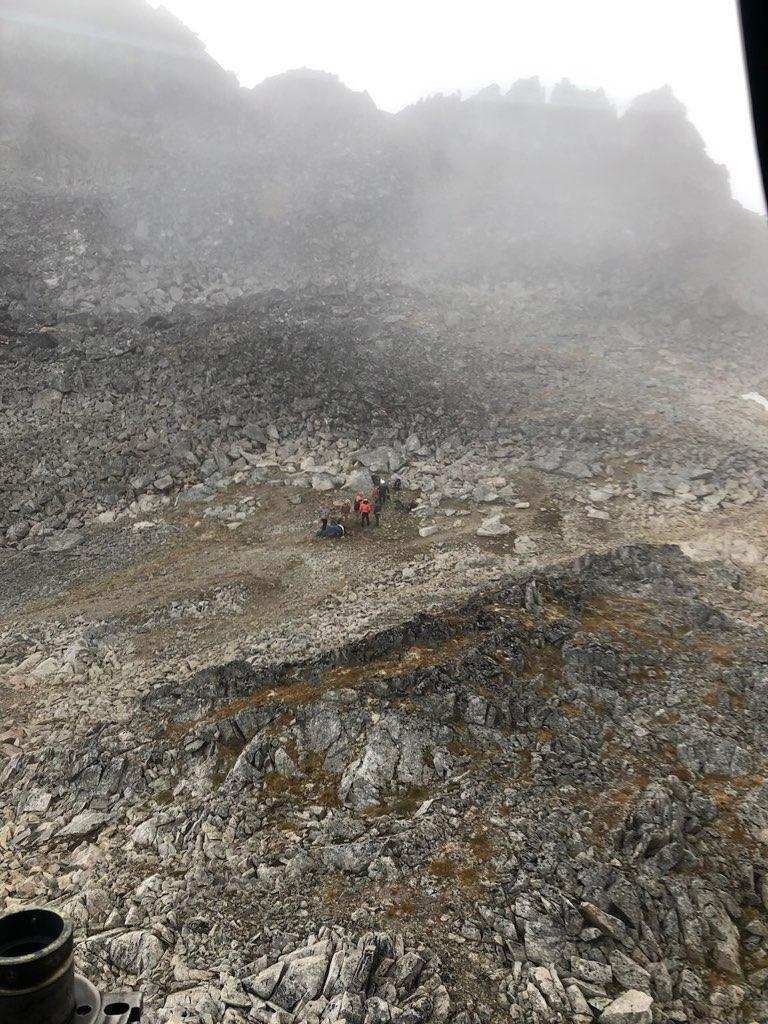
Photo By Staff Sgt. Kelly Willett | On August 6th, 2021, the Alaska Rescue Coordination Center (RCC) received a rescue request for a hiker in distress near Glacier Pass in Archangel Valley. Initial rescue efforts from a civilian component were postponed due to weather. The 176th initiated a launch of rescue crews using information from the hikers, launching an HH60G Pave Hawk with a Guardian Angel Team on board, from Joint Base Elmendorf Richardson (JBER). The Pave Hawk crew safely navigated to the hiking parties’ location where the team provided field care and hoisted the patient into the Pave Hawk, transporting the individual to A Mat-Su area hospital. (Photo courtesy of Tech. Sgt. Sam Taylor/Released) see less
| View Image Page
The Alaska State Trooper Search and Rescue coordinator contacted the Alaska Rescue Coordination Center Aug. 6 around 7:30 p.m. for assistance to rescue a hiker in distress near Glacier Pass.
“Cloud cover and terrain precluded initial rescue efforts by a civilian medical evacuation company, so the AK RCC coordinated the dispatch of a hoist capable, [HH-60G] Pave Hawk from the 176th Wing” said Alaska Air National Guard Maj. Josh Lester, AK RCC senior search and rescue controller.
The distressed hiker was one in a group of seven. After the hiker began experiencing distress, a fellow hiker activated the personal locator beacon they were carrying and made a cellphone call to AST.
The medical and terrain information provided to AST were critical for the 210th Rescue Squadron Pave Hawk crew and the 212th Rescue Squadron Guardian Angel pararescue team on board.
“Understanding the nature of the injury or medical condition and the terrain surrounding the hiking party helps us decide which rescue assets to dispatch and which medical teams to have on board,” Lester said.
The Pave Hawk crew safely navigated through the weather to the hiking party’s location where the GA team provided field care and hoisted the patient into the Pave Hawk before transport to Matanuska-Susitna Valley area hospital.
The AK RCC stressed the importance of having a PLB and two-way satellite communications such as an InReach device or a satellite phone to communicate with rescue assets via text or voice. Cell phone coverage is not always a guarantee in Alaska.
For this rescue, the AK RCC, 210th RQS and 212th RQS were awarded one save.

 Subscribe






