WASHINGTON, Aug. 2, 2018 – For the first time in the Defense Department, a series of career field specialties is using human performance monitoring and a data collection system, as well as specialized recruiters to create fitter, faster, stronger, more resilient warfighters.
Because of high attrition rates in its special operations career fields -- pararescue, combat controller, tactical air control party and special operations weather technicians -- the Air Force stood up the 350th Battlefield Airman Training Squadron at Joint Base San Antonio-Lackland, and the 330th Recruiting Squadron at Joint Base San Antonio-Randolph in Texas. Recruiters also focus on the special operations support career fields: survival, evasion and resistance and explosive ordnance disposal.
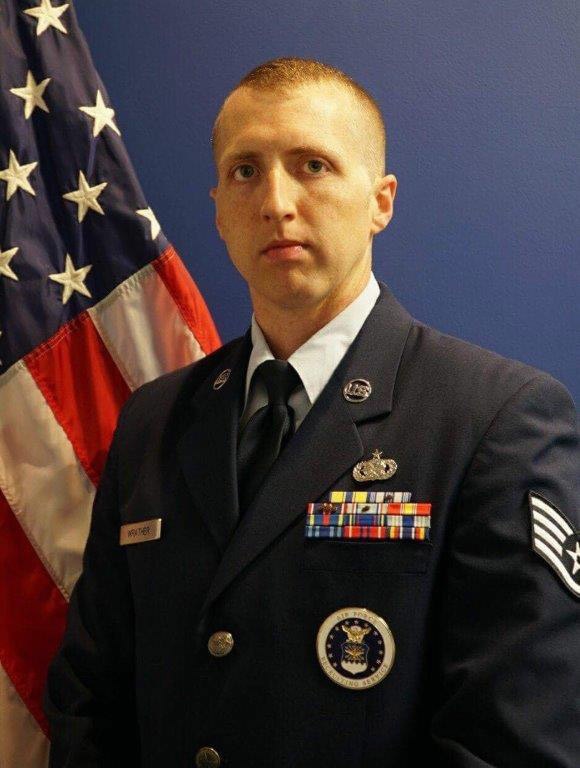
Air Force Staff Sgt. Blake Wrather, assigned to Traverse City, Michigan, was one of 90 special operations recruiters who attended a one-week version of the eight-week course so they could get hands-on experience June 25-29.
Traverse City
Wrather said his favorite part about serving in the military for the past eight years has been opportunities such as his career, the travel, advancement training and meeting people he wouldn't have met otherwise.
He said he enjoys recruiting in the Traverse City area. “I've been recruiting here for two years now. I love how it's a small town with a lot of originality like local breweries and restaurants," said the Glasgow, Kentucky, native. "There's also plenty of hunting, fishing and kayaking, which I enjoy doing in the summer."
Mission
Air Force Maj. Heath Kerns said the recruiters’ mission is to scout, develop and guide the future warriors for their combat calling. With this new program, the recruiters work hand-in-hand with the squadron ahead of time and have developers, retired operators, who will work with the recruits to make sure they can pass the physical training test and be ready for battlefield airmen prep before arrival.
Technology
The squadron uses many cutting-edge innovative technology systems. By January, the squadron will have a 55,000-square-foot smart gym with an indoor track with an LED lighted system called a rabbit. The gym will know when the students enter via a chip in their smart watches. The cardio equipment will read the chips as well. The weight equipment will have tablets with video cameras where the students will type in their student number and record their workout, and then the coaches will critique and send them a message if they did anything wrong in their techniques.
“These candidates entering the course haven't learned proper nutrition and exercises," Wrather said. "This truly helps get their bodies ready for the rigorous training ahead of them and is already showing results.
He said having the facility and staff are crucial. “Injury is one of the most common reasons people don't make it through their training pipelines aside from the mentality such as quitting," Wrather said. "We need special operators fighting the fight downrange more than ever. If this course can put more men into these critical positions by mitigating injuries and educating them on the importance of mobility, strength and nutrition, then I hope we continue to improve this program as rapidly as possible."
DoD First
The squadron is the first in DoD to use a digital functional movement screening called DARI for all candidates. The camera system identifies joint mobility and strength imbalances of 28 movement patterns.
The first class had 14 candidates who were identified to be at high risk for injury, said Air Force Chief Master Sgt. Josh Smith, the special warfare preparatory course superintendent for the 350th BATS. He has been a pararescueman, or PJ, for 25 years.
Within 10 training days, 12 of the 14 were injured in the way the computer had predicted.
“For the next class, for those identified, we gave them homework,” he said. “They wear these compression shirts and shorts that link to their tablets to show that they’re doing the exercises for accountability. The injuries went down.”
The students wear a harness with a Zephyr biomodule sensor, which measures their core body temperature throughout the day, as well as 44 individual post-training event data analytics that provide in-depth understanding of individual and group data on heart rates, calorie burns, estimated core temperatures, physiological and mechanical training. It provides feedback on windows of trainability in endurance, speed, power, strength and coordination.
The squadron’s dietitian is working with Google to implement an automated process of determining a candidate’s food consumption by providing a machine-learning vision system to digitally track food. It will compare a trainee’s performance calorie burn before and after meals for nutritional intake of actual calories consumed by taking a photo of the plate of food before and after the meal. The subject matter expert can address the disparities, Smith said.
The Staff
The coaches and staff consist of nutritionists, psychologists, a physician assistant, athletic trainers, medics and many more who have a minimum of a bachelor’s degree. Most of them have a master’s degree in some type of exercise physiology and multiple certified strength and conditioning credentials, and some are Level 2 and 3 Crossfit instructors.
Some of the coaches are former National Football League and National Hockey League players, one was on the U.S. Olympic swim team, and NASA’s lead strength coach just applied to be a part of the program.
“I have the most amazing group of individuals who are the most brilliant minds throughout their different modalities,” Smith said. “This is what makes this program so successful.”
One instructor, who’s ranked in the top 100 in the world for the freestyle in swimming, even enlisted to become a combat controller and is now at Air Force basic training, Smith said.
Isaiah Harris, a former Atlanta Falcons linebacker, worked with the Chicago Bears for eight years and would take the players over to the Naval Special Warfare Team program at Great Lakes. He said all the coaches work together as a team to make sure each candidate is ready for graduation.
“The jobs of these special operators is crucial to the security of our nation," Wrather said. "Special operations isn't just about shooting bad guys; it's about bringing people home and saving lives."
To reach Wrather, call 231-206-9097 or email blake.wrather@us.af.mil.
-30-
| Date Taken: |
06.29.2018 |
| Date Posted: |
08.03.2018 12:34 |
| Story ID: |
287142 |
| Location: |
US |
| Web Views: |
154 |
| Downloads: |
0 |
PUBLIC DOMAIN

This work, Traverse City Air Force Recruiter Learns About Innovations for Next-Gen Special Ops Airmen, by Shannon Collins, identified by DVIDS, must comply with the restrictions shown on https://www.dvidshub.net/about/copyright.

 Subscribe





