
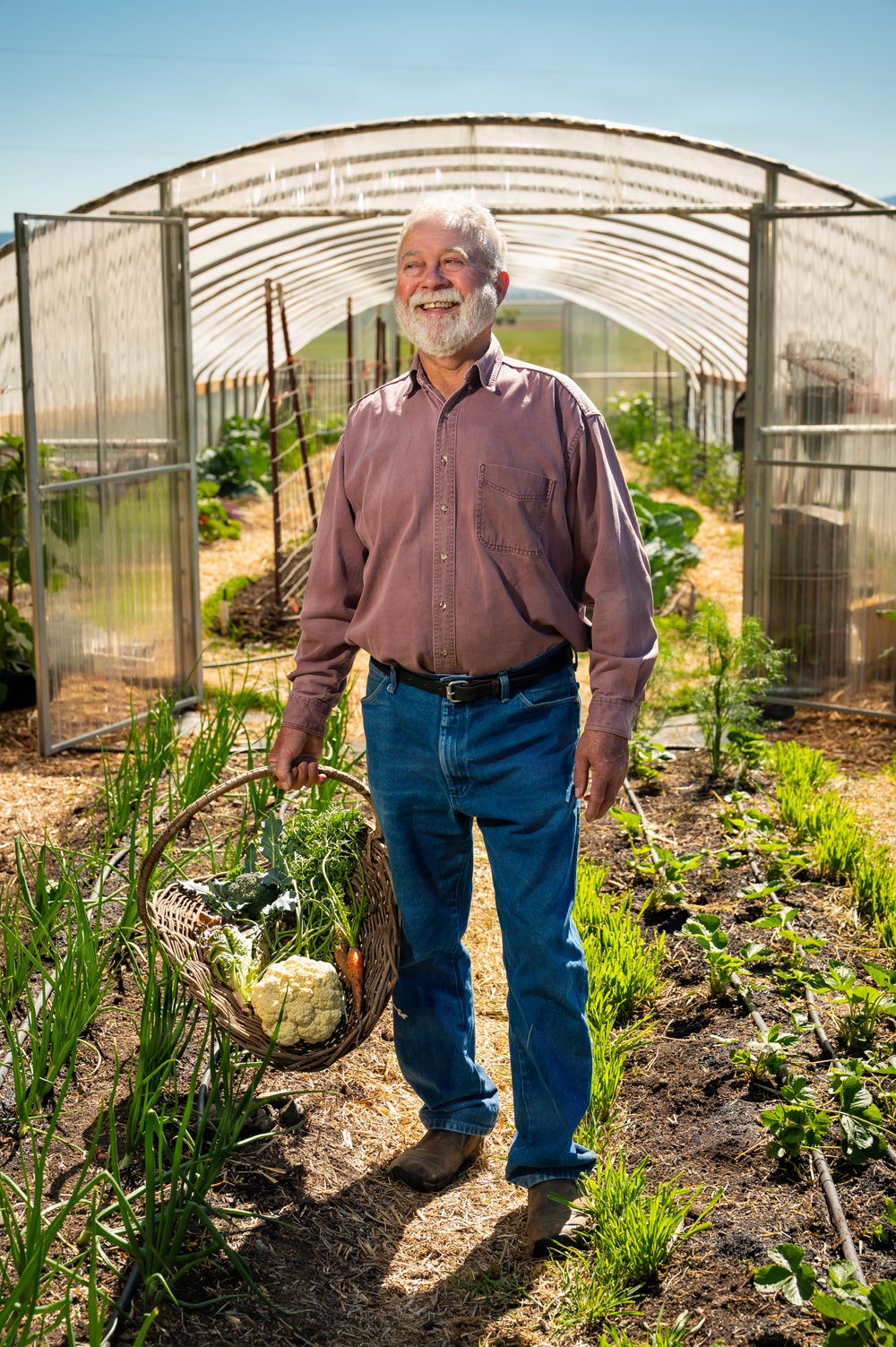
Just outside of La Grande, Oregon, Mike Burton tends a garden that now has an extended growing season thanks to assistance from NRCS. Mike raises more than 70 crop varieties at Grace Gardens to feed himself, his wife, and the local community. Because the Grande Ronde Valley is known for wind and a short growing season, the Burton’s applied for assistance through NRCS's Environmental Quality Incentives Program (EQIP) and received cost-share funding for a high tunnel. High tunnels are unheated, plastic covered structures that shelter crops planted directly in the ground. They're built to solve exactly the problems the Burtons were facing. By shielding plants from wind, hard rain, and temperature swings, high tunnels let growers extend their season earlier into spring and later into fall, sometimes growing year-round. Programs like EQIP and the Regenerative Pilot Program are built to serve growers at every scale, whether you have a half an acre or 3,000 acres plus, ensuring that small, community-rooted operations like the Burtons’ have the same access to conservation support as much larger farms.
6/11/2026 by USDA/Kirsten Strough
| Date Taken: | 06.11.2026 |
| Date Posted: | 09.22.2026 16:54 |
| Photo ID: | 9958003 |
| VIRIN: | 260611-P-UI255-5222 |
| Resolution: | 4024x6048 |
| Size: | 8.86 MB |
| Location: | LA GRANDE, OREGON, US |
| Web Views: | 24 |
| Downloads: | 1 |

This work, Oregon High Tunnel, by Kirsten Strough, identified by DVIDS, must comply with the restrictions shown on https://www.dvidshub.net/about/copyright.