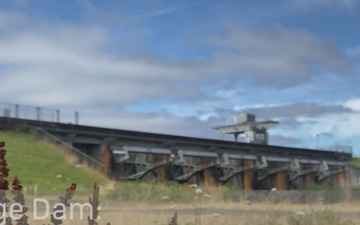
Editor’s Note: This is the first in a series of news commentaries on the Bonneville Dam safety reclassification. In this edition, the author will explain the basis of the reclassification, with future articles addressing specific aspects influencing the reclassification and evaluation.
PORTLAND, Ore. -- “Bonneville Dam is really complicated.”
That is the single most accurate description I heard while working on this article.
As a journalist, my inclination is to apply bombastic literary effects whenever possible. And by all accounts, this historic and massive piece of Pacific Northwest infrastructure beckons it: colossal statistics, fantastical personification opportunities, and, of course, a harrowing historical account or two....
06.23.2026 | PORTLAND, OREGON, US |
Story by Andria Allmond
After a century of quiet, Mount St. Helens - known to the Cowlitz as Lawetlat’la, or The Smoking Mountain - announced its wrath in 1980. The eruption wasn't a singular event. It began a decades-long geological and engineering challenge for Portland District, U.S. Army Corps of Engineers. "With the continued sediment outwash, it could be said the eruption never stopped," said Portland District Civil Engineer and Technical Lead Todd Hansen....
“Bonneville Dam is complicated."
When our media desk at at the Portland District heard the dam underwent a safety reclassification, we knew it was a major story. Here is what the U.S. Army Corps of Engineers safety data actually means for the region: According to our Dam Safety Program Manager, Matt Chase, “Bonneville Dam is working well and operating safely today... The new understanding of risk just helps us know what to fix for the...
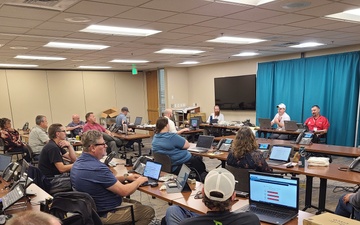
The conference room in downtown Portland was set up like any other training event: Logistics employees wheeled out gray chairs in bunches of six and tucked them under rows of roll-away tables with honey-brown wood-laminate tops.
But, in the corner, one table would eventually host a coffee maker that would slowly drip on the carpet over the following month – a testament to all the caffeine consumed by 30 employees as they answered...
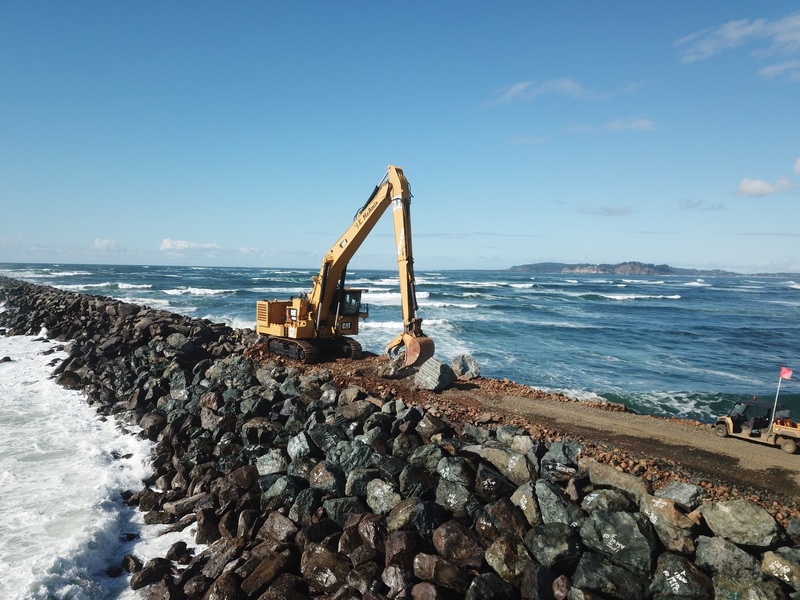
A GPS-enabled excavator allows contractors to precisely place giant boulders on the South Jetty at the mouth of the Columbia River. The six-mile rock pile is one of three rubble-mound jetties that minimize navigation channel maintenance and make passage safer for vessels transiting between the Pacific Ocean and the Columbia River. (Photo by J.E. McAmis)