KUNAR PROVINCE, Afghanistan – The Iowa National Guard’s 734th Agribusiness Development Team conducted a quality assurance /quality control check at a small poultry project in Karula, Jan 13.
What the ADT found was that small poultry projects aimed at helping a handful of Afghan families at a time are not costly, provide much-needed income and dietary protein and appear sustainable.
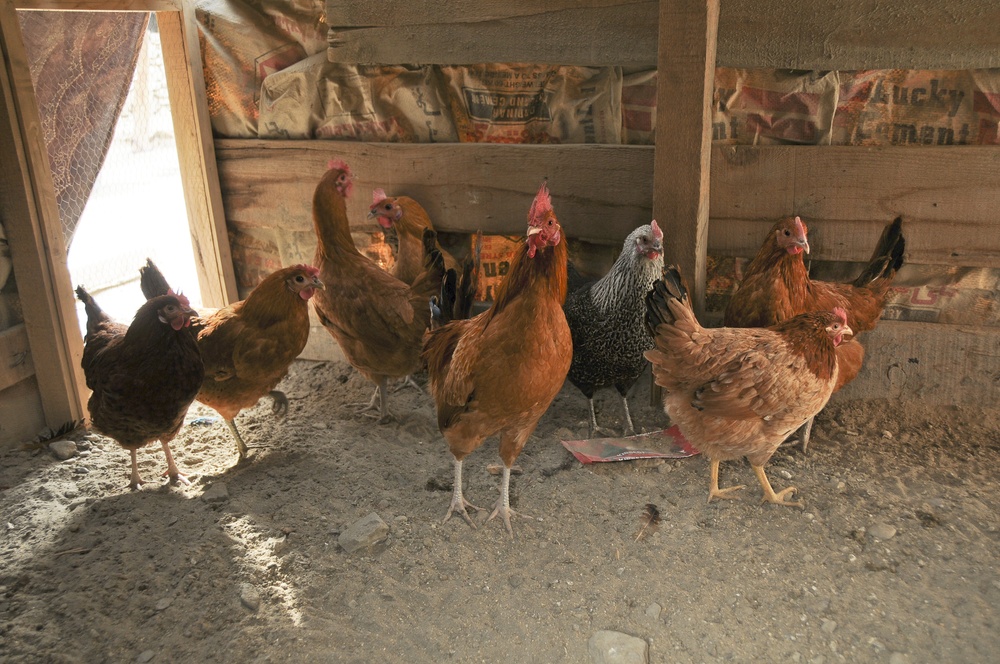
The Iowa ADT initiated the project in December by giving 23 hens and two roosters each to six families who live in Karula, a small village outside the provincial capital of Asadabad. The ADT vaccinated the chickens, provided five to six months of feed and furnished funding to the families for the purchase of wood and chicken wire to construct coops.
U.S. Army Master Sgt. Darla Sheasley of Everly, Iowa, veterinary technician for the ADT, initiated the project and led the QAQC visit.
“We weren’t sure what to expect when we came here,” Sheasley said. “We didn’t know if the families would be taking care of the chickens or what kind of losses there might have been, but we were pleasantly surprised.”
Not only were all the chickens provided by the ADT alive, they were housed in mud, wood and chickenwire coops and seemed to be in robust health. Moreover, the hens were producing 12 to 15 eggs per day for the families, according to Baba Jon, assistant to the Kunar Director of Women’s Affairs.
“These families are headed by widows, and they can sell these eggs for 10 afghanis (22 cents) each,” Jon said. “They can also feed some of (the eggs) to their children, so they are very happy with this program.”
The additional income from the sale of eggs is important to the families, Jon added. However, Sheasley pointed out the sale of eggs is not the key to the sustainability of small poultry projects like the one in Karula.
“The families are able to replenish and add to the flock by letting some of the eggs hatch, and feed in the form of insects is plentiful, especially when it gets warmer,” Sheasley said.
Setting up the poultry project in Karula cost $500 per family. Sheasley, who is also a leader of the Kunar Female Engagement Team, described that as “a pretty small investment” compared to the returns.
“With the Department of Women’s Affairs, we’re setting up a self-sustaining small business for widows who are mainly relying on charity for income and helping improve the nutrition of their children at the same time,” said Sheasley. “Because it doesn’t cost much, we can duplicate it many times. The women we’re helping are grateful, and it’s something the ADT and the Afghan government can really be proud of.”
| Date Taken: |
01.13.2011 |
| Date Posted: |
01.17.2011 13:17 |
| Story ID: |
63701 |
| Location: |
KUNAR PROVINCE, AF |
| Web Views: |
47 |
| Downloads: |
0 |
PUBLIC DOMAIN

This work, Iowa ADT small poultry project a sustainable success, by CPT Peter Shinn, identified by DVIDS, must comply with the restrictions shown on https://www.dvidshub.net/about/copyright.

 Subscribe





