AVIERO, Portugal - Service members have pretty demanding lifestyles which can significantly impact their well-being at times. Knowing how to find all the right tools to bounce back from stressful situations may not be as easy for some as it is for others.
Approximately one year ago, the Air Force created a new job position called the Community Support Coordinator. According to a letter to Air Force wing commanders from Brig. Gen. Eden Murrie, USAF Director of Services, this was in response to the 2009 Fort Hood incident recommendation to provide a full-time, installation-level position to oversee and integrate community, family, individual support and resilience programs.
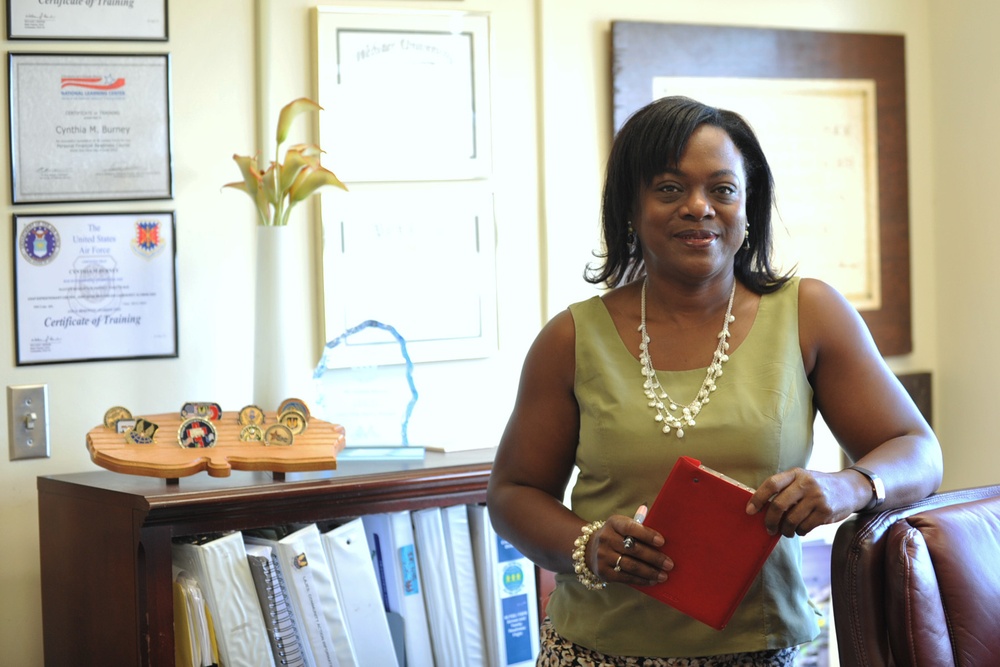
Cynthia Burney, Lajes Field's Community Support Coordinator, was charged with being the first person to take on this responsibility at Lajes in January. She had been working in Lajes' Airman and Family Readiness Center as a consultant for two and a half years prior.
"I am the focal point of the installation's resilience programs," said Burney. "Our goal is to conduct resilience skills training throughout the base to help Airmen of all ranks bounce back in order to do their jobs and, basically, live their lives."
The Community Support Coordinator helps airmen and their families withstand, recover from and grow throughout difficult situations.
Burney's position requires her to focus on the airmen's mental, physical, social and spiritual well-being - also known as the four pillars of Comprehensive Airmen Fitness. She serves as the executive director of the installation Community Action Information Board and chair of the Integrated Delivery System. The CAIB, chaired by the wing commander, identifies and resolves issues impacting the readiness of airmen, civilians and family members. The IDS is the working group formed as the action arm for the CAIB.
"I am responsible for pulling together all the agencies on base that deal with people, such as the Medical Clinic, the Airman and Family Readiness Center, the Chapel, the Sexual Assault Response Coordinator, the Legal Office and Public Affairs in order to get information out," Burney said.
Every month the IDS meets and pulls together resources to make sure all the programs are out there and these helping agencies are talking to one another so that can have a united front in presenting programs and information throughout the base."
"We have all of the agencies at the meetings so they can hear the information as well as converse on how to present certain programs," Burney said. "It's also an opportunity to get the word out about all of our programs so that we're a resilient community."
Each agency works to promote a positive way of life while enhancing the ability to function as productive Air Force community members. For example, the Mental Health Clinic gives suicide awareness updates. The Chapel plans retreats and dinners for single and unaccompanied members. The Health and Wellness Center provides updates of the overall tobacco use on the installation. The Lajes Spouses Club initiates ideas, such as the Lajes Community Theater, which resulted in a production in June.
"Resilience is one of the top Air Force issues due to the high operations tempo that we have across all branches of service," Burney said. "We have high ops-tempo, we have increased suicide rates, as well as self-defeating behaviors. So, the Air Force, as well as the Army, believe we can teach airmen how to be more resilient or provide them the tools they need to bounce back in a healthier manner."
Burney explained that resilience is not something everyone is born with, however, it can be learned. Also, not everyone finds it naturally easy to seek help when they're experiencing hardships even though they know helping agencies are available. An individual's ability to cope with situations is usually dependent on a number of factors, such as how they were raised, their values or their personal skills.
Every airman has a story. In the work environment, Airmen can get to know each other better on a personal level through participation in core groups. The wing mandates core group conversations on training days so that airmen can have discussions on a wide range of topics, such as excellence, integrity, courage, camaraderie, honor, service, etc.
There are usually no more than 10 members within a group. These small groups allow airmen to gain a better idea of each individual's story. Having discussions about personal experiences help Airmen learn who they could possibly turn to if they should ever need to talk to someone in a time of despair.
"Across the Air Force, we are striving to teach airmen resilient skills so they have something to fall back on when they find themselves in a situation that may be too hard for them to cope with," she said. "Our goal is to build resilience so that, professionally and personally, they can use those skills throughout their life, and we're starting with the First Term Airmen."
Burney explained having a Community Support Coordinator to equip individuals with tools of resilience within this very small Lajes community is quite important for airmen here.
"When you need to get away from coworkers or family members - and I mean you just want to take a time out - it's very difficult to do that on a base like this because you're either working with someone or you're living with someone and then you go to the base exchange, the commissary or the mail room, and you may see these same people all the time," Burney said. "In a lot of ways, that's a positive thing, but in some situations, it may not be because you may want to get away. We're working to teach these resilience skills to individuals so they can deal with conflicts or situations in their life regardless of where they are. Whether it's a big place where you feel no one knows you or a small place where everyone knows you, there will be pluses and minuses."
Burney, who is a retired 26-year Air Force veteran, said she loves helping people and has spent a lot of time doing so both on active duty and as a civilian as a drug and alcohol counselor, a mental health counselor, a sexual assault response coordinator, and an AFRC consultant.
"I gravitate toward jobs where I can listen, talk and be creative in helping individuals," she said. "I love the idea that the Air Force is giving us the opportunity to deal with people as individuals. One of the tools we teach in resilience training is how to count your blessings. Blessings are different for individuals, and we need to recognize that, however big or small. Whatever the blessing is, people can fall upon that in their time of need when they really need to focus on something positive to make themselves better."
| Date Taken: |
10.03.2013 |
| Date Posted: |
10.04.2013 06:15 |
| Story ID: |
114761 |
| Location: |
AVEIRO, PT |
| Web Views: |
117 |
| Downloads: |
0 |
PUBLIC DOMAIN

This work, U.S. civilian oversees program to build Lajes community's resilience, by SSgt Smythe Angelique, identified by DVIDS, must comply with the restrictions shown on https://www.dvidshub.net/about/copyright.