ANNISTON ARMY DEPOT, Ala. –Force projection begins at homestation, and for the Army to project combat power rapidly across the globe, its rail network must be modernizedand synchronized across the enterprise.
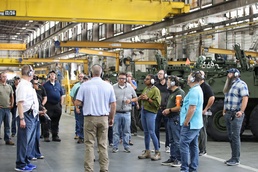
To address critical readiness shortfalls and build a unified roadmap across theArmy’srail network, Army Sustainment Enterprise leaders and technical experts gathered at Anniston Army Depot, Aug. 25–27.
While railrepresentsone vital piece of the military's broader power projection network, it serves as the essentiallink for movingarmor,equipmentand munitionsto the point of need.
“Rail directly impacts readiness and is an integral part of force projection,” said Mike Dusablon,force projection lead. “Rail is readiness force projection. We as the rail expertsmust connect to it all — the training, the rail crews, safety — to be able to project forces effectively.It’sgoing to take the entire enterprise to change how the Armyoperateson a day-to-day basis.”
Decades of heavy operational demand have placed significant strain on the service’s rail network, creating readiness challenges across aging locomotive fleets, rolling stock and installation track infrastructure. Discussions focused on shifting away from fragmented management toward an integrated operating model that aligns rail readiness with broader Organic Industrial Base modernization.
“Whenthe command talks about modernizing the Organic Industrial Base, rail falls right into that with infrastructure, locomotivesand rail cars,” said Isis Green, lead traffic management specialist with AMC’s G-3 Support Operations Division. “Two of the focus areas are rail safety and making sure that we are aligned across the enterprise.”
For operational commanders, rail readiness directly dictates how quickly a combat unit can assemble and deploy during a crisis. Enterprise leaders reviewed initiatives toestablishreal-time readiness visibility into track availability, equipmentstatus, and crew certifications.
“We are working through the whole maintenance process and documenting it to give it visibility,” said DanStarkenburg, mobility chief for the Army Sustainment Command Transportation Readiness Division. “Ultimately, ourgoal at ASC is to be able to take a snapshot and look at an installation if we are ready. Do I have locomotives? Do I have the personnel tooperate? And is my infrastructure ready to support the warfighter to launchthem off the installation? Because we are theinitialpoint where the warfighter launches from.”
Workforce capacity was also a central focus, withstakeholders outlining plans to deploymobiletrainingteams and implement targeted retention strategies to ensure rail operating crewsremainfully qualified andmission-ready.
To keep pace with operational demands, the enterprise is alsoleveragingstreamlined contracting models and long-standing interagency partnerships to accelerate rolling stock overhauls and parts procurement.
“The Volpe Center has been supporting Army rail for over 37 years.It’sa partnership that the Department of Transportation has had for over 50 years —we’reall in this together,” said John Wojtowicz, senior advisor for National Security and Critical Infrastructure Programs at the Volpe Transportation Systems Center.
Byutilizingenterprise-wide IndefiniteDelivery andIndefinite Quantity contracts through the partnership, the Army is drastically reducing administrative delays.
“For a contracting officer to do a separate requirement can take 12 to 18 months, which the mission just cannot wait for,” said Patricia Barnette, contracting officer with theDepartment of Transportation Volpe National Transportation Systems Center. “Starting an innovative IDIQ contract vehicle with a pool of pre-vetted vendors allows us to issue task orders against an existing contract, which cuts procurement lead time in half.”
Unitingstakeholders across commands and agencies helpedestablisha common direction for the future of the enterprise.
“We’re making great traction bringing the stakeholders together and getting a singular way forward through the Army Rail Enterprise to receive guidance from the major commands on what they want us to do, and how we are moving forward with bringing Army rail into the 21st century,” said Brett Goertemoeller,supervisor of locomotive engineers at theU.S.Army Transportation School.