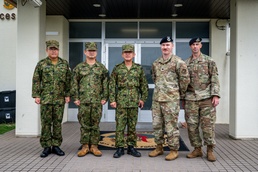
KADENA AIR BASE, Japan – Maintaining installation defense requires more than individual unit readiness. It depends on the ability of U.S. and Japanese forces to communicate, coordinate and respond together to evolving threats. The 18th Security Forces Squadron partnered with the Japan Ground Self-Defense Force 51st Regiment to conduct a bilateral tabletop exercise Oct. 23, 2026, at Kadena Air Base, Japan, focused on strengthening combined defense procedures and improving coordination during potential multi-domain threats. "Our partnership with the Japan Ground Self-Defense Force is an important part of maintaining a strong defensive posture in the region,” said Lt. Col. Bradley Robinson, 18th SFS commander. “By routinely exercising together, we build the relationships and interoperability necessary to respond to complex security challenges." During the exercise, participants simulated the development and distribution of Ground Tasking Orders, rehearsing how information moves from the Emergency Operations Center through the Base Defense Operations Center to tactical elements and supporting JGSDF forces operating off base. The scenario challenged participants to coordinate responses to multiple simulated threats, including unmanned aircraft systems, special operations forces, civil disturbances and missile attacks. Participants also reviewed bilateral force protection procedures, off-base threat coordination and post-strike response actions with Japanese authorities. By working through these scenarios together, U.S. and Japanese forces evaluated their ability to share information, synchronize decisions and coordinate defensive operations across installation boundaries. "The tabletop exercise allowed us to work through realistic scenarios and examine how information moves from leadership to the personnel responsible for executing the mission," said Chief Master Sgt. John Haines, 18th SFS senior enlisted leader. "Understanding those processes and identifying gaps before an actual contingency is essential to maintaining readiness." The exercise reinforced the importance of bilateral interoperability in maintaining a coordinated defense posture throughout Okinawa and strengthening the U.S.-Japan alliance. As a key installation supporting U.S. airpower in the Indo-Pacific, Kadena Air Base plays an important role in regional security. Continued bilateral training strengthens the ability of Team Kadena and its Japanese partners to respond to emerging threats, maintain readiness and support a free and open Pacific.