MCCONNELL AIR FORCE BASE, Kan. – Easy access to readily available clean drinking water is a luxury 25 percent of the world, or one in four people, do not have. Airmen and residents of McConnell Air Force Base and the greater Wichita area experienced a loss of that luxury when a boil water advisory (BWA) was put into effect Sept. 16.
The BWA was the result of a power loss at the main water treatment plant and Hess Pump station, which led to a temporary drop citywide in water pressure. The facilities had switched to back-up generators after a storm-related power surge, but a malfunction caused two of them to fail and prevented two others from starting, cutting off power to the pumps for about 45 minutes.
“We’re still investigating the cause of the power failure to the generators,” said Gary Janzen, Wichita Public Works and Utilities director. “We’re committed to ensuring that we instill procedures that will prevent a multi-failure power outage. We want to do everything we can to safeguard not having this happen again.”
Thirty-four hours after the initial announcement, the Kansas Department of Health and Environment rescinded the order for Wichita after the results for 195 testing locations came back clear and free of contamination.
However, the boil order has not yet been lifted on McConnell. The 22nd Operational Medical Readiness Squadron Bioenvironmental Engineering collected water samples from eight locations around base and are still waiting for the results of those tests before lifting the advisory.
“The bottom line is that because the boil water advisory affected the entire water system of Wichita, and we are a consecutive system of that water system, we had to wait and sample until Wichita cleared their BWA,” said Maj. Brian Thompson, 22nd OMRS Bioenvironmental Engineering flight commander. “Then we sampled, and hopefully we clear ours once our samples get back.”
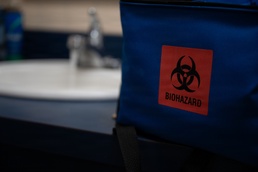
Bioenvironmental is testing the water samples for pH levels, chlorine residual, and bacteria. Because of the bacteriological test, they have to culture for a minimum of 24 hours before it can be determined safe or not.
Clean water is essential to the operations of multiple facilities on McConnell, many of which fall under the 22nd Force Support Squadron, such as the Child Development Center, dining facility, and fitness center. Once the BWA was announced, 22nd FSS personnel immediately took measures to mitigate risk by boiling water and purchasing water bottles.
The fountain drink machines were turned off and labeled as temporarily out of order at the Chisholm Trail Dining Facility and bowling alley, and all fresh produce is being cleaned using boiled water. A notice was provided to all parents of children at the CDC, School-Age Care, and Youth Center updating them on the protocols put in place regarding drinking water and hydration, food preparation and meal services, hand washing and hygiene, sanitation and diapering.
“Everyone was all hands on deck,” said Lt. Col. Latisha Cannon, 22nd FSS commander. “I think it’s important to be able to act quickly to make sure that our kiddos are safe and just the populous as well, because you need people to run the base. Making sure that we adhere to the standards and execute quickly, I think that’s what keeps us in line and mission ready.”
The BWA did not just affect Wichita proper and the base, but nine of the neighboring communities and three rural water districts. The other affected communities were Andover, Bel Aire, Benton, Derby, Kechi, Park City, Rose Hill, Valley Center, Maize South schools, and Sedgewick County Rural Water Districts 1-3.
“It’s vital for a community to have clean drinking water,” Thompson said. “We can’t do anything if we don’t have clean water. We saw contracting have issues purchasing bottled water, how fast those flew off the shelf, so it’s absolutely vital.”
The city of Wichita is constructing a new $573 million Northwest Water Treatment Facility to replace the current facility, which is more than 80 years old. The new facility is expected to open sometime between April and June 2027.