Alaska Air National Guardsmen assigned to the 176th Wing rescued two hunters stranded on a Kukpowruk River bank about 120 miles north of Kotzebue Sept. 11.
The hunters called for help after rising water placed them in danger and prevented them from self-extracting. They used a commercially available two-way satellite communication device to correspond with rescue officials.
Due to inclement weather between the North Slope Borough Search and Rescue hangar in Utqiagvik and the hunters’ location, NSB SAR requested assistance from the Alaska Rescue Coordination Center at Joint Base Elmendorf-Richardson. The AKRCC then requested support from the 176th Wing.
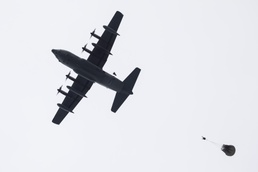
The 176th Wing search and rescue duty officer dispatched a 211th Rescue Squadron HC-130J Combat King II with 212th Rescue Squadron pararescuemen, also known as PJs, aboard. Additionally, a 210th Rescue Squadron Detachment 1 HH-60W Jolly Green II was dispatched from Eielson Air Force Base with PJs aboard.
Using coordinates provided through the hunters’ two-way satellite communication device, the HC-130 crew reached the search area, visually identified the hunters’ tent and spotted their flashlight.
The hunters also used the device to relay current weather conditions at their location to the AKRCC. With a low cloud ceiling limiting operations in the area, 212th RQS PJs conducted a low-altitude jump with a pack raft to reach the stranded hunters. The HC-130 crew also airdropped an additional raft and survival equipment near the site.
The PJs rigged an overhead rope system and used the raft to reach the hunters and move them to shore. The PJs then started a fire to help warm the hunters while they waited for extraction.
Prior to the HH-60W’s arrival, weather conditions improved enough for NSB SAR to fly its S-92 helicopter to the site and extract the hunters and PJs. The HC-130 remained overhead providing mission support while the HH-60W was released from the mission and returned to Eielson AFB.
NSB SAR transported the group to Utqiagvik, where the PJs and hunters transferred to the HC-130 for transportation to JBER. Upon arrival, the hunters were transferred to local authorities.
AKRCC officials encourage Alaska residents traveling into remote areas to carry a charged and registered two-way satellite communication device. In addition to providing rescuers with an accurate location, two-way devices allow people in distress to communicate changing conditions and other critical information that can help rescuers plan and execute a response.