OXFORD, United Kingdom- The 68th Theater Medical Command and the United Kingdom Defence Medical Command co-hosted the 33rd Multinational Military Medical Engagement (MMME) at St. Hugh’s College in Oxford, United Kingdom, Sept. 8-10, 2026. MMME is an annual forum that brings together medical leaders from across
NATO and partner nations. Over 200 participants from 15 nations attended plenary and breakout sessions under the theme, “Ready Now: Strengthening Deterrence through Credible Coalition Medical Forces”.
Maj. Gen. Phil Carter, Surgeon General of the United Kingdom Armed Forces and acting Chief of Defence Medical, welcomed participants to Oxford and encouraged them to engage with attendees from other nations and medical specialties. “Conversations and dialogue are the most powerful elements of this conference,” he said. “What is said
out in the breakouts is more important than what is said on this stage. Warfare evolves, but human physiology has not.”
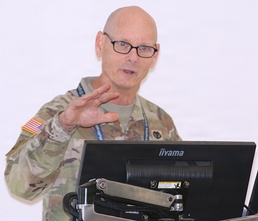
Brig. Gen. Lance C. Raney, Commanding General, 68th Theater Medical Command and Command Surgeon, U.S. Army Europe and Africa, provided his 90-day medical assessment of the theater since assuming command over the summer. He identified three challenges that NATO and partner nations must overcome: reliance on
technology, foundational skill degradation, and accumulating operational risk.
“The challenges I’ve identified are not the ones we typically discuss in our medical forums, but I assure you they directly impact the effectiveness of our medical mission and the capabilities we bring to the operational environment,” said Raney.
Raney added, “We must first be proficient in our core skills – clinically, tactically, individually, and collectively. We must be present on the battlefield and resilient – in our people, our equipment, and our systems.”
Any future conflict will present challenges of scale and complexity. “These problems require us to develop new ideas, collaborating across national borders to address them. Industry, academia, and military medical specialists, working together, through events like MMME, is essential to meeting these challenges"; said Carter.
The three-day engagement consisted of breakout sessions and workshops where attendees discussed leadership, data integration, innovation, patient evacuation, mass casualty and triage, medical logistics, force health protection, interoperability, human performance optimization, and microbial resistance in the operational environment.
Lt. Gen. Mary K. Izaguirre, U.S. Army Surgeon General and Commanding General, U.S. Army Medical Command was the guest speaker. She encouraged attendees to keep two principals in mind.
“One: we must ensure our systems are field tested. We must stress-test our partnerships, force our technology into austere environments, and challenge our capabilities in training to build the confidence required to overcome any challenge in combat,” she said.
“Two: we must anchor our efforts in purpose. We are not just moving assets on a map. We are honoring a sacred promise made to every warrior who steps onto the battlefield: the best medical is with you every step of the way.”
Planning is underway for Germany to host the 34th MMME in 2027.