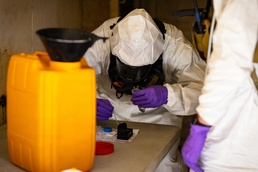
Technology, such as next generation sequencing and molecular diagnostics, has made detecting and identifying the presence of chemical, biological, radiological and nuclear (CBRN) agents faster and more accurate. While these innovations give the defense community a strategic advantage in identifying and understanding the threat, many of these technologies are commonly only operated in lab settings by trained users. Rapid presumptive testing tools, like lateral flow immunoassays (LFI), handheld assays (HHA) and biological sampling kits (BSK), remain critical for initial information gathering and immediate tactical decision making, especially for those in far-forward environments. Initial screenings or presumptive tests of unknown materials are important because they provide information that can guide deeper confirmatory testing and other next steps.
These testing tools are now small enough to fit into a pocket and do not require power or formal training to operate. The technology in these tools works the same as commonly used at-home products like a pregnancy test or COVID-19 test. Users deposit a small amount of environmental sample to the test strip and wait less than 15 minutes to see the results displayed as a color change or symbol. While the test cannot give details on what characteristics of an agent are present or where it’s from, it can provide the user with enough information to make an informed decision quickly, such as putting on personal protective equipment, evacuating the area and requesting confirmatory testing.
Presumptive and confirmatory tests can work together in biological detection. LFIs are fast, simple, on‑site tools that indicate whether a biological agent or toxin might be present. LFI results inform potential force protection actions or give responders early awareness so they can take precautions and decide if further action is needed. Confirmatory testing such as PCR, sequencing or mass spectrometry, provide definitive identification and characterization but is more expensive, requires specialized labs with trained personnel and more time. LFIs are often used before PCR because they can deliver rapid results with minimal equipment and training, allowing teams to quickly assess potential threat level and manage larger sample quantities, while more complex, time‑intensive PCR testing is reserved for use when confirmation and/or increased sensitivity is required.
While there are many LFIs, HHAs and BSKs available to purchase in the public domain, the U.S. government applies greater scrutiny to what it uses. The Joint Project Lead for CBRN Enabling Technologies’ Defense Biological Product Assurance Office (DBPAO) enhances warfighter operational success and resiliency and deters adversaries by ensuring warfighters have access to the highest quality biological products. DBPAO provides the government with assays, reagents and biological material for identifying agents of concern through the Ordering System for Critical Assays and Reagents (OSCAR) website. OSCAR is a digital storefront where the DoW and other government agencies can access hundreds of biological products including LFIs, HHAs and BSKs, at government-controlled costs.
DBPAO confirms that LFI production is ISO 9001 compliant, ensuring the tools can perform in the field in austere environments and under circumstances warfighters may encounter. All DBPAO products are independently tested to guarantee performance.
“We want to give warfighters and users 100 percent confidence that the tool in their pocket is accurate and will work the way it’s supposed to,” said Bryan Necciai, director of DBPAO.
Though LFI, HHA and BSK utilize colorimetric technology, which is common, these tools are still advancing to add expanded capability for the warfighter. Recently, DBPAO introduced multiplexing technology on a single strip, known as BlindSpot. This technology allows for a single panel to screen up to six samples at a time, expanding a warfighter’s detection capability without adding more physical weight to them. Presently, BlindSpot can detect 14 different agents of interest; DBPAO is working to increase that number.
“LFIs, HHAs and BSKs are not replacements for next generation sequencers and all the advanced technology now available for confirmatory analysis, but LFIs and the like still very much serve a purpose. They are a critical companion and serve as the first line of defense and source of information to the warfighters and users,” Necciai said.
LFIs, HHAs and BSKs have played a critical role in biological detection over the years. For example, during the anthrax attacks of the early 2000s, DBPAO supplied testing kits to rapidly identify anthrax powder in the Hart Senate Office Building’s mail. This effort led to the development and deployment of medicines to treat and prevent anthrax exposure.
In 2026, DBPAO enhanced readiness in the Pacific region by repurposing short-shelf-life BSKs and electrochemiluminescence assays at no cost to multiple units. This zero-cost distribution strengthened operational readiness, maximized resource efficiency and reinforced deterrence by ensuring forward-positioned forces could operate advanced detection tools against regional biothreats.
DBPAO leads the continuous and coordinated distribution of sampling and detection kits, while ensuring products are high-quality and meet expected requirements through testing and evaluation activities. Layering frontline tools like LFI and performing verification with the detailed analysis accomplished in the labs gives warfighters integrated layered protection and access to the information they need to save lives.