For more than a decade, the U.S. Army Reserve–funded installation Fort Hunter Liggett has steadily advanced one of the Department of the Army’s most resilient and forward leaning energy and water programs. Through sustained investment in modern technologies, the installation has positioned itself as a leader across the Army’s enterprise, routinely sharing its expertise in microgrid operations, cybersecurity, and installation level resilience.
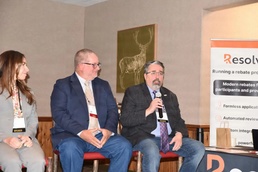
Building on its established foundation, Fort Hunter Liggett continues to shape the national conversation on energy resilience by participating in federal and state forums focused on the future of secure, reliable power. Most recently, the installation showcased its innovation and lessons learned at the California Utility Energy Forum, where team members delivered a presentation highlighting the successful implementation and ongoing evolution of its microgrid.
The Environmental Security Technology Certification Program (ESTCP) Microgrid Lessons Learned Workshop, held in Denver, Colorado, at the National Renewable Energy Laboratory of the Rockies and facilitated by Converge Strategies, brought together energy professionals from across the Department of War. Fort Hunter Liggett represented the Army, joining counterparts from the Air Force, Marine Corps, and Navy for a focused exchange on strengthening microgrid operations across the services. The workshop created a unique environment to converge strategies, share challenges and successes, and conduct candid self-assessments of microgrid system development and long-term sustainment. Participants explored common issues such as interoperability, cybersecurity, component lifecycle management, and operational training, and mining insights that will ultimately strengthen the broader microgrid program.
“The workshop gave us a chance to look inward as much as outward,” said Jarrod Ross, who provides contract support as the Fort Hunter Liggett Resource Efficiency Manager. “Seeing where other services excel and where we can improve helps us refine our microgrid strategy. Everyone brought something valuable to the table, and that level of collaboration is what will push the entire installation energy resilience mission forward.”
“It was a great opportunity for microgrid system operators to discuss both common and installation-specific challenges, and work on developing solutions,” added Joe Foriska, who provides contract support to the Army Reserve Energy and Water Program. “The lessons learned from other services can help shape our way ahead for microgrids. Looking ahead, the potential addition of a training simulator will fill a capability gap for the Army Reserve, and the white papers being developed will support future project development and scoping.”
In addition to these engagements, Fort Hunter Liggett recently conducted its second “Hack the Microgrid” cyber resilience assessment, building on the groundbreaking work completed in November 2024. The original assessment, conducted by the Army Reserve Installation Management Directorate and Fort Hunter Liggett in cooperation with the Defense Digital Service and industry partner Bugcrowd, used a bug bounty model to bring in 11 pre-vetted independent security researchers for four days of intensive vulnerability testing on the installation’s solar-powered microgrid. That effort set a precedent across the Department of War, demonstrating how cyber commissioning can and should be integrated into future microgrid deployments. During the most recent iteration, two of the same researchers returned to retest their earlier findings, evaluate how identified vulnerabilities were addressed, and push the system to an even higher level of resilience. The repeat assessment underscored Fort Hunter Liggett’s commitment to continuous improvement and offered valuable insights that will inform the Army Reserve’s broader approach to securing energy systems.
“Our goal is simple, ensure our Soldiers always have reliable, secure power no matter what,” Ross said. “Everything we learned through this process pushes us closer to that mission and strengthens the Army Reserve’s ability to lead by example.”
Released by LTC Long Pham.